

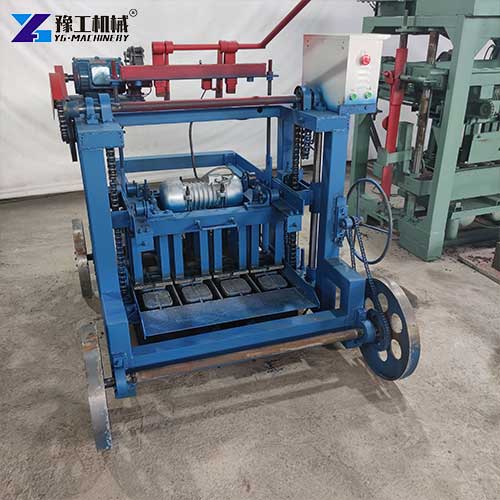
YG series semi-auto brick making machine offers four models with 35-second molding cycles and outputs from 15,000 to 20,000 standard bricks per shift. Every model requires only 2-3 operators and weighs 750- 830 kg. For American contractors looking for a concrete brick making machine that fits a modest budget while delivering commercial-grade output, the YG series provides a practical, proven solution. This industrial brick making machine is designed for block yards, landscaping suppliers, and small to medium-sized construction firms. Whether you need brick manufacturing equipment for a new business or an upgrade from manual production, the YG series has a model matched to your requirements.
Semi Auto Brick Making Machine Technical Parameters:
| Model Features | YG4-35A | YG4-35A (Hopper) | YG4-35B | YG4-35B (Hopper) | YG4-40A | YG4-40A (Hopper) |
| Molding Cycle | 35s | 35s | 35s | 35s | 35s | 35s |
| Power (kW) | 4.8 | 4.8 | 6.3 | 6.3 | 7.5 | 7.5 |
| Standard Bricks/Shift | 15,000 | 20,000 | 15,000 | 20,000 | 20,000 | 24,000 |
| Hollow Blocks/Shift | 2,400 | 3,200 | 2,400 | 3,200 | 3,200 | 3,600 |
| Machine Weight | 750kg | 780kg | 800kg | 830kg | 1100kg | 1150kg |
| Operators Needed | 2-3 | 2-3 | 2-3 | 2-3 | 2-3 | 2-3 |
Case One: USA Small‑Scale Independent Block Producer
Client Background :
This USA private‑owned block business supplies building blocks for local small‑scale construction and residential build projects. The business runs on moderate, fluctuating order volumes. They previously relied on manual block moulds. Manual labour created inconsistent block quality, and output was capped well below their growing order demand. Their workshop has limited floor space, and they employ a small local crew.
Core Client Requirements :
- Fit within compact workshop footprint, avoid extra‑large heavy‑duty industrial frames
- Run with 2‑3 on‑site operators, matching their current available staffing
- Produce standard solid bricks, plus hollow blocks for residential wall builds
- Molding cycle must support steady shift output, target 15,000 standard bricks per working shift
- Work with locally accessible raw materials: sand, stone powder and cement
- Simple mechanical design; local mechanics can complete routine maintenance
YG Matching Solution :
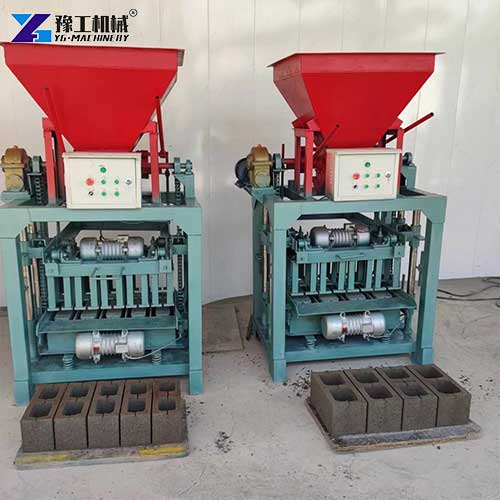
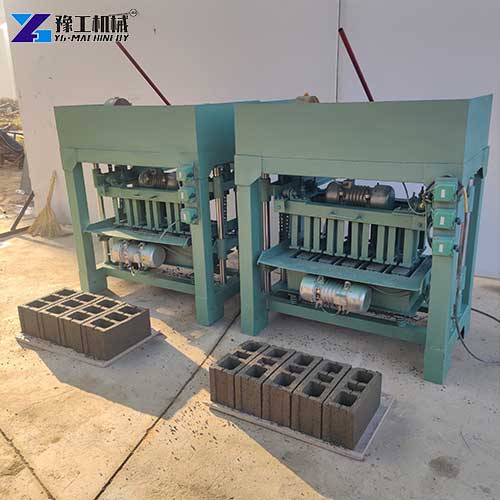
YG recommended the YG4‑35A semi-auto brick making machine. Weighing 750 kg at 4.8 kW, it features a fixed 35‑second molding cycle, outputting 15,000 standard bricks or 2400 hollow blocks per shift. Just 2‑3 operators handle the full workflow with no complex automation infrastructure. On‑site assembly and testing finished in three days. Operators swap moulds to produce solid bricks and hollow blocks, and the machine adapts to local sand‑cement mixes. The customer skipped the hopper variant to stick with manual batch feeding.
Specific Client Feedback:
After weeks‑long continuous runs, the customer provided field feedback. The 35s molding cycle stays stable with correctly conditioned raw mixes. Block dimension accuracy improves greatly versus manual molds. Routine maintenance requires no specialist technicians. Without a hopper, manual feeding restricts daily output. The customer may upgrade to the hopper‑fitted model later for higher shift throughput. For their current order demands, this semi-auto brick making machine fulfils key production needs.


Case Two: USA Mid‑Size Building Material Supplier
Client Background :
This USA private building‑material supplier serves local contractors. They supply hollow blocks alongside standard bricks for small commercial builds. They receive larger bulk orders from local contractors, and they want to raise output without jumping all the way to full automatic production lines. And they have dedicated floor space inside their yard, and their team can assign 2‑3 staff for block production tasks.
Core Client Requirements :
- Lift shift‑time output above basic entry‑level semi‑automatic units
- Manufacture both solid bricks and high volumes of hollow blocks
- Integrate hopper feeding to reduce repeated manual material loading work
- Operate with their existing crew of 2‑3 workers
- Maintain stable 35‑second cycle time for consistent block output
- Accept raw mixes that contain mineral slag alongside sand and cement
YG Matching Solution:
YG proposed YG4‑35A (Hopper), a semi-auto brick-making machine fitted with a feeding hopper. This model weighs 780 kg, uses 4.8 kW power and holds the same 35‑second molding cycle. The integrated hopper lifts standard brick output up to 20,000 bricks per shift and hollow block production to 3200 hollow blocks per shift. Assembly and operational commissioning wrapped up within three working days. The hopper reduces repetitive manual loading work for the on‑site crew. Operators adjust material ratios to incorporate locally available mineral slag, alongside sand and cement. Mould swaps allow fast transitions between solid brick and hollow block production runs. This concrete brick making machine gives them extra shift capacity to fulfil bulk contractor orders.
Specific Client Feedback :
After multiple production batches, the supplier shared field insights. The hopper reduces operator physical labour for steady shift‑long workflows. Properly proportioned slag‑sand‑cement mixes deliver consistent block quality. Oversized particles disrupt hopper flow, so aggregates require pre‑screening. This industrial brick making machine fits their covered yard, eliminating the large footprint needed for fully automatic brick manufacturing equipment. Its simple mechanical design enables fast onboarding for new operators.

Common Operational Missteps Seen In Semi‑Auto Brick Shop Floor Settings
These are practical pitfalls observed across real deployments, not generic marketing bullet points.
- Skip mould maintenance: Moulds wear gradually with repeated pressing. Worn moulds produce blocks with uneven dimensions. Simple periodic inspection prevents quality drift.
- Ignore moisture calibration: Too wet mixes create deformed blocks; overly dry mixes reduce block compaction strength. Operators should test mix moisture at the start of each work shift.
- Overlook curing requirements: This equipment produces no‑kiln blocks. Pressing completes only part of the process. Proper air‑curing time remains critical to achieve target block strength. Machine output cannot compensate for insufficient curing.
- Expect full‑auto results from semi‑auto hardware: A semi-auto brick making machine still needs manual input for material transport, finished block removal and mould swaps. It cuts labour demand, but it does not eliminate operator involvement.
Semi Auto Brick Making Machine For Sale
These two independent USA case studies demonstrate how a semi-auto brick making machine serves distinct business profiles. The base model works well for small‑volume producers with fluctuating orders. The hopper‑equipped variant boosts throughput for suppliers handling larger contractor bulk orders. All semi‑auto models carry clear operating boundaries around staffing, raw‑material preparation and achievable real‑world shift output.
Before purchasing brick manufacturing equipment, clarify your primary block types, average order size, available on‑site labour and raw‑material conditions. If you evaluate a concrete brick making machine or an industrial brick making machine for your facility, share your project parameters. Get targeted model guidance aligned to your actual shop‑floor working conditions.