
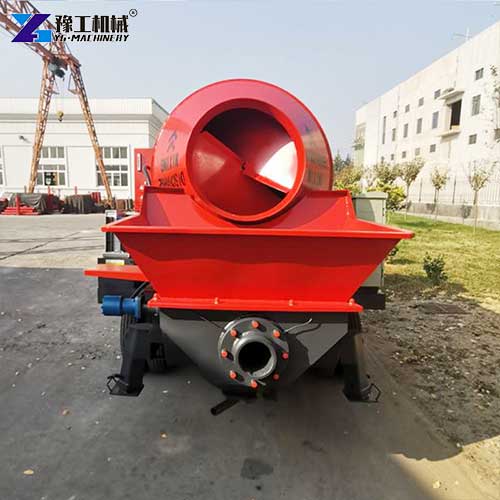
Every construction site needs concrete. Every job site faces the same question: how to get it mixed, moved, and placed efficiently. Traditional methods require a separate mixer and a separate pump—two machines, two operators, two sets of coordination challenges. A concrete mixer with pump machine eliminates that complexity. It integrates concrete mixing and high-pressure pumping into a single mobile unit. One machine takes raw materials at one end and delivers ready-to-place concrete at the other.
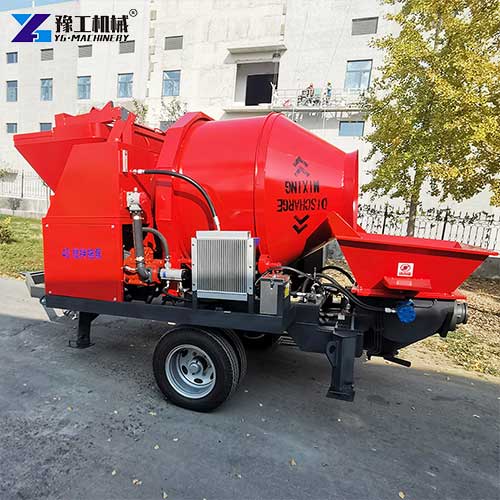
The YG series concrete mixer with pump machine offers two models covering delivery volumes from 20 to 40 m³/h. Every model features a fully integrated mixing drum and high-pressure pumping system on a single chassis. If you are looking for a portable concrete mixer with pump that handles everything from rural construction to industrial slabs, the YG series delivers proven performance. This trailer concrete mixer with pump is designed for road pouring, roof casting, and general construction.
Concrete Mixer with Pump Machine Parameters:
| Model | YG-350 | YG-550 |
| Theoretical delivery volume | 20-30M3/h | 40M3/h |
| Bone particle diameter | 0.5-40mm | 20-40mm |
| Greatest pressure | 20mpa | 20mpa |
| Bore*Stroke | 180*1000mm | 200*1110mm |
| Motor Power | 45kw | 55kw |
| Oil pump power | 100(column)L/S | 140(column)L/S |
| Delivery pipe | 125mm | 125mm |
| Genset power | 150kw | 150kw |
| Machine size | 6100*2000*2700mm | 6200*2000*2700mm |
| Weight | 5500kg | 6500kg |

Advantages of Concrete Mixer with Pump Machine
- Integrated workflow: Mixing and pumping work in sync, with overall working efficiency 4 to 6 times higher than traditional stationary mixer setups.
- Fully automatic control: One operator can manage the entire feeding, mixing and pumping process, reducing on-site labor demand.
- Compact footprint: The single-unit design takes far less space than separate mixer and pump combinations, suitable for narrow construction sites.
- Reliable drum mixing: A drum concrete mixer with pump delivers uniform concrete consistency, which reduces pipeline clogging risk during pumping.
How Integrated Design Fixes Pain Points Of Separate Mixer And Pump Setups
Most small and mid-sized construction teams initially run separate mixers and pumps, but this split setup creates four recurring costly problems that this integrated equipment directly resolves.
1. Material waste and pouring interruption from manual transfer
With separate machines, workers must move mixed concrete from the mixer to the pump hopper manually or with wheelbarrows. This causes material spillage, temperature loss and pouring gaps that can create cold joints in structural concrete. A trailer concrete mixer with pump feeds mixed concrete directly from the drum into the pumping hopper, with no intermediate transfer. This eliminates spillage waste and maintains continuous pouring rhythm for uninterrupted structural casting.
2. Excessive on-site space occupation
Separate mixer and pump units each require their own operating area, plus extra space for transfer paths between them. This makes them impractical for narrow urban sites, indoor renovation work and tight village construction lots. The integrated single-frame design cuts required working space by nearly half, so the equipment can operate normally even in confined construction areas with limited room for maneuvering.
3. High labor and supervision cost
Split setups require dedicated operators for the mixer and the pump separately, plus additional workers for material transfer. This raises daily labor costs and creates more points for human error. The fully automatic control system on this unit lets one operator monitor the full workflow, which reduces staffing requirements and lowers overall project labor expense.
4. Slow relocation between job sites
Moving two separate pieces of equipment requires two transport trips, plus separate disassembly and reassembly work at each new site. This wastes valuable working hours for teams serving multiple scattered projects. A drum concrete mixer with pump on a trailer chassis moves as one complete unit, with no disassembly needed between jobs. Teams can relocate to a new site and restart pouring in a fraction of the time required for split equipment.


5 FAQs About Concrete Mixer with Pump Machine
A: YG-350 handles aggregate from 0.5mm to 40mm for flexible material adaptability; YG-550 works with 20mm to 40mm aggregate for high-grade concrete mixes.
A: Yes, both configurations reserve a matching interface for a 150 kW genset to support construction locations without stable grid power access.
A: Hourly output, motor power and cylinder bore stroke form the main gaps; pick YG-350 for scattered small jobs and YG-550 for large volume continuous pouring demands.
A: The YG-350 delivers 20-30 m³/h. The YG-550 delivers 40 m³/h. The actual output depends on the concrete mix, pumping distance, and site conditions.
A: Both models use a 125mm delivery pipe—the industry standard for medium to large concrete pumps.


The YG series delivers two models covering delivery volumes from 20 to 40 m³/h. Every model features an integrated mixing drum and high-pressure pumping system on a single chassis.
If you need a concrete mixer with pump machine that delivers efficient, continuous concrete placement, the YG series provides proven performance. Contact us with your project requirements—output needed, site conditions, and pour volume. We will recommend the right portable concrete mixer with pump for your operation. Get a free quote today.