Walk-behind drum road rollers and ride-on drum road rollers are the two main types of equipment for small and medium-sized compaction projects, with significant differences in weight, vibration force, and operating efficiency. Walk-behind rollers are compact and flexible, suitable for narrow areas and corners; ride-on rollers offer greater compaction depth and speed, suitable for large-area operations. YG’s full series of rollers covers both models, suitable for municipal repairs, roadbed backfilling, asphalt paving, overseas infrastructure projects, and other scenarios. Selecting the right model can significantly reduce construction costs and improve acceptance rates. For procurement needs, please consult for parameter quotes and working condition matching solutions.
Road Roller Compactor Parameter
| Model | YG-600S | YG-600D | YG-850 | YG-880 |
| Type | Walk-behind | Walk-behind | Ride-on | Ride-on |
| Drum number | 1 | 2 | 2 | 2 |
| Engine power | 5.5Hp | 6.0Hp | 6.0Hp | 25Hp |
| Walking speed | 2.4km/h | 0-4km/h | 0-4km/h | 0-5km/h |
| Walking type | Two-side | Two-side | Two-side | Two-side |
| Drive Type | Hydraulic | Hydraulic | Diesel | Hydraulic |
| Drum size | 426*600 | 426*600 | 580*700 | 800*850 |
| Vibrate force | 15KN | 25KN | 35KN | 50KN |
| Climbing ability | 25% | 30% | 30% | 30% |
| Weight | 330kg | 550kg | 750kg | 1000kg |
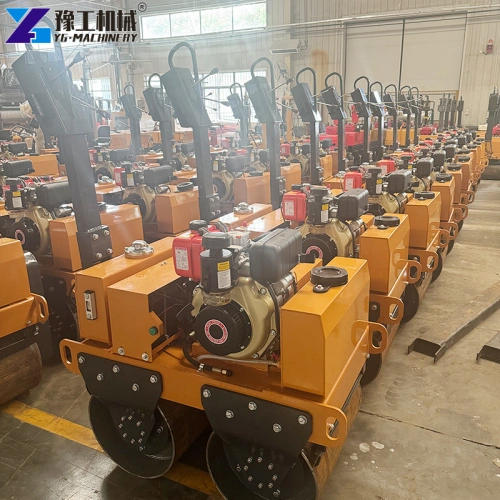
Comprehensive Comparison of Core Hardware Performance
1. Machine Weight and Compaction Capacity
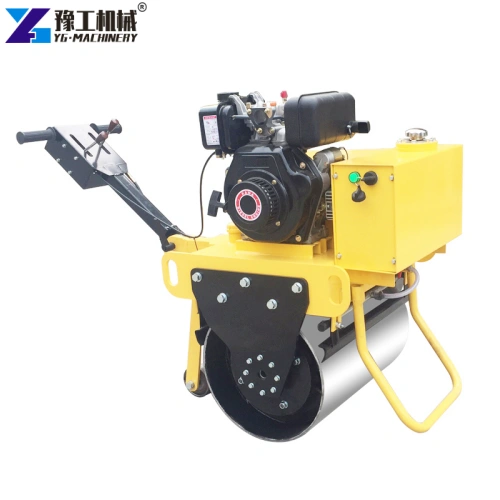
- The weight of walk-behind drum road rollers is mostly between 300 and 600kg. The YG-600S walk-behind single-drum road roller weighs 330kg and has a maximum vibration force of 15KN. The YG600D walk-behind double-drum road roller weighs 550kg and has a maximum vibration force of 25KN.
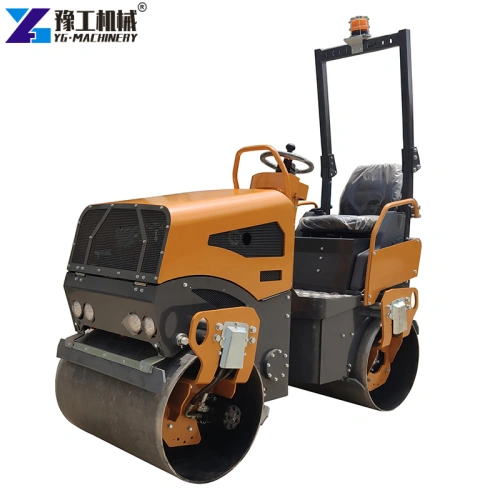
- Ride-on drum road rollers weigh 600–1000 kg; the YG850 double-drum roller weighs 750 kg and has a vibration force of 35 kN; the YG880 fully hydraulic ride-on roller weighs 1000 kg and has a vibration force of 50 kN. They consistently achieve 95% national standard compaction density for deep subgrades and thick backfill, with a load-bearing capacity far exceeding that of walk-behind models.
2. Travel Speed and Work Efficiency
- Walk-behind drum road rollers rely on manual pushing, with a travel speed of 0–4 km/h. A single operator can effectively compact approximately 800–1500 m² per day, resulting in significant labor consumption during prolonged operation.
- Ride-on drum road rollers are equipped with a hydraulic travel system, allowing speeds of 0–5 km/h. With uniform machine speed, they can cover 2500–5000 m² per day, increasing efficiency for large-area projects by more than three times and significantly reducing worker fatigue.
3. Machine Size and Maneuverability
- The walk-behind drum road roller has a compact overall size and no cab protrusion, allowing free passage through areas less than 1 meter wide, such as manholes, pipe trenches, wall gaps, and narrow alleys in residential areas. Repair projects that cannot be handled by large equipment can only be completed using the walk-behind roller.
- The ride-on drum road roller is larger and requires more turning space. Its performance is fully realized in open areas, main roads, and parking lots. In narrow corners, the walk-behind equipment is still needed for finishing.
4. Power and Working Condition Adaptability
Both are equipped with air-cooled fuel engines, and all YG models come standard with dustproof and heat dissipation components. The walk-behind roller has lower power output and a lower load limit for continuous high-temperature, long-term operation, making it suitable for intermittent repairs. The ride-on roller has ample power reserves and a reinforced heat dissipation structure, making it suitable for continuous all-weather construction in high-temperature and dusty regions such as Nigeria and Southeast Asia, and offering greater stability for long-distance relocation.
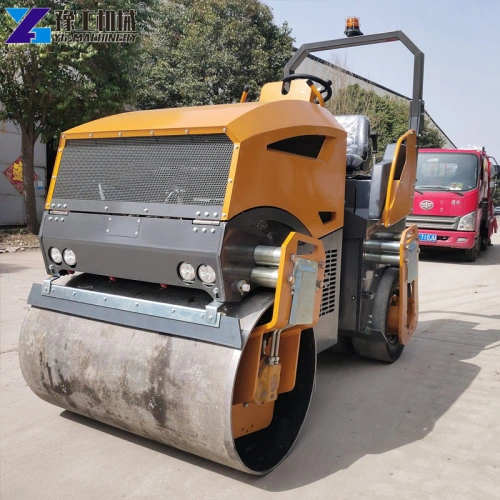
Walk-behind vs. Ride-on Rollers: Operating Costs and Operational Difficulty
- Fuel Consumption and Maintenance: Walk-behind rollers have lower fuel consumption per operation due to fewer parts, a simpler structure, and lower filter and belt replacement costs. Ride-on rollers experience higher oil and hydraulic fluid consumption, but their modular parts offer greater versatility, and YG original parts are available globally, resulting in shorter replenishment cycles for overseas customers.
- Operational Difficulty: Walk-behind rollers rely on a handle for steering, making them simple and easy to learn; even novice operators can operate them in half an hour. Ride-on rollers feature a steering wheel and vibration adjustment settings, requiring only simple training, and are suitable for long-term, dedicated operation.
Selection Criteria for Drum Road Rollers in Different Scenarios
Scenarios for Walk-behind Drum Road Rollers (YG-600S/YG-600D):
- Municipal road pothole repair, sidewalk renovation, and compaction around manhole covers;
- Underground pipe trenches, retaining wall gaps, and narrow spaces such as courtyard paths;
- Small-scale projects, temporary repairs, and individual contractors with limited budgets;
- As auxiliary equipment, used in conjunction with ride-on drum road rollers for finishing touches.
Scenarios for Ride-on Drum Road Rollers (YG-850/YG-880):
- Rural road reconstruction and expansion, and asphalt paving and compaction of urban main roads;
- Leveling and compaction of large areas such as parking lots, storage yards, and playgrounds;
- Engineering rental companies and overseas infrastructure contractors seeking high workloads;
- Thick subgrades and gravel backfilling, with strict acceptance requirements for deep compaction.
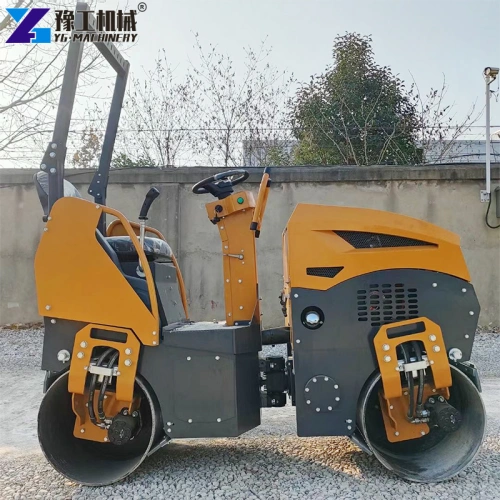
YG Road Roller Combination Procurement Plan (High-Performance Package)
For most medium-sized projects, the optimal solution is a YG850 double-drum roller for large-area construction, paired with a YG600D hand-held roller for edge and corner work. The total cost of the entire set is controllable and covers all construction procedures. This combination is frequently used by overseas clients in Nigeria and other countries, ensuring both speed and quality on main roads while solving the challenges of narrow streets and alleys. The complete set includes English manuals, a large quantity of spare parts, and remote technical guidance, making it suitable for overseas maintenance conditions.
YG Drum Road Roller Application and Customer Groups
1. Core Application Scenarios
The entire YG roller series is designed for small to medium-sized precision compaction operations, with highly precise application scenarios: municipal road repair, residential courtyard paving, asphalt compaction of sidewalks, trench backfilling, parking lot leveling, playground construction, rural road renovation, small infrastructure sites, and landscaping foundation compaction. It is particularly adept at working in narrow spaces and corner areas where large rollers cannot access.
2. Suitable Customer Groups
- Municipal engineering and road/bridge construction contractors for routine road maintenance and minor repairs.
- Small and medium-sized infrastructure companies for routine construction on small and medium-sized sites.
- Equipment rental companies with low failure rates, high resale values, and fast return on investment.
- Individual construction workers and landscaping teams with lightweight, easy-to-operate equipment and a low purchase threshold.
Conclusion
There is no absolutely better drum road roller; matching the construction area, site width, compaction thickness, and budget is key. For small-area, narrow-zone repairs, the YG-600D is the preferred choice due to its low cost, flexibility, and ease of use. For large-area subgrade and asphalt engineering, the YG-850 and YG880 are the preferred options, maximizing efficiency and compaction strength. For simultaneous construction in multiple scenarios, YG can provide customized equipment configurations and pricing plans based on project scale.