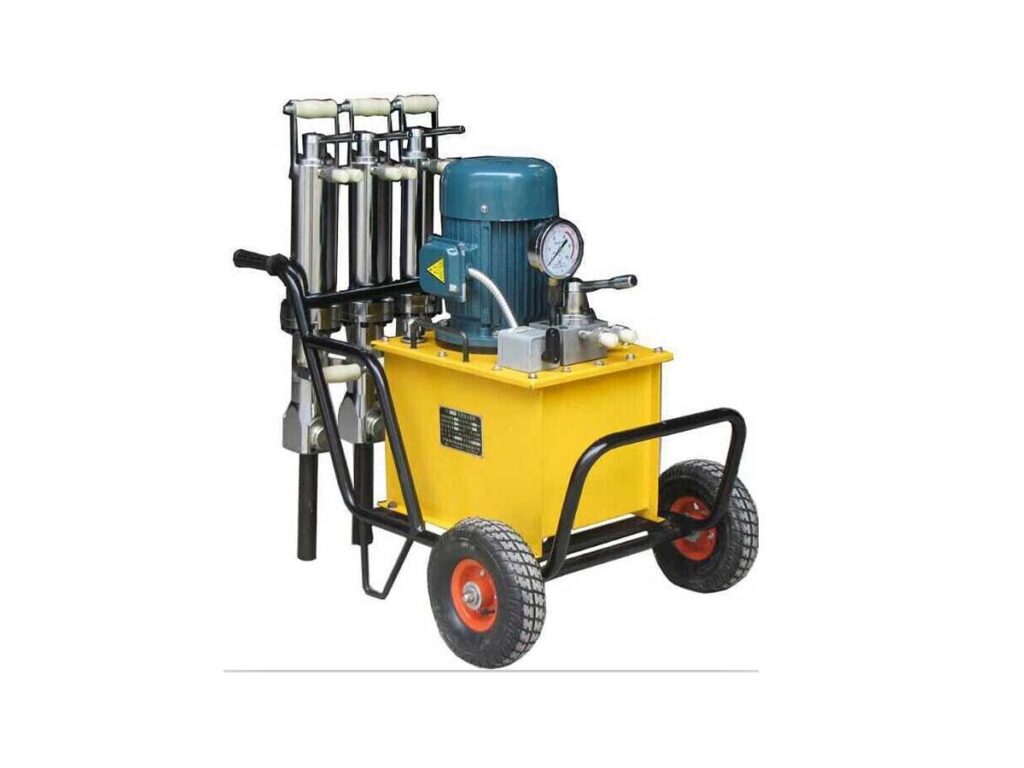
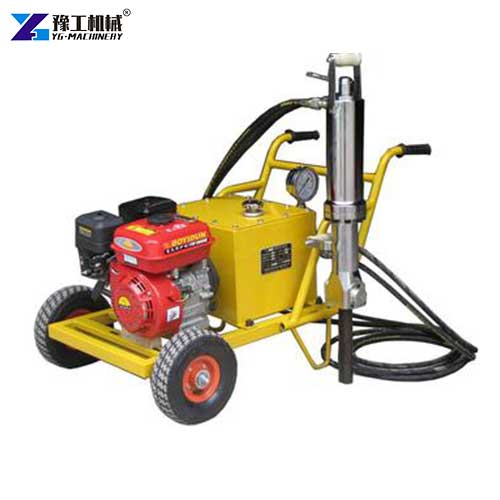
A rock splitter machine breaks hard material using hydraulic pressure applied from inside a pre-drilled hole. You drill a hole into rock or concrete, insert the wedge assembly, and activate the hydraulic power unit. The wedge expands outward, creating a clean, controlled crack that follows the direction you set. This approach differs fundamentally from impact-based methods. Instead of hammering away at the surface, a hydraulic splitter for rock works from the inside out. The result is a predictable split with clean edges, minimal noise, and zero vibration. Contractors use these machines for everything from quarrying stone to demolishing concrete foundations.
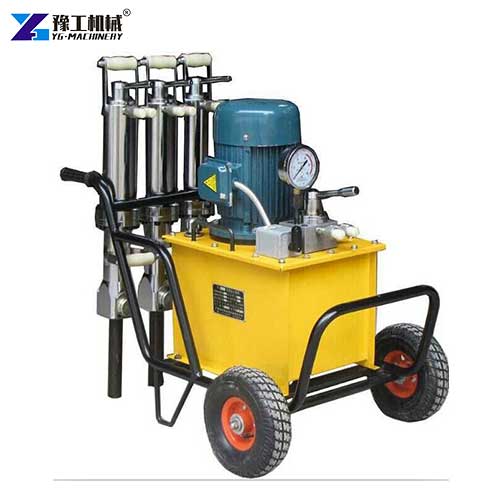
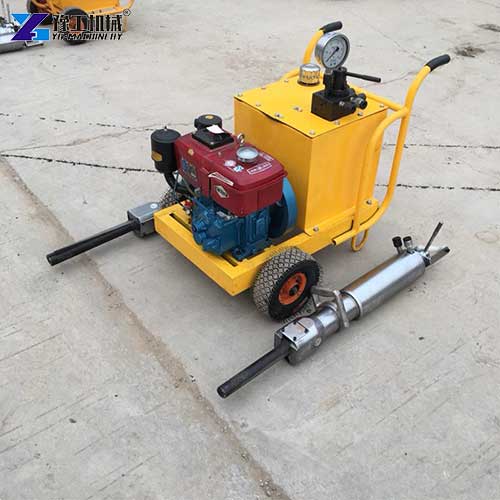
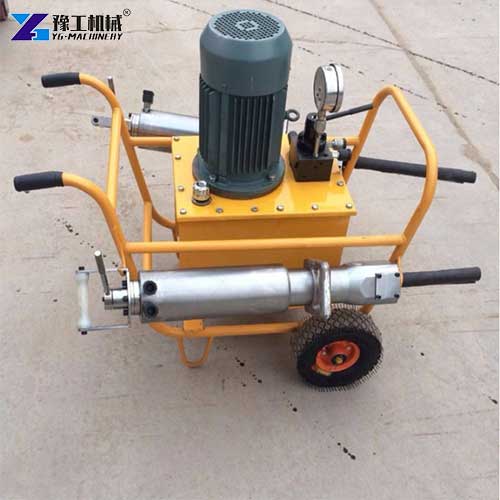
The rock splitter machine consists of three main parts: a power unit that generates hydraulic pressure, high-pressure hoses that carry the fluid, and one or more splitting guns that do the actual cracking. The power unit comes in either electric or diesel versions, depending on where you need to work. Operation is straightforward — most crews learn the basics quickly and develop efficient working rhythms with experience.
Rock Splitter Machine Parameters
| Model | YG-250 | YG-350 | YG-450 |
| Wedge Length(mm) | 250mm | 350mm | 450mm |
| Piston Stroke(mm) | 90/220mm | 90/220mm | 90/220mm |
| Drilling Depth(mm) | >500mm | >700mm | >900mm |
| Punching Diameter(mm) | 42mm | 46mm | 46mm |
| Crack Width(mm) | 10-20mm | 10-20mm | 10-20mm |
| Cleavage Time(s) | 10-15/s | 10-15/s | 10-15/s |
| Splitting Force(T) | 500t | 800t | 800t |
| Weight(kg) | 240kg | 250kg | 260kg |


Rock Splitter Machine Power: Electric vs. Diesel Options
The power source you choose affects where you can work, how you maintain the equipment, and what your operating costs look like. Both options deliver the same splitting performance — the difference is in how they generate the hydraulic pressure.
Electric power units run on grid electricity or a generator. They produce zero exhaust emissions, which makes them the clear choice for indoor work, underground projects, and poorly ventilated areas. They also tend to be quieter than diesel units and require less day-to-day maintenance — no fuel filters, no oil changes for the engine, no exhaust system to worry about. The main limitation is that you need a reliable power source nearby.
Diesel power units offer full portability. You can take them anywhere, even remote sites with no electricity. They are self-contained and ready to work as soon as you fill the fuel tank. For outdoor projects, quarry operations, and job sites where power is not available, diesel is the practical choice. The trade-offs are exhaust emissions, higher maintenance requirements, and the need for a steady supply of fuel.
How to decide:
- Work mostly indoors or in urban areas with power access → electric is probably better
- Work on remote outdoor sites or move frequently between locations → diesel makes more sense
- Need zero emissions for regulatory or safety reasons → electric is the only option
- Value simplicity and lower maintenance → electric wins
- Need maximum portability above all else → diesel is the way to go

Rock Splitter Machine Maintenance for Longer Service Life
Good maintenance keeps your equipment productive and reduces your cost per hour of operation. A hydraulic splitter for rock has relatively few moving parts, but the parts that do move work under high pressure and need proper care.
Daily checks take just a few minutes and prevent most problems:
- Check hydraulic fluid level and top up if needed
- Inspect all hoses for cuts, abrasions, bulges, or leaks
- Look at the wedge mechanism for signs of wear or damage
- Clean any dirt or debris from the splitting gun before and after use
- Verify that all connections are tight and secure
Weekly maintenance goes a bit deeper:
- Inspect the power unit for any signs of hydraulic fluid leaks
- Check the condition of hydraulic filters and replace them according to the schedule
- For diesel units, check the engine oil level and the fuel filter condition
- For electric units, inspect power cables and connections for damage
- Test the pressure gauge to make sure it reads correctly
Wear part replacement follows a predictable schedule:
- Wedge components wear over time, especially when working with abrasive rock. Replace them when you notice the splitting force dropping or when the wedge shows visible wear.
- Hydraulic seals eventually harden and leak. Replace them at the first sign of seepage to prevent more serious damage and pressure loss.
- Hoses degrade with age and use. Replace any hose that shows cracking, bulging, or abrasion before it fails.
Storage practices also affect service life:
- Store equipment in a clean, dry area when not in use
- Relieve hydraulic pressure before storing for extended periods
- Protect hoses from sharp edges, sunlight, and extreme temperatures
- Keep the splitting gun with the wedge retracted and protected

6 Frequently Asked Questions About the Rock Splitter Machine
A: It depends mainly on what material you work with and how deep you can drill. If you mostly handle concrete and moderate rock with drilling depths around 500mm, the smaller model works well. For harder stone and deeper drilling up to 900mm, the larger models deliver more force and deeper splitting. Share your typical project details with the supplier and they can recommend the right fit.
A: Both produce the same splitting force. Electric units run on grid power, produce zero emissions, and require less maintenance. Diesel units are fully portable and work anywhere, but they have exhaust emissions and higher maintenance needs. Choose based on where you work most often — indoor and urban sites favor electric, while remote outdoor work favors diesel.
A: It depends on the power unit size and your setup. Standard configurations run one or two guns, but you can often add more if your power unit has the capacity. Running multiple guns lets you work several holes at once for faster production on larger projects.
A: Daily checks include fluid levels, hose inspection, and general cleaning. Weekly tasks cover filter checks and deeper inspection. Wear parts — wedges, seals, and hoses — need replacement on a schedule that depends on how much you use the equipment and what material you work with. Overall maintenance is relatively simple compared to many other types of construction equipment.
You can purchase directly from manufacturers like YG Machinery that specialize in hydraulic construction equipment. Buying from the manufacturer gives you access to technical support, replacement parts, and help selecting the right model for your work.
The initial crack is typically 10 to 20mm wide. That is enough to cleanly separate the material. If you need a wider gap — for removing a section or inserting other tools — you can use additional wedges or repeat the splitting process in a different position.
If you are looking at a rock splitter for sale, we help you compare models, understand the specifications, and choose the hydraulic stone splitter that fits your actual work. We also provide parts support and technical guidance after your purchase.