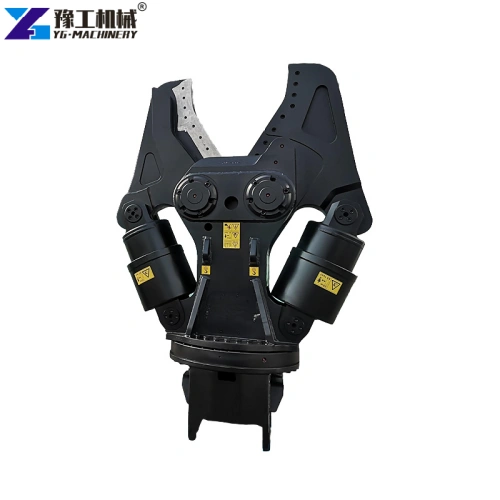
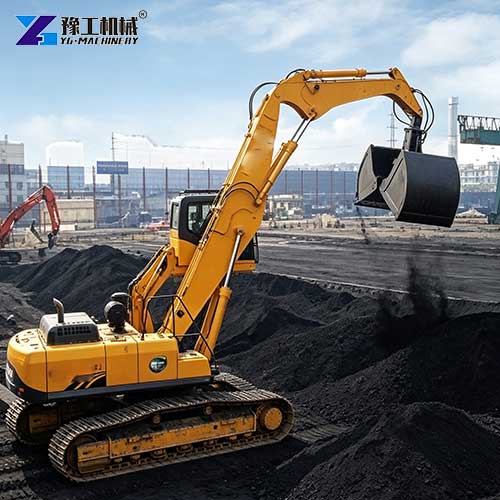
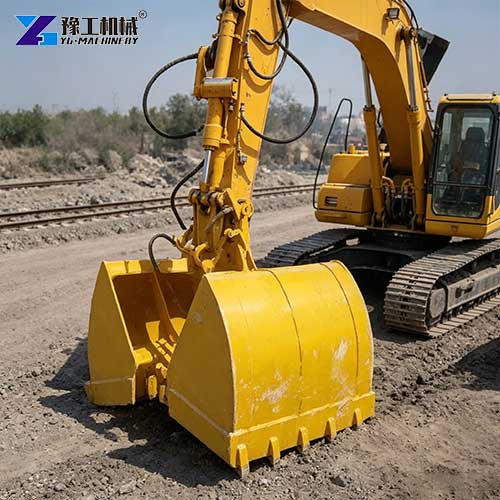
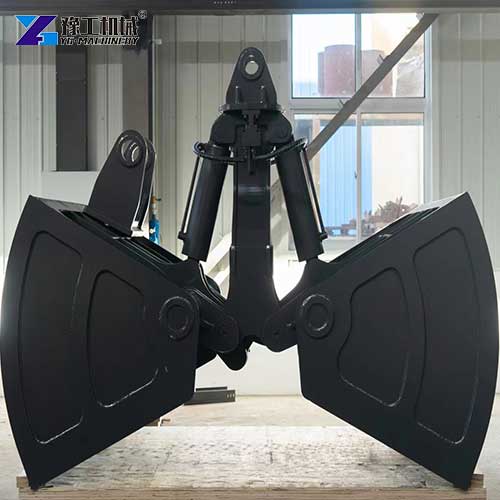
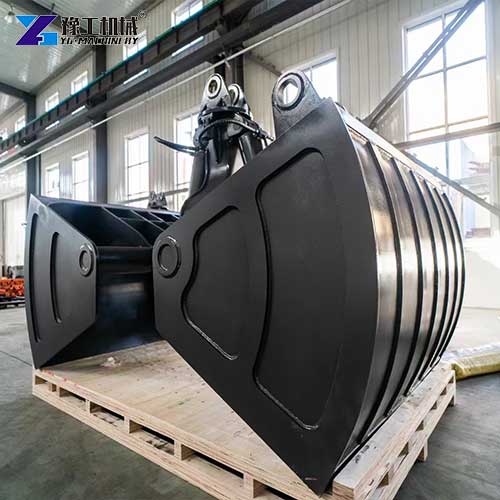
An excavator clamshell bucket grabs and holds what standard buckets spill. Sand, gravel, coal, and demolition debris—it clamps them securely between two hydraulic shells, keeping the load in place until the operator releases it.
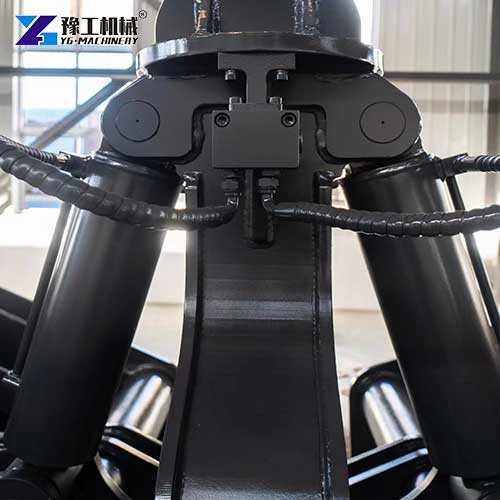
The YG series clamshell grab bucket offers four models covering excavators from 7 to 35 tons. Opening widths range from 1000mm to 2300mm, with working pressures from 180 to 250 bar. Every model features NM500 wear-resistant steel, 42CrMo alloy steel pins with built-in oil passages, and a dual-cylinder linkage design with HALLITE seals. Get a free quote for your clamshell bucket for sale today.
Excavator Clamshell Bucket Technical Specifications:
| Model | YGCS04 | YGCS06 | YGCS08 | YGCS10 |
| Suitable Excavator | 7-11T | 12-18T | 18-25T | 26-35T |
| Weight | 800kg | 1200kg | 2000kg | 2300kg |
| Opening | 1000mm | 1500mm | 2200mm | 2300mm |
| Working Pressure | 180bar | 210bar | 250bar | 250bar |
| Set Up Pressure | 250bar | 290bar | 320bar | 340bar |
| Working Flow | 190 lpm | 210 lpm | 220 lpm | 240 lpm |
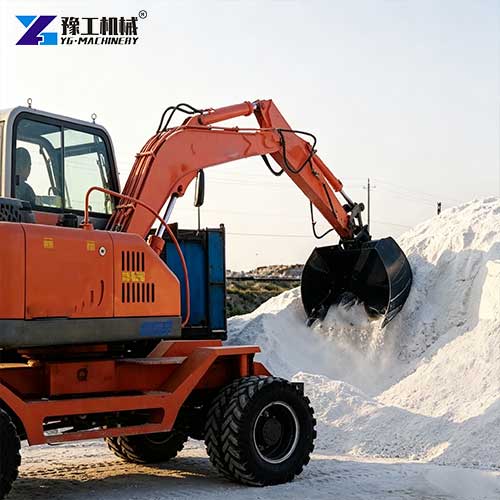
7 Applications of YG Excavator Clamshell Bucket
The excavator clamshell bucket serves a wide range of industries and project types where deep excavation and vertical material lifting are required:
- Foundation pit excavation: The primary application — removing material from deep foundation pits for buildings, underground structures and basements, where standard buckets become inefficient beyond shallow depths.
- Elevator shaft and underground tank digging: Deep, narrow excavations like elevator shafts, underground storage tanks and lift pits, where the confined space prevents standard bucket operation and vertical lifting is the only practical removal method.
- Deep trench and utility excavation: For deep utility trenches — sewer lines, water mains, underground conduit — where trench depth makes standard bucket curling ineffective and the clamshell grab bucket removes material cleanly from the bottom.
- Industrial facility work: Cleaning out settling tanks, sludge pits, storage silos and processing equipment where material must be lifted vertically from confined spaces, with the enclosed shell design preventing spillage in sensitive industrial environments.
- River and marine dredging: Shallow dredging in rivers, canals and marinas, removing sediment and debris from the water bottom. The hydraulic components operate reliably in wet conditions, and the closed shells hold saturated sediment during lifting.
- Demolition and debris removal: Removing fragmented concrete, brick and rock from deep excavations and basement levels on demolition sites, where the heavy-duty construction withstands abrasion and the secure grip prevents material from falling onto workers or structures below.
- Agricultural and biogas facility work: Cleaning out manure pits, silage bunkers and biogas digester tanks, where heavy, wet organic material must be lifted vertically from confined spaces.
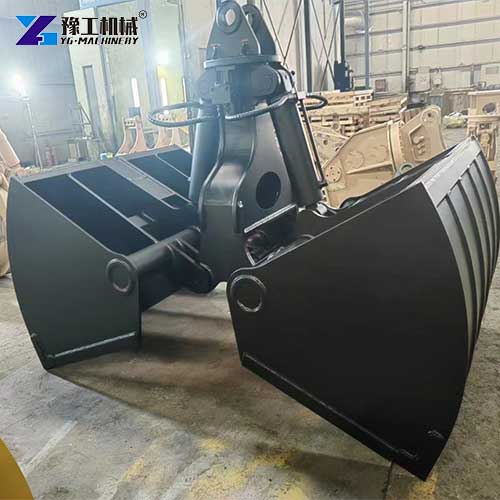
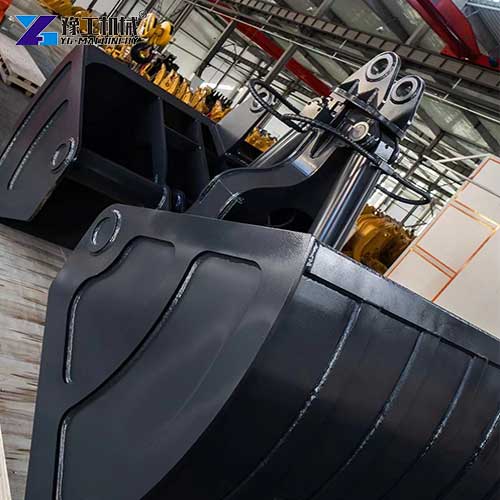
What Can an Excavator Clamshell Bucket Grab and Hold?
The YG series clamshell bucket for sale handles materials that standard buckets struggle with.
- Sand and Gravel. The bucket picks up and transports loose aggregates without spilling. The active clamping action holds the material securely during lifting and swinging.
- Soil and Mud. The bucket excavates and loads wet soil and mud. For dredging and excavation in soft, muddy conditions, the clamshell bucket is the preferred tool.
- Coal and Ore. The hydraulic clamshell bucket loads coal, iron ore, and other bulk minerals. The secure clamping prevents spillage during transport to trucks or conveyors.
- Demolition Debris and Scrap. The bucket handles demolition debris, construction waste, and scrap metal. The opening width accommodates irregular shapes and bulky materials that standard buckets cannot hold.
- Crushed Rock and Aggregate. The bucket loads crushed stone and aggregate for construction applications. The NM500 steel construction withstands the abrasive nature of crushed rock.
- Underwater Sediment. The bucket works underwater, reaching down to extract sediment from riverbeds, harbors, and canals. The dual-shell design allows the bucket to close around the sediment and lift it to the surface.
Clamshell vs Standard Bucket: The Active Grip Advantage
The fundamental difference between an excavator clamshell bucket and a standard bucket is how they hold material.
A standard bucket relies on curling force and gravity. Material sits in the bucket and stays there as long as the bucket remains level. On uneven ground, during lifting, or when swinging, material spills out. Loose, wet, or powdery materials are the hardest to keep in a standard bucket.
A clamshell grab bucket actively clamps the load between two shells. The shells close around the material and hold it securely. The clamping force keeps material in place regardless of the bucket’s angle or movement. Wet sand, fine gravel, and loose debris stay in the bucket until the operator opens the shells to release them.
The result: Less spillage, faster cycles, cleaner job sites, and more material moved per hour. Unlike a standard digging bucket that relies on curling force and gravity to hold material, the grab bucket actively clamps the load between two shells. That means you pick up wet sand and loose gravel without losing half of it on the way to the truck.
5 FAQs About YG Excavator Clamshell Bucket
A: A standard bucket uses curl to scoop and hold material, which spills when lifted vertically from deep pits. A clamshell bucket uses two hinged shells that close around the material, forming an enclosed grip that holds securely during vertical lifting from any depth.
A: Depth is limited by the excavator’s arm reach, not the bucket itself. Standard excavators reach approximately 3 to 8 meters depending on size, and long-reach boom extensions can increase depth significantly.
A: Yes, the enclosed dual-shell design holds wet, muddy and sludgy material securely with minimal leakage. The main consideration is weight — wet material is heavier than dry, so operators must account for the additional load when lifting.
A: Grease the hinge pins regularly, inspect hydraulic cylinders and hoses for leaks, and check cutting edges for wear — replace them when they become too worn to penetrate material. Also inspect the shell structure for cracks after heavy use with rock or concrete debris.
A: The bucket handles sand, gravel, soil, coal, ore, demolition debris, scrap metal, crushed rock, and underwater sediment. The NM500 steel construction resists wear from abrasive materials. The active clamping action holds loose materials that standard buckets spill.