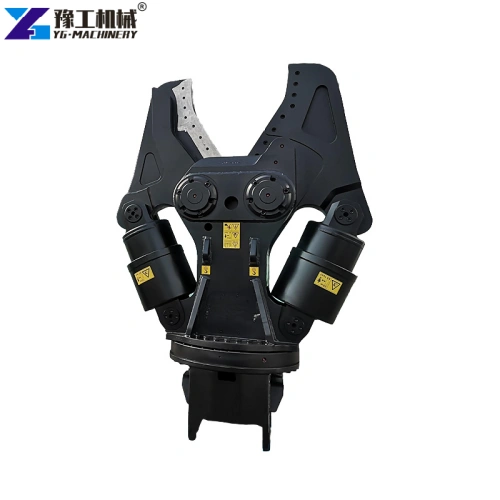


An excavator demolition shear is a powerful cutting attachment that mounts directly to an excavator arm, using the excavator’s auxiliary hydraulic circuit to drive a dual-cylinder cutting mechanism for fast, clean cutting of structural steel, concrete-encased columns, thick plate and scrap metal. Traditional torch cutting is slow, requires fuel and certification, and creates fire hazards from molten slag. Single-cylinder shears lack the force for heavy structural steel, requiring multiple passes that slow production and accelerate blade wear.
The YG hydraulic demolition shears use a dual-cylinder synchronous drive that converts high-pressure hydraulic oil into mechanical thrust, driving a moving blade against a fixed blade to generate tons of cutting force. The lever principle and sharp blade edges deliver fast cold cutting — no heat, no flame, no slag — making it suitable where torch cutting is restricted. The modular blade design allows quick removal, resharpening or replacement, minimizing downtime.
Excavator Demolition Shear Technical Specifications:
| Product | Excavator-mounted hydraulic demolition shear for waste scrap rebar | ||||
| Item | YG-620 | YG-1413 | YG-2200 | YG-2977 | YG-4052 |
| Weight kg | 620 | 1413 | 2200 | 2977 | 4052 |
| Max. Open Size mm | 334.4 | 540 | 500 | 660 | 801 |
| Width mm | 864 | 1175 | 1370 | 1600 | 1700 |
| Height mm | 1521 | 2050 | 2380 | 2600 | 2700 |
| Effective Shear Depth mm | 286 | 348 | 486 | 578 | 736 |
| Rotating Way | 360 collision | 360 hydraulic | |||
| Working Pressure Bar | 235 | 300 | 320 | 320 | 320 |
| Bottom Shear Force T | 81.2 | 138.2 | 171.2 | 330.2 | 387.2 |
| Medium Shear Force T | 50.2 | 80.2 | 100.2 | 189.2 | 218.2 |
| Tip Shear Force T | 32.2 | 53.2 | 75.2 | 127.2 | 147.2 |
| Applied Excavator Weight T | 5-9 | 10-19 | 20-25 | 28-35 | 38-50 |

How Does an Excavator Demolition Shear Work?
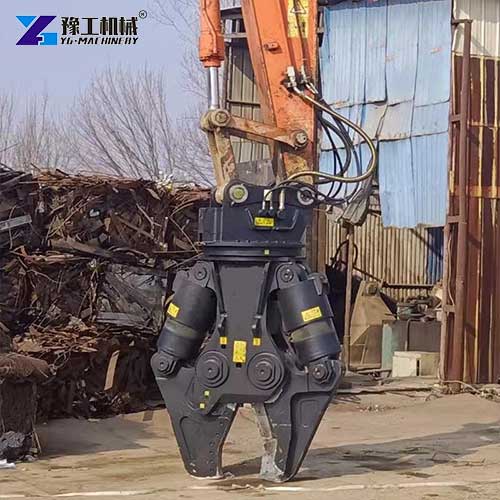
An excavator demolition shear uses hydraulic power to drive two jaws—one moving, one fixed—against each other. The hydraulic cylinder applies force to the moving jaw, which pivots against the fixed jaw, creating a scissor-like cutting action. The shear concentrates this force onto a narrow cutting edge, allowing it to slice through steel that would resist other methods.
The YG hydraulic demolition shears use a dual-cylinder synchronized drive design. The hydraulic system converts high-pressure oil into mechanical force, driving the moving jaw against the fixed jaw to generate hundreds of tons of cutting force. Through leverage and sharp blade edges, the shear achieves rapid cold cutting of hard metal structures.
The key is the leverage ratio. The shear force is highest at the base of the jaws (bottom shear force) and decreases toward the tip. This means the operator positions the material as deep in the jaws as possible for maximum cutting power. For thinner materials or less critical cuts, the tip section provides faster cycling.
6 Features of Excavator Demolition Shear
- Dual-Cylinder Synchronized Drive. Two hydraulic cylinders work together to close the jaws, delivering significantly more force than single-cylinder designs. The YG-4052 generates 387.2 tons of bottom shear force—enough to cut through heavy I-beams and structural steel.
- 360° Rotation for Precision Positioning. All models except the YG-620 feature 360° hydraulic rotation, allowing the operator to position the jaws at any angle without repositioning the excavator. The YG-620 uses 360° collision rotation.
- Modular Blade Design. Each blade can be removed, sharpened, or replaced individually. Blade changes take minutes, not hours, and blades can be turned multiple times before replacement, extending service life and reducing downtime.
- Wide Jaw Opening Range. Jaw openings range from 334mm on the YG-620 to 801mm on the YG-4052, accommodating everything from light rebar to heavy structural steel in a single bite.
- Three Shear Force Ratings. Each excavator shear attachment model delivers bottom, medium, and tip shear forces. Bottom force provides maximum cutting power for heavy steel; tip force provides faster cycling for lighter materials.
- Effective Shear Depth. Effective shear depth ranges from 286mm to 736mm, determining how deep the jaws can close on structural sections and affecting the range of material sizes the shear can handle.

Cutting Strategy For Different Materials
- Structural steel I-beams and H-columns: Position the beam deep in the shear throat where cutting force is highest, and cut perpendicular to the beam axis in one steady closing motion. For beams beyond rated capacity, make partial cuts from both sides rather than forcing a full cut that may stall.
- Concrete-encased steel columns: Use a two-stage approach: first break and strip the concrete around the perimeter, then cut the exposed steel core using the same deep-throat, perpendicular technique. Cutting concrete and steel simultaneously dulls blades faster and may cause binding on aggregate.
- Thick steel plate and sheet piling: Position the plate edge deep in the throat, perpendicular to blade closing direction, and cut in one steady motion — if the shear stalls, release, reposition and retry; never force a stalled shear. For sheet piling, cut each sheet individually from the top, avoiding the interlock joint.
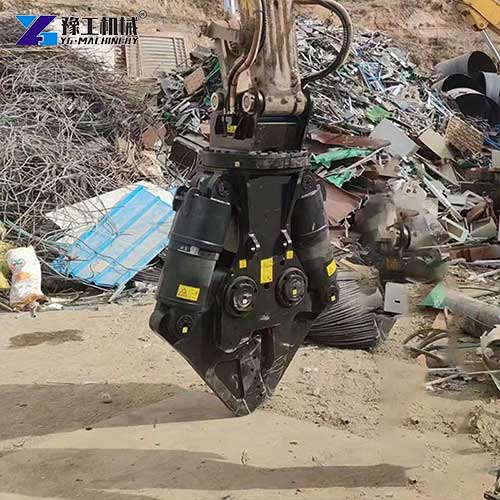
- Scrap car bodies and vehicle hulks: Drain hazardous materials per local regulations first, then systematically section the vehicle — roof and upper body, then floor pan and frame rails, then engine compartment — positioning each section deep in the throat. The cold cutting process eliminates ignition risk from residual fluids.
- Bulk scrap steel and mixed metal piles: Sort by size first, and for small material like rebar or wire, gather multiple pieces into a bundle and cut simultaneously to increase processing rate. Avoid material beyond the shear’s capacity — use the excavator arm to break oversized sections first — and inspect blades periodically, since dirty abrasive scrap accelerates wear.


5 FAQs About YG Excavator Demolition Shear
A: The YG series offers jaw openings from 334mm on the YG-620 to 801mm on the YG-4052. Larger openings accommodate thicker materials and larger structural sections.
A: Bottom shear force ranges from 81.2 tons on the YG-620 to 387.2 tons on the YG-4052. Medium shear force ranges from 50.2 tons to 218.2 tons. Tip shear force ranges from 32.2 tons to 147.2 tons. Higher force models handle thicker and harder materials.
A: The excavator shear attachment cuts structural steel, I-beams, rebar, heavy plate, vehicle frames, ship steel, and reinforced concrete. It is designed for steel—not for concrete crushing or rock breaking.
A: Blade life depends on the material being cut and operating conditions. Harder materials and heavy use shorten blade life. The blades are modular and can be turned multiple times before replacement, extending service life.
A: The excavator shear attachment uses standard excavator mounting pins. The attachment connects to the excavator’s auxiliary hydraulic circuit. Installation takes minutes.
YG Demolition Shear For Sale
The YG excavator demolition shear cuts through I-beams, thick plate and concrete-encased columns in seconds, with dual-cylinder force, cold cutting safety and modular blades that swap in minutes. If your current cutting method is slowing your operation, tell us what you cut and what excavator you run — we will match the right shear and send a direct factory quote. Wear parts and technical support stay available long after purchase. Get a free quote for your small demolition shear for sale today.