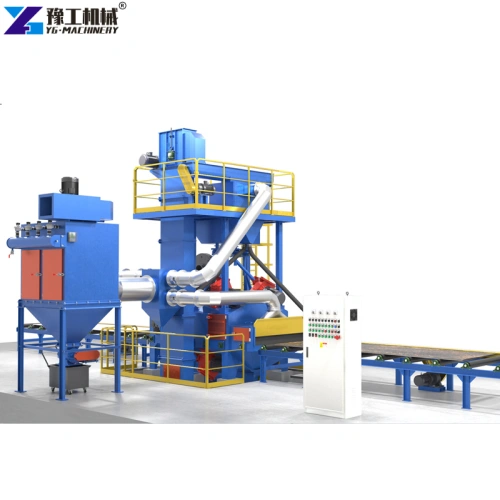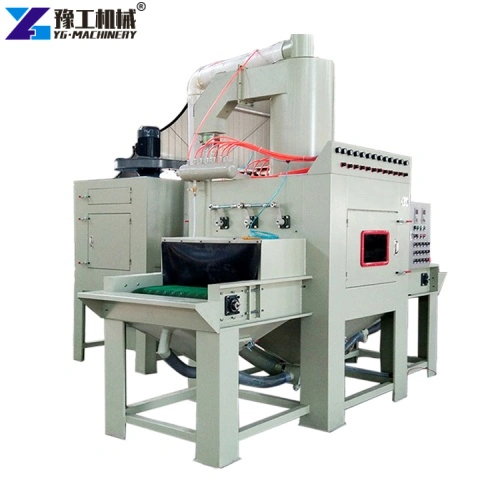


Ever wondered why a perfectly rolled thread outlasts a simple cut thread? While most fabricators know the “what,” few understand the “how” behind the superior performance of thread rolling machines. Unlike subtractive cutting processes that remove material and leave a rough, stress-racked surface, true rolling involves cold forging the material. We compress and reshape the steel fibers, aligning them along the grain. The result is a connection that resists fatigue, corrosion, and vibration far better than its machined counterpart.
Thread Rolling Machines Technical Parameters:
| Model | YGS-40 | YGT-40 | YGA-40 |
| Processing diameter range | 16-40mm | ||
| Thread rolling length | 0-80mm | 0-80mm | 0-100mm |
| Power voltage | 4kw/380v 50hz | 4kw/380v 50hz | 7.5kw/380v 50hz |
| Working efficiency | 15s/forming | 8s/forming | One-touch auto forming |
| Machine weight | 320kg | 350kg | 400kg |
| Machine size | 115*50*106cm | 110*60*130cm | 126*70*106cm |
| Type | Standard type | Upgrade type | Fully automatic type |


6 Advantages of Thread Rolling Machines
- Integrated one-clamping workflow combines rib stripping and thread rolling in a single setup, which removes dimensional deviation from repeated bar repositioning and keeps every finished thread concentric with the rebar shaft.
- Dual thread direction support lets operators produce both right-hand and left-hand threads on one unit, matching diverse coupling design requirements without purchasing separate dedicated machines.
- Cold-rolled non-cutting forming preserves continuous metal fiber flow inside the thread section, so finished joints withstand cyclic vibration loads far better than cut-thread alternatives on bridges and high-rise structures.
- Pure copper motor paired with industrial-grade reducer delivers stable torque output during long continuous batch processing shifts, resisting overheating under heavy daily workloads.
- Standard 380V 50Hz power input fits common industrial power supplies on construction sites worldwide, with no custom voltage conversion hardware required for regular operation.
- Thickened machine body with rubber walking wheels allows crews to relocate the unit between reinforcement working zones quickly without heavy lifting equipment.

Standard, Upgraded, or Fully Automatic – Which One Fits Your Work
YGS-40 – Standard Model
The YGS-40 rebar thread rolling machine is the entry-level model. It takes 15 seconds to form one thread. One operator runs one machine. The operator controls each step: clamping, peeling, rolling, and releasing.
This model suits workshops with moderate thread demand. It works well for small to medium construction projects where the thread volume does not justify a faster machine.
Key specs: 4kW motor, 16-40mm diameter, 0-80mm thread length, 320kg weight.
YGT-40 – Upgraded Model
The YGT-40 reduces cycle time to 8 seconds per thread—nearly twice as fast as the standard model. The difference comes from improved automation within the machine.
The upgraded model also allows one operator to run two machines. While one machine is threading, the operator loads the next bar into the second machine.
Key specs: 4kW motor, 16-40mm diameter, 0-80mm thread length, 350kg weight.
YGA-40 – Fully Automatic Model
The YGA-40 rebar thread rolling machine features one-touch automatic operation. The operator loads the bar and presses a button. The small thread rolling machine completes the entire cycle—clamping, peeling, rolling, and releasing—without further input.
The fully automatic model also offers longer thread length capacity at 100mm, compared to 80mm on the other models.
One operator can run two fully automatic machines with minimal effort.
Key specs: 7.5kW motor, 16-40mm diameter, 0-100mm thread length, 400kg weight.


Daily Pre-Operation Inspection And Standardized Startup Routine
Power and connection check. Before startup, confirm the 380v power cable is intact with no exposed wiring, and verify the grounding connection is secure. Loose power connections cause voltage fluctuation that directly affects thread forming consistency.
Clamping jaw condition check. Inspect clamping jaw surfaces for wear or damage. Worn jaws allow bar slippage during rolling, which creates tilted off-axis threads. Replace jaws at the first sign of significant wear to maintain processing quality.
Rolling die inspection. Check rolling die surfaces for chipping, excessive wear or accumulated concrete residue. Clean dies thoroughly before each shift, because residue buildup creates uneven thread surfaces and accelerates die wear.
Lubrication verification. Confirm that all moving transmission parts have adequate lubrication. Insufficient lubrication increases friction, raises operating temperature and shortens the service life of internal components.
Trial piece verification. Always run one test piece at the start of each shift and inspect thread quality with a ring gauge before starting full batch production. This single step catches parameter drift or die issues before they affect a whole batch of workpieces.
5 FAQs About YG Thread Rolling Machines
A: All three YG thread rolling machines cover a consistent 16-40mm processing diameter range for both round steel and ribbed deformed rebar, matching the most widely used rebar specifications in construction.
A: Yes, compact models retain the full 16-40mm processing diameter range. A smaller footprint does not reduce maximum processing diameter capacity.
A: Standard models require manual operator control for each cycle, while fully automatic variants use one-touch operation to reduce manual workload and extend maximum thread rolling length from 80mm to 100mm.
A: Ordinary civil construction can use the unit independently. Pairing with an upsetting machine is recommended for high-load infrastructure projects to further increase joint tensile strength by processing threads on pre-upset rebar heads.
A: Blade and die life depends on usage frequency and rebar quality. With normal use, the tools last for thousands of cycles. Replacement blades and dies are available.
Thread Rolling Machine For Sale
YG doesn’t build thread rolling machines for showrooms. We build them for guys who get their boots muddy every day. Our units are built with thick steel frames that don’t flex, sealed hydraulic valves that keep out dust and debris, and dies that actually last. We’re not going to hit you with jargon or hide fees—you tell us what rebar you’re using, and we’ll send you a quote with no surprises, a video of your exact machine rolling threads, and a free set of spare die inserts with every order. Get a free quote for your thread rolling machine for sale today.