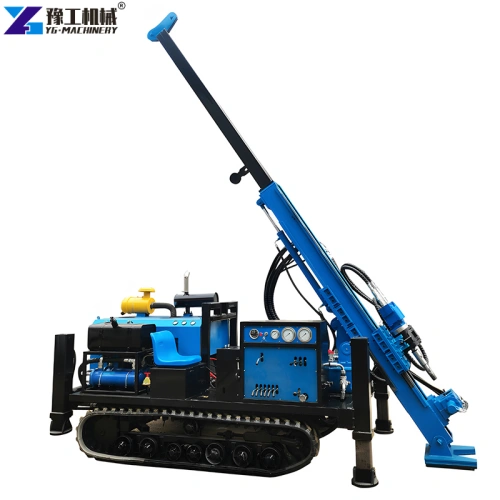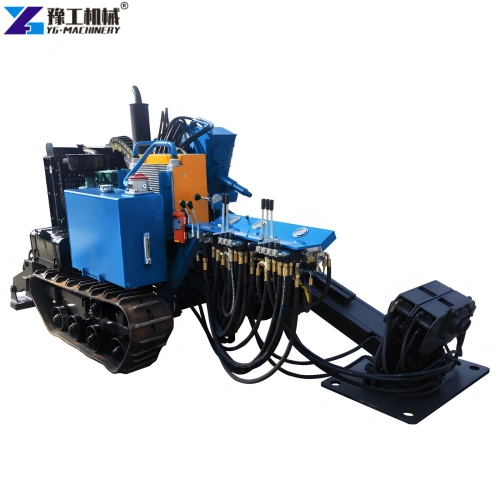
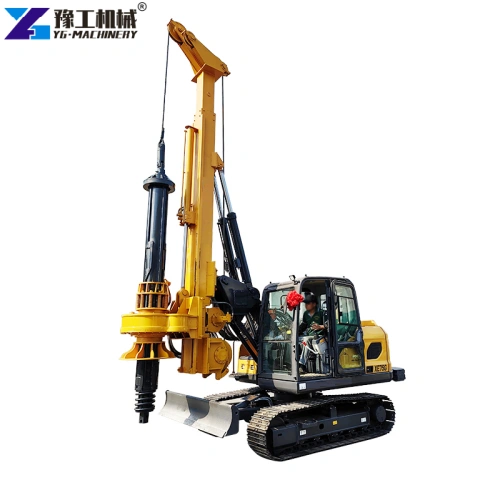
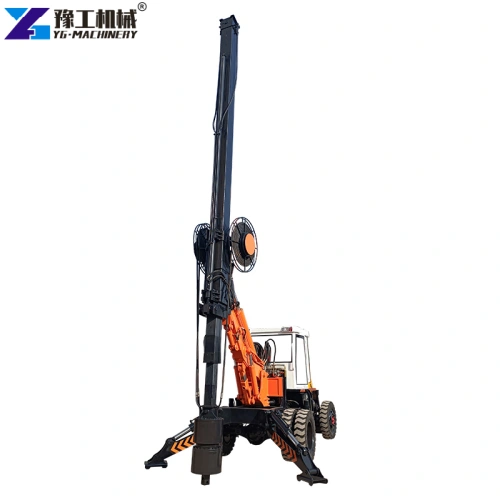
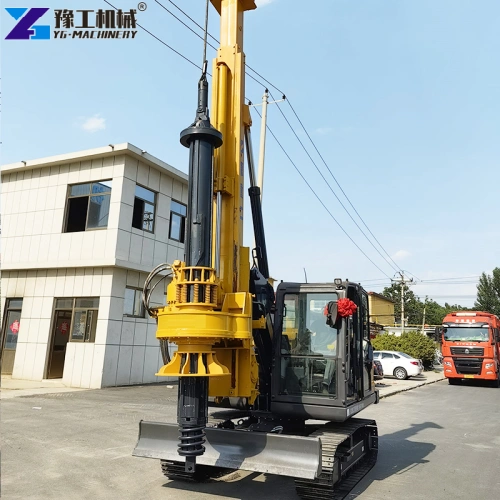
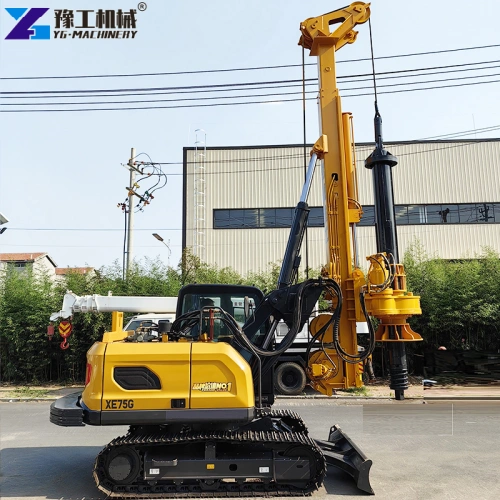
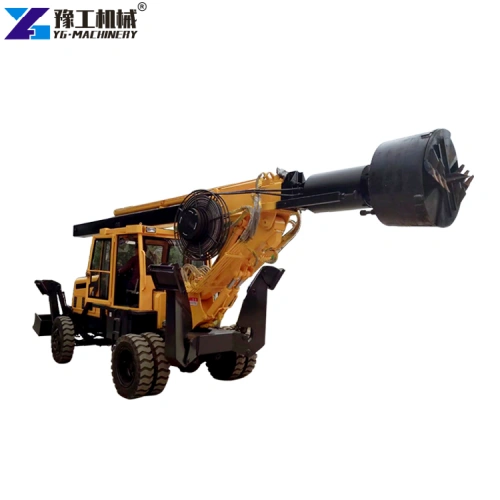
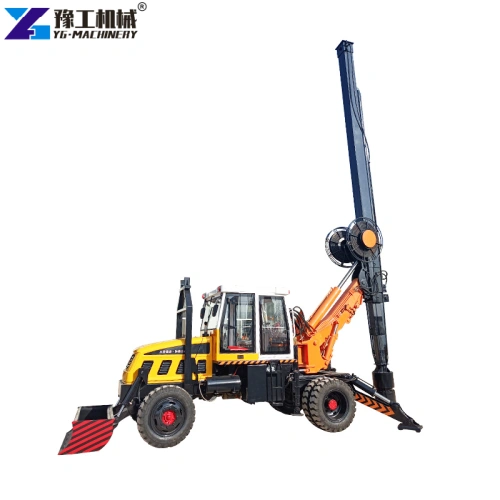
Combining hydraulic drive, mechanical transmission, and intelligent control, hydraulic rotary drilling rigs belong to professional piling machinery. They are primarily used for hole-forming operations in pile foundation engineering and are core equipment for foundation construction of high-rise buildings, bridges, and municipal works. Composed of a power head, telescopic drill rod, drill bucket, mast, chassis, and hydraulic control system, it performs drilling tasks in clay, sand, gravel layers, and moderately weathered rock layers through integrated rotary cutting and soil lifting operations. If you are interested in a hydraulic rotary drilling rig, please contact us for more details. We will provide you with customized 1-on-1 service.
Rotary Drilling Rig Parameter:
| Dimensions (mm) | 7900*2260*3100 |
| Vehicle mass (kg) | 8000 |
| Wheelbase (mm) | 3150 |
| Wheelbase (mm) | Front 1400 After 1060 |
| Drilling depth (m) | 13 |
| Drilling diameter (mm) | 600-1600 |
| Rotation angle | 180 degree |
| Walking speed (km/h) | 50 |
| Gear pump model | CBJT2080 |
| Hydraulic system working pressure (Mpa) | 20-25 |
| Hydraulic system displacement (ml/r) | 80 |
| engine model | 4108 |
| Engine power (kW) | 88 |
Advantages of Hydraulic Rotary Drilling Rig
- High-efficiency hole formation, shortened construction period: The high-torque hydraulic power head delivers fast drilling speeds in soil and clay layers, lifting efficiency 3–5 times over traditional rigs. Its self-propelled chassis enables quick relocation and precise positioning, saving auxiliary time and shortening project cycles.
- Wide adaptability to geological formations, flexible construction: By changing drill bits (drill bucket, auger bit, tubular drill, rock-socketed drill bit), it can adapt to clay, sand, gravel layers, soft rock, and moderately weathered rock layers. Small rigs are suitable for narrow urban sites, medium-sized rigs combine power and flexibility, and large rigs meet the needs of ultra-deep, ultra-large diameter hard rock construction.
- Reliable Pile Quality and High Bearing Capacity: Static mud wall protection minimizes borehole disturbance, resulting in a thin and rough mud cake that significantly improves pile side friction. Less sediment at the bottom of the hole facilitates easy cleaning, ensuring stable pile end bearing capacity. It allows for underreaming operations, increasing single pile bearing capacity by 20%-40%, meeting the high load-bearing requirements of high-rise buildings and large bridges.
- Environmentally Friendly and Low-Consumption, Green Construction: Adopting dry or low-mud circulation technology cuts mud consumption to 1/10–1/20 of conventional rigs for cleaner construction. With noise below 75dB and low vibration, it suits urban residential and downtown sites, greatly reducing environmental complaints.
- Intelligent Control, Safe and Stable: Equipped with GPS positioning, verticality monitoring, and torque overload protection systems, it monitors construction parameters in real time and automatically warns of faults. Hydraulic system overload protection and drill rod anti-drop design reduce the risks of borehole collapse and drill rod jamming, ensuring construction safety.
Application Scenarios of Hydraulic Rotary Drilling Rig
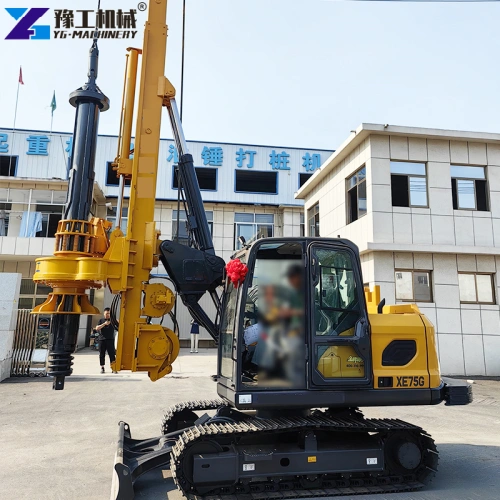
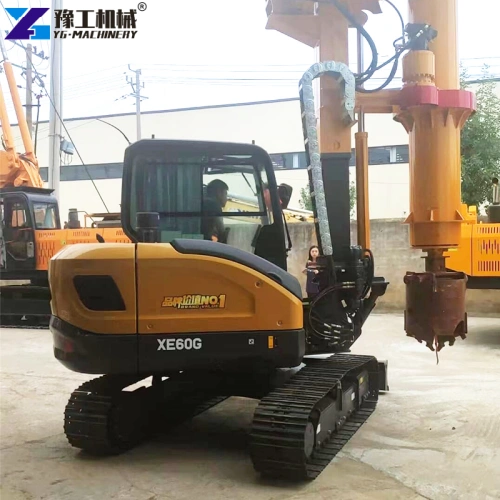
- Building Construction: Suitable for pile foundation construction of high-rise and super high-rise buildings, covering independent foundation piles, raft foundation piles, and tension piles. Furthermore, it adapts to engineering needs with pile diameters ranging from 0.8 to 2.5m and depths of 30–80m, thus ensuring qualified bearing capacity for single piles.
- Transportation Engineering: Construction of bridge pier foundation piles for highways and railways; drilling of ultra-deep piles (80-120 meters deep) and large-diameter piles (2-3 meters) for cross-river bridges; construction of tunnel portal reinforcement piles and roadbed treatment piles, adaptable to complex terrain and geological conditions.
- Municipal Engineering: Construction of retaining piles, interlocking piles, and pilot holes for diaphragm walls in urban subway stations; construction of pipeline support piles for urban road reconstruction; and construction of sedimentation tank pile foundations for sewage treatment plants, balancing efficiency and environmental protection.
- Water Conservancy and Port Engineering: Construction of reservoir dam reinforcement piles, sluice gate foundation piles, and river channel seepage prevention walls; deep pile construction for port wharves and large factory buildings, suitable for water-rich strata, soft soil strata, and rockfill layers.
- Special Geological Engineering: Construction of grouting holes for slope protection and dam reinforcement; pile foundation construction in silty soil layers and pebble/rock layers, solving complex geological drilling challenges through steel casing and rock-embedded drill bits.
Frequently Asked Questions and Answers about Hydraulic Rotary Drilling Rig
1. What geological conditions are suitable for YG hydraulic rotary drilling rigs?
The entire YG hydraulic rotary drilling rig series is suitable for clay, sand, silt, gravel layers, soft rock, and moderately weathered rock layers. Small rigs (torque 100-120 kN·m) are suitable for soft soil layers, medium rigs (180 kN·m) are suitable for complex soil layers, and large rigs (240 kN·m and above) can tackle hard rock and ultra-deep pile construction.
2. What to do if a borehole collapses during construction?
Borehole collapse is often caused by poor mud performance, excessive drilling speed, or loose geological conditions. Minor collapse requires adjusting mud specific gravity to 1.2–1.3 and replenishing high-quality circulating mud. Severe collapse needs sand and gravel backfilling before re-drilling. Easily collapsible strata demand casing wall protection and a drilling speed capped at 2 meters per hour.
3. What to do if the power head torque is insufficient and drilling is slow?
The core causes include insufficient hydraulic oil, clogged filters, worn drill bits, or incompatibility with the geological conditions. Troubleshooting steps: Check the hydraulic oil level and filter, replenishing or replacing as needed; replace with a drill bit suitable for the geological formation (rock-socketing drill bits for hard rock); adjust the hydraulic system pressure and clean impurities from the power head gears.
Why Choose YG?
Purchasing a hydraulic rotary drilling rig is a systematic decision involving capital investment, project matching, and long-term operation. As a leading force in the domestic small and medium-sized piling machinery industry, YG hydraulic rotary drilling rigs, with 20 years of technological accumulation, a rich product line, and a market-oriented pricing strategy, provide high-performance, cost-effective options for small and medium-sized construction companies and individual investors. YG hydraulic rotary drilling rigs feature a modular design, with core components (hydraulic pump, power head) sourced from well-known brands, resulting in a low failure rate. Routine maintenance only involves periodic filter replacement, drill rod lubrication, and cutting tooth inspection, resulting in 15%-20% lower maintenance costs than comparable equipment. In addition, we also offer free technical guidance and professional after-sales maintenance services.
When selecting equipment, we recommend you first clarify your construction demands. Specifically, confirm your main project types, applicable geological conditions, as well as commonly used pile diameters and depths. Then, select a matching model from the YG product line. For specific details and pricing, please consult YG customer service. Of course, if possible, you are welcome to visit our production base to understand YG’s production processes and quality control standards. We look forward to hearing from you.