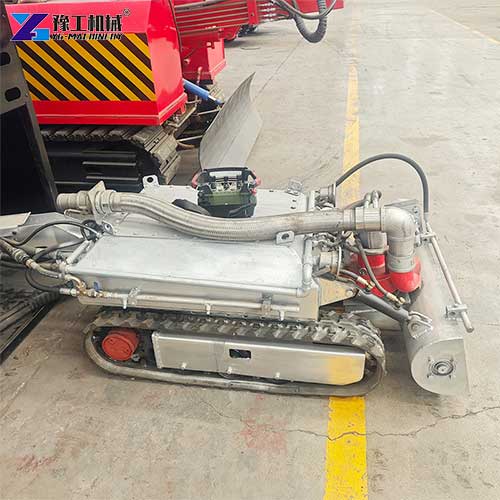

A river dredging robot is a remotely operated, track-driven desilting device built to remove sediment, sludge, and solid debris from waterways, pipelines, and enclosed basins. The unit travels along the bottom of the target area while a built-in slurry pump pulls material through a discharge line to the surface, where it can be dewatered and hauled away. Operators control the machine from ground level or shoreline via wireless remote. This setup removes the need for personnel to enter the work area directly and allows the system to operate in fully submerged conditions without draining the site first.
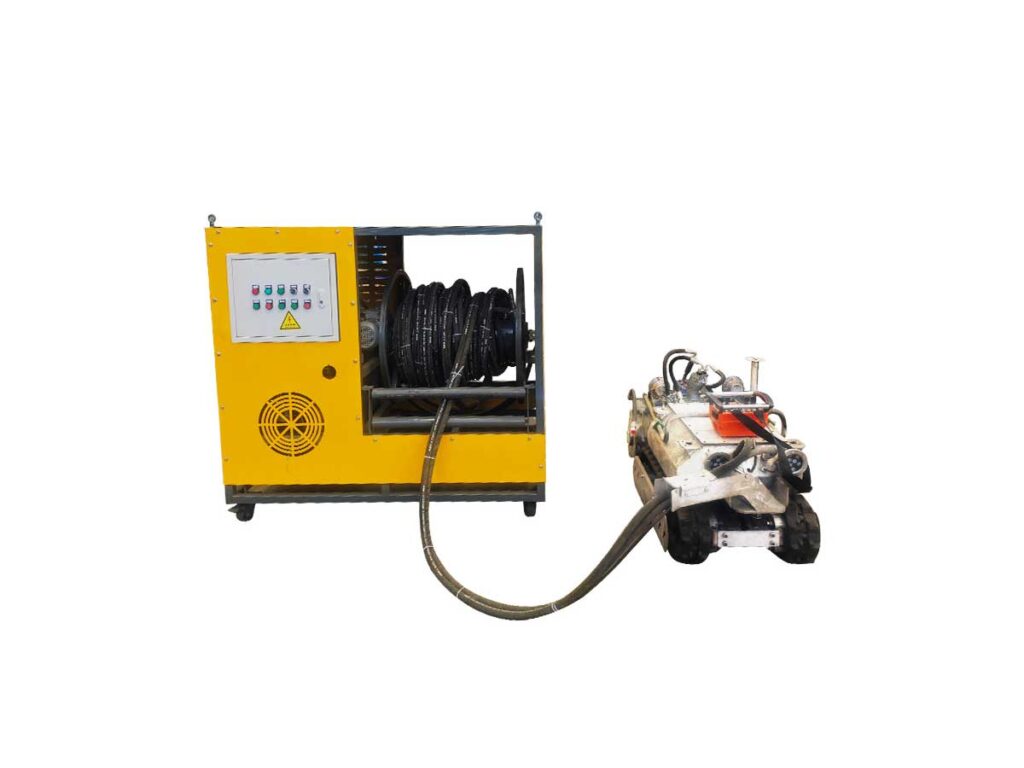
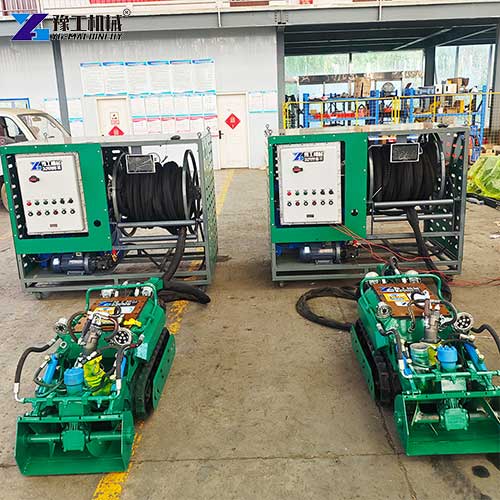
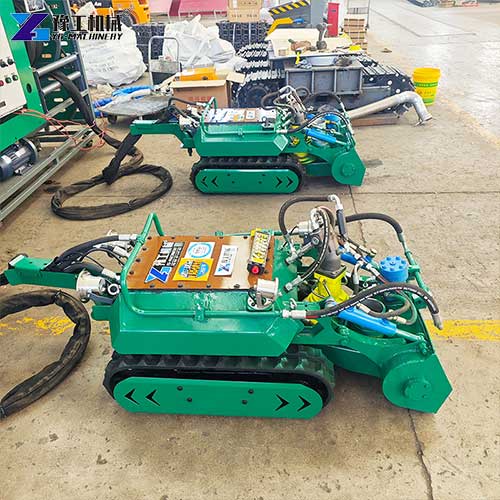
The complete system consists of three main components: the submersible tracked robot, a ground-level hydraulic power station, and the remote control console. Hydraulic hoses connect the power station to the robot, delivering power for the drive tracks, pump, and any auxiliary tools. A separate 4-inch discharge line carries the slurry to the surface. Once deployed through a manhole, access shaft, or shore ramp, the robot moves forward on rubber tracks at adjustable speeds. The suction inlet sits close to the bottom surface to maximize pickup efficiency. For compacted material, an optional high-pressure water jet can loosen sediment ahead of the pump inlet. A river dredging robot operates continuously during a shift, with throughput determined by model size and sediment density.
River Dredging Robot Technical Specifications
| Model | YG-500 | YG-600 | YG-700 | YG-800 | YG-900 | YG-1200 |
| Robot dimensions | 1500*500*650mm | 1500*600*650mm | 1600*700*650mm | 1600*850*700mm | 1650*960*750mm | 1900*1200*750mm |
| Dredging width | 500mm | 600mm | 700mm | 800mm | 900mm | 1200mm |
| Track travel speed | 3-15m/s | 3-15m/s | 3-15m/s | 3-15m/s | 3-15m/s | 3-15m/s |
| Robot weight | 320kg | 350kg | 380kg | 400kg | 420kg | 500kg |
| Pump output diameter | 3inch | 3inch | 4inch | 4inch | 4inch | 4inch |
| Pump flow rate(cubic meters/ hour) | 100 m³ | 100m³ | 200m³ | 200m³ | 200m³ | 200m³ |
| Pump head | 0-30m | 0-30m | 0-30m | 0-30m | 0-30m | 0-25m |
| Hydraulic station dimensions(mm) | 2200*1200*1700 | 2200*1200*1700 | 2200*1200*1700 | 2200*1200*1700 | 2200*1200*1700 | 2120*1240*1200 |
| Main motor power | 22kw | 22kw | 30kw | 30kw | 30kw | 45kw |
| Hydraulic system pressure | 0-16Mpa | |||||
| Particle size | 15mm | 15mm | 38mm | 38mm | 38mm | 60mm |
| Reeling system speed | 0-10r/min | |||||
| Hydraulic hoses | 50m (Standard configuration) | |||||
| Control system | Wireless remote control | |||||
| Lighting system | Underwater LED lights *2 | |||||


Why Does a Dredging Robot for Reservoir Clearing Beat Conventional Barge Methods?
Reservoir sedimentation is a slow but relentless problem. Year after year, silt and organic material settle to the bottom, reducing storage capacity, degrading water quality, and clogging intake structures. Historically, the only fix was draining the reservoir or bringing in a full dredge barge — both expensive and disruptive.
A river dredging robot offers a third path. Deployed from the shoreline on extended hydraulic lines, the tracked unit creeps across the reservoir floor, homogenizing sediment and pumping it back to a shore-based dewatering area. It works in water as shallow as a few feet and as deep as 90 meters, which covers most municipal and industrial reservoirs.
Compared with bucket dredging from a barge, this approach disturbs far less surrounding water. Mechanical buckets roil the water column and release nutrients and contaminants back into circulation, which can trigger algae blooms and violate discharge permits. The suction-based method pulls material directly from the bottom with minimal turbidity, making it the preferred choice for environmental restoration projects and drinking water reservoirs.
A river cleaning robot also costs a fraction of a barge operation. There is no barge to charter, no crew to house on site, and no heavy crane needed for launch and recovery. Small to mid-sized reservoirs can often be fully desilted in a single mobilization.

What Drives Robotic Dredge Machine Price — and What You Actually Pay For
When buyers first research robotic dredge machine price, they sometimes experience sticker shock — until they break down what is included and compare it with the alternative.
The base system covers four major components: the tracked robot unit itself, the above-ground hydraulic power station, 50 meters of heavy-duty hydraulic hose, and the wireless remote control package. Together, these form a complete turnkey system that arrives ready to work. No additional core equipment is required to start a job.
From there, costs scale in three directions. First is model size. The YG-500 with a 22 kW power station and 100 m³/h throughput sits at the entry level. The YG-1200 with a 45 kW system and 210 m³/h capacity sits at the top. Stepping up a model class makes sense when you know you will consistently work on larger-diameter pipes or bigger reservoirs.
Second is depth rating. Standard configurations handle 30 meters, but projects with deeper shafts or deeper reservoirs require extended hydraulic line runs. Additional hydraulic hose adds cost per meter, and deeper work sometimes calls for upgraded pump specifications.
Third are optional add-ons, which we cover next. The key takeaway is that the robotic dredge machine price follows a modular structure — you only pay for the capacity and features your specific work requires.

Reservoir and Pond Desilting Applications
- A dredging robot for reservoir clearing addresses a persistent challenge for water utilities and industrial operators: gradual sediment accumulation that reduces storage volume and can interfere with intake structures.
- Deployed from the shoreline on extended hydraulic lines, the tracked unit traverses the reservoir floor, pumping homogenized sediment back to a shore-based dewatering area. It works effectively from shallow near-shore zones down to the full depth rating of the unit, which covers the majority of municipal water supply reservoirs and industrial settling ponds.
- The suction-based removal method produces minimal turbidity compared with mechanical bucket dredging. The machine draws materials straight from the bottom instead of scooping and lifting them through the water, so it stirs up far less sediment in the water. A river dredging robot clearing is therefore well suited to drinking water reservoirs, ecological restoration projects, and any site where water quality must stay within discharge limits during work.
- For facilities running annual or biennial maintenance programs, a dredging robot for reservoir clearing provides consistent, repeatable results with predictable per-project costs and minimal mobilization overhead.
YG River Dredging Robot — Built for Real Field Conditions
YG manufactures a full six-model lineup of tracked desilting systems, from the compact YG-500 to the heavy-duty YG-1200. Every unit leaves the factory fully tested, with standardized spare parts and straightforward service procedures that in-house technicians can handle.
If you are evaluating a river cleaning robot for pipeline rehabilitation or industrial lagoon maintenance, send your project parameters to the YG team. We will match you to the right model size, flag relevant optional equipment, and provide a transparent quotation with clear lead times. Reach out today to request your customized proposal.