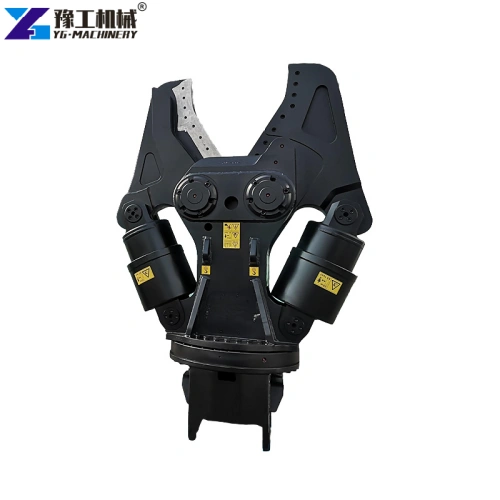
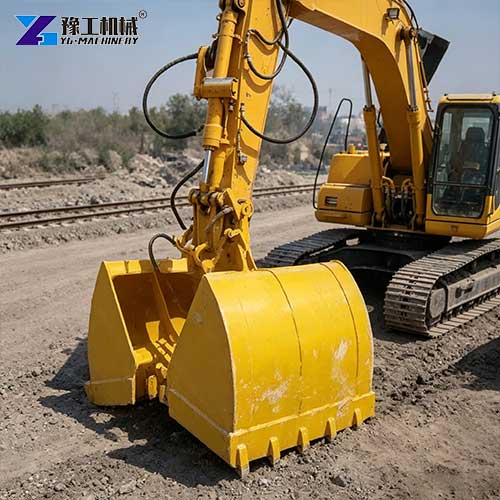
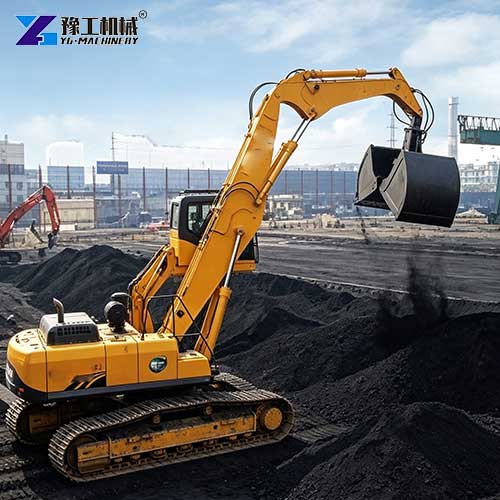
A hydraulic clamshell bucket grabs what standard buckets spill—sand, gravel, crushed rock, and debris. Two hydraulic shells close around the load like a pair of hands, clamping the material securely until the operator releases it. No spillage. No waste. Just clean, efficient loading.
The YG series excavator clamshell bucket offers four models covering excavators from 7 to 35 tons. Opening widths range from 1000mm to 2300mm, with working pressures from 180 to 250 bar. Every model features NM500 wear-resistant steel, 42CrMo alloy steel pins with built-in oil passages, and a dual-cylinder linkage design with HALLITE seals.
Hydraulic Clamshell Bucket Technical Specifications:
| Model | YGCS04 | YGCS06 | YGCS08 | YGCS10 |
| Suitable Excavator | 7-11T | 12-18T | 18-25T | 26-35T |
| Weight | 800kg | 1200kg | 2000kg | 2300kg |
| Opening | 1000mm | 1500mm | 2200mm | 2300mm |
| Working Pressure | 180bar | 210bar | 250bar | 250bar |
| Set Up Pressure | 250bar | 290bar | 320bar | 340bar |
| Working Flow | 190 lpm | 210 lpm | 220 lpm | 240 lpm |
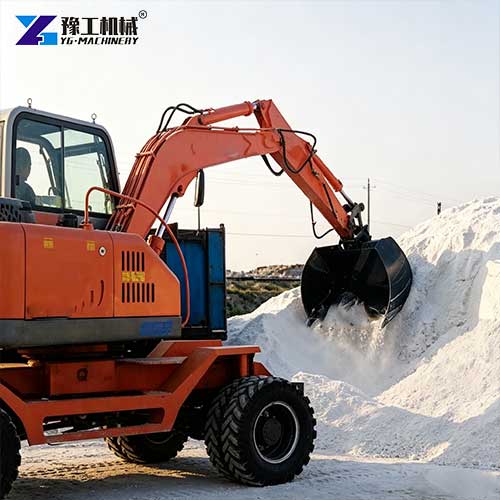
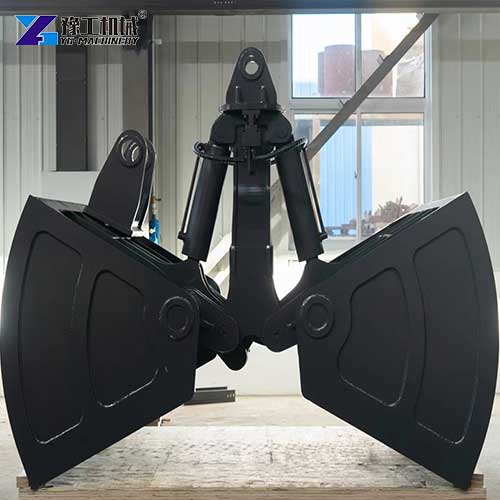
7 Advantages of the YG Hydraulic Clamshell Bucket
1.NM500 Wear-Resistant Steel.
The clamshell grab bucket uses NM500 steel for all structural parts—a high-strength abrasion-resistant material with a Brinell hardness of 500 HBW. It withstands the wear caused by sand, gravel, crushed rock, and other abrasive materials. The bucket maintains its shape and cutting edges even after extended use in demanding conditions. This translates directly into a longer service life and fewer replacements.
2.42CrMo Alloy Steel Pins with Built-In Oil Passages.
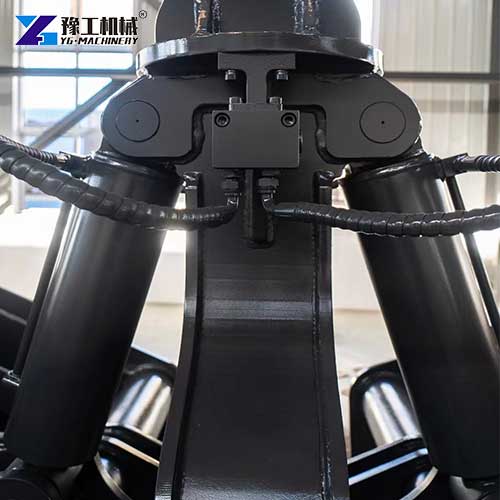
The pins connect the shells to the cylinder linkage. 42CrMo is a high-strength alloy steel known for toughness and fatigue resistance. The pins undergo heat treatment for strength. The built-in oil passages deliver lubricant directly to the bearing surfaces, reducing wear and extending pin life. This design ensures smooth operation over thousands of cycles.
3. Dual-Cylinder Linkage with Honed Tubes.
Two hydraulic cylinders work together to close both shells evenly. The synchronized action maintains a consistent grip across the full width of the bucket. The cylinders use honed tubes—precision-machined internal surfaces that reduce friction and extend seal life. The result is a short working cycle and long service life.
4. HALLITE Seals for Leak-Free Operation.
The hydraulic cylinders use HALLITE seals—a premium seal brand known for reliability in demanding applications. The seals maintain their integrity under high pressure and in abrasive environments, preventing leakage and ensuring consistent clamping force.
5. Active Gripping vs. Passive Scooping.
A standard bucket relies on curling force and gravity—material spills when the bucket tilts or swings. A small clamshell bucket actively clamps the load between two shells. The clamping force keeps material in place regardless of the bucket’s angle. Wet sand, fine gravel, and loose debris stay in the bucket until the operator releases them. Less spillage means faster cycles, cleaner job sites, and more material moved per hour.
6. Quick Cycle Time, High Productivity.
The dual-cylinder design and honed tube construction deliver fast, smooth opening and closing cycles. The hydraulic clamshell bucket completes each grab quickly, reducing cycle time and increasing the number of loads per shift. For high-volume material handling, this directly translates to higher daily output.
7. Low Maintenance Design.
The sealed pin oil passages and HALLITE seals reduce the frequency of maintenance. NM500 steel resists wear, extending the interval between shell replacements. The simple, robust design minimizes downtime and keeps the bucket working.


Delivered to Saudi Arabia: A Contractor’s Bulk Material Challenge
The Customer Background:
A construction contractor in Saudi Arabia was handling bulk aggregate materials for multiple infrastructure projects. The contractor was using standard excavator buckets to load sand, gravel, and crushed rock from stockpiles into trucks.
The Challenge:
The standard buckets were causing significant material loss during loading. Loose sand and gravel spilled out during the swing from the stockpile to the truck. Each load lost material, requiring extra cycles to achieve the required truck weight. The contractor estimated they were losing 10-15% of each load during transfer.
The Saudi construction market is one of the largest in the Middle East, valued at USD 65 billion in 2025 and projected to reach USD 87 billion by 2031. Major projects across the country—NEOM, Red Sea developments, Diriyah, and Expo 2030 Riyadh—are driving demand for efficient material handling.
The YG Solution :
YG recommended the YGCS06 excavator clamshell bucket for the contractor’s 14-ton excavator. The 1500mm opening and 1200kg weight were matched to the machine’s capacity. The dual-cylinder design provided the clamping force needed to hold loose aggregate securely during loading and transport.
Customer Feedback:
“We were losing too much material with standard buckets,” the project manager said. “Every load dropped sand and gravel during the swing. The small clamshell bucket grabs the material and holds it. We are getting full loads to the trucks every time. The cycle time is shorter, and we are moving more material per shift. We have already ordered a second bucket for our larger excavator.”

How to Choose the Right Hydraulic Clamshell Bucket?
Choosing the wrong bucket costs time and money. Too small and you make extra cycles. Too heavy and your excavator struggles.
- Start with your excavator size. The YGCS04 fits 7-11 ton machines, the YGCS06 fits 12-18 ton, the YGCS08 fits 18-25 ton, and the YGCS10 fits 26-35 ton. A small clamshell bucket that is too heavy for your excavator reduces stability and reach. A bucket that is too light underutilizes the machine’s hydraulic capacity.
- Check your hydraulic flow and pressure. The YGCS04 needs 190 lpm at 180 bar. The YGCS10 needs 240 lpm at 250 bar. If your excavator cannot supply the required flow or pressure, the bucket will not operate at full capacity.
- Consider your material. Sand, gravel, crushed rock, and coal are ideal for a clamshell bucket—the shells close around loose material and hold it securely. Wet clay, sludge, and sticky mud are not ideal—sticky materials cling to the shells and do not release cleanly.
If you are unsure, send us your excavator model and material type. We will recommend the right bucket—no guesswork, no pressure.
Hydraulic Clamshell Bucket Price
YG has specialized in hydraulic excavator attachments for many years. Every hydraulic clamshell bucket we produce is engineered with a carefully matched hydraulic drive system — calibrated pressure, flow and displacement for each model — and a heavy-duty structural design built from high-strength steel with hardened hinge pins and wear-resistant cutting edges. Every unit is tested under full load before shipment to verify smooth opening and closing and reliable clamping force. If you need a clamshell grab bucket that grabs and holds bulk materials securely, the YG series provides proven performance. Contact us with your excavator model and typical material type. We will recommend the right excavator clamshell bucket for your operation. Get a free quote today.