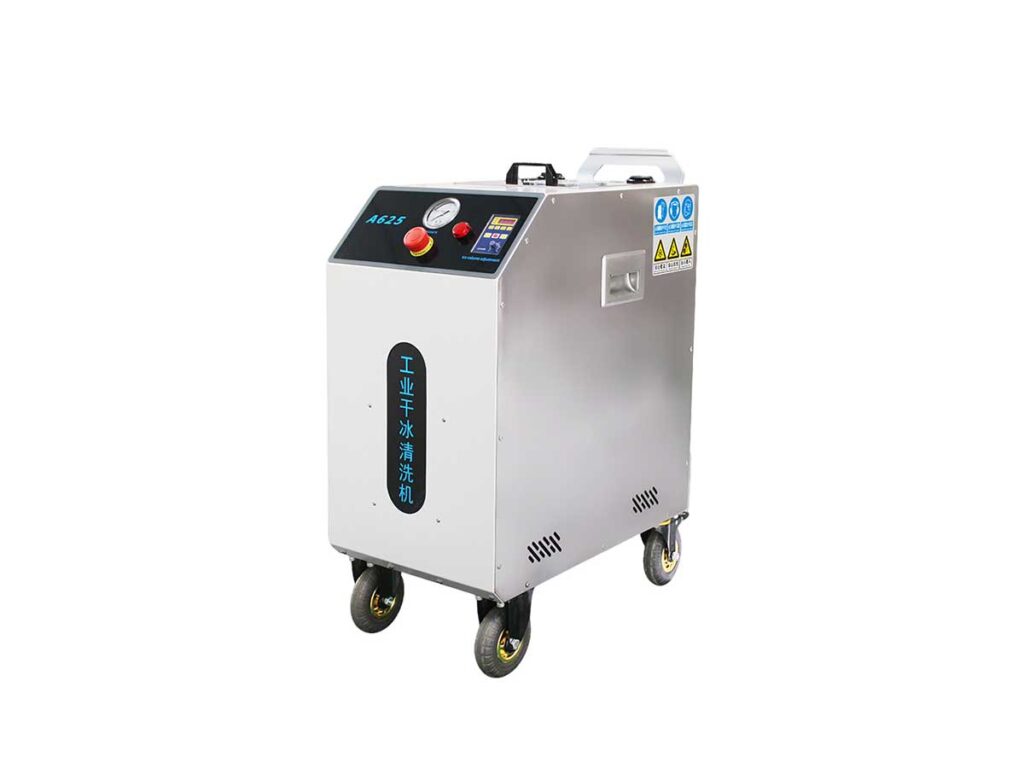

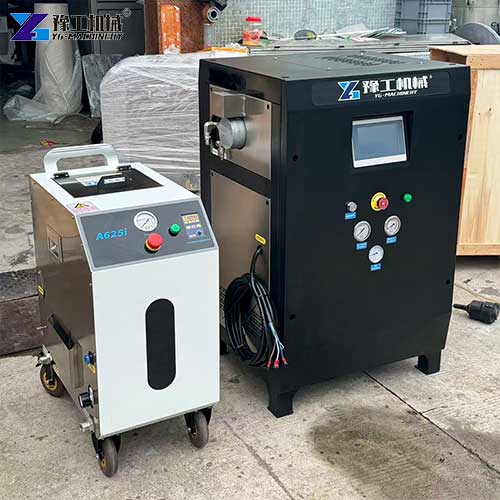
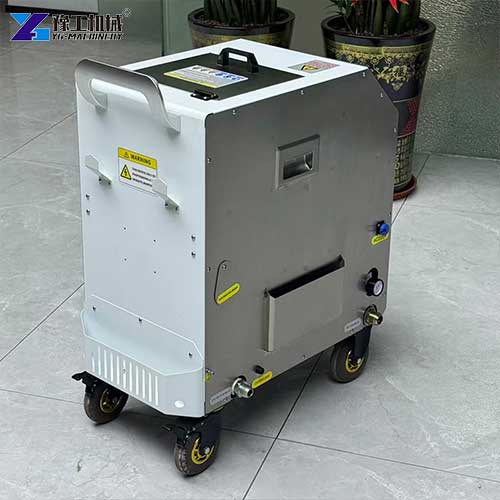
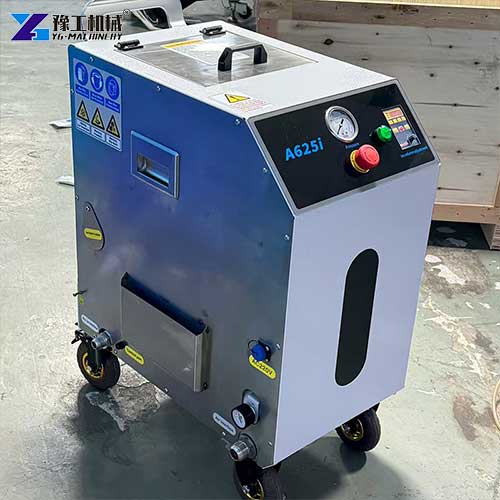
If you have ever had to disassemble equipment just to clean it, or haul heavy parts to a separate cleaning station, you know how much time and money those processes waste. A portable dry ice cleaning machine solves those problems by bringing the cleaning power directly to where you need it. This small dry ice cleaning machine uses compressed air to accelerate dry ice pellets toward surfaces, removing contaminants through impact, thermal shock, and sublimation. The pellets vaporize on contact, leaving no secondary waste — no water, no chemicals, no abrasive media to clean up afterward. What makes the portable version different is its size and mobility. Compact dimensions and manageable weight mean you can move it between work areas, take it to job sites, or position it right next to the equipment that needs cleaning.
The technology works on a wide range of surfaces and contaminant types — from grease and carbon buildup to ink residue, mold release agents, and general industrial grime. Because it is non-abrasive and non-conductive, it cleans without damaging delicate components, electrical parts, or finished surfaces.
Portable Dry Ice Cleaning Machine Parameter
| Model | ICE-JET 3.0 | ICE-JET 6.0 | ICE-JET 15 | ICE-JET 40 |
| Dry Ice Capacity | 3KG | 6KG | 15KG | 40KG |
| Dry lce Consumption | 20-50KG/H | 20-50KG/H | 30-100KG/H | 30-100KG/H |
| Supply Pressure | 3-10bar | 13-10bar | 3-10bar | 3-10bar |
| Air Consumption | 1-2m³/min | 1-3m³/min | 1-4m³/min | 1-5m³/min |
| Weight | 40KG | 50KG | 65KG | 80KG |
| Dimensions | 460x340x750mm | 460x350x850mm | 550x445x985mm | 650x550x1000mm |
| Total Power | <500W | <800W | <800W | <800W |

Common Cleaning Issues and Solutions
Even with proper technique, you may run into challenges from time to time. Understanding common problems and how to fix them keeps your cleaning operation running smoothly.
- Slow or inconsistent ice flow is one of the most common issues. If the ice comes out unevenly or in spurts, check several things. First, make sure the hopper has enough ice — low levels can cause feeding problems. Second, check for ice bridging or clogging in the feed mechanism, especially if the ice has started to warm up slightly. Third, verify that your air pressure and volume meet the machine requirements — insufficient air supply causes inconsistent performance.
- Not cleaning effectively or leaving residue usually means you need to adjust your technique. Move the nozzle closer, increase pressure slightly, or slow down your travel speed. Heavy or baked-on deposits may need multiple passes. Also, check that your dry ice is fresh — older ice that has started to sublimate may not clean as effectively because the pellets are smaller and have less kinetic energy.
- Surface damage or etching happens when settings are too aggressive for the material. Reduce pressure, increase nozzle distance, or use a wider spray pattern. For delicate surfaces, try a 45-degree angle instead of direct perpendicular blasting. If you are unsure about a particular material, always test on an inconspicuous area first.
- Excessive noise or vibration may indicate a problem with the air supply or the machine itself. Check for air leaks in hoses or fittings, make sure all connections are tight, and verify that the small dry ice cleaning machine is on a stable surface. If the noise level seems unusually high, have the small dry ice blaster equipment inspected.
- Frost or ice buildup on the outside of the machine is normal to some extent — the cold dry ice inside cools the housing, and moisture from the air condenses and freezes on the surface. A moderate amount of frost is not a problem, but excessive buildup may indicate an insulation issue or unusually humid operating conditions.
- For automotive applications specifically, dry ice blasting for cars sometimes encounters issues with sensitive electronic components or plastic trim pieces. The solution is usually the same — lower pressure, greater distance, and careful technique around those areas.

Portable Dry Ice Cleaning Machine for Automotive Use
Dry ice blasting for cars solves several common cleaning challenges that traditional methods struggle with. The portable format means you can bring the cleaning power directly to vehicles in the shop or on location.
Engine and engine bay cleaning removes grease, oil, carbon deposits, and road grime without water or chemicals. Because the process is non-conductive, you can clean around electrical components, sensors, and wiring without risk of water damage. No drying time is needed, and there is no risk of corrosion in hard-to-reach areas.
Carbon deposit removal from intake manifolds, carburetors, and engine components works faster than chemical soaking or manual scraping. Dry ice reaches into tight passages and removes built-up carbon without damaging base metal or altering tolerances.
Brake and undercarriage cleaning removes brake dust, road grime, and corrosion without abrasive media that could damage bearing surfaces or seal areas. This is especially useful for restoration work where parts need cleaning without dimensional changes.
How to Choose the Right Portable Dry Ice Cleaning Machine for You?
Selecting the correct size of the portable dry ice cleaning machine directly affects cleaning speed, operating cost, and portability. A dry ice sand blaster that is too small will slow you down on large jobs, while one that is too large wastes dry ice and is harder to move around.
- Start with your typical application size and type. If you mostly clean small components or do detailed work on precision equipment, a smaller model with lower ice consumption may work well. If you clean large surfaces, heavy industrial equipment, or entire production lines, you need a larger model with higher throughput.
- Consider the dry ice consumption rate. Smaller models use 20 to 50 kilograms per hour, while larger ones use 30 to 100 kilograms per hour. Higher consumption means faster cleaning but higher operating costs for the dry ice itself. You need to balance speed against material cost for your specific jobs.
- Think about portability requirements. If you move the portable dry ice cleaning machine frequently between job sites or between different areas in a facility, weight and dimensions matter. Smaller units weigh around 40 kilograms and have a compact footprint, making them easy to move. Larger industrial models can weigh 80 kilograms or more and require more space.
- Evaluate your compressed air capacity. Each small dry ice blaster model has specific air pressure and volume requirements. Smaller units need 1 to 2 cubic meters per minute, while larger ones need up to 5 cubic meters per minute. Make sure your existing air compressor can deliver the required volume and pressure before you select a model.
- Factor in hopper capacity. The hopper holds the dry ice pellets before they enter the blasting system. Larger hoppers mean fewer refills during long cleaning sessions. Smaller models hold 3 to 6 kilograms, while larger industrial units hold 15 to 40 kilograms.