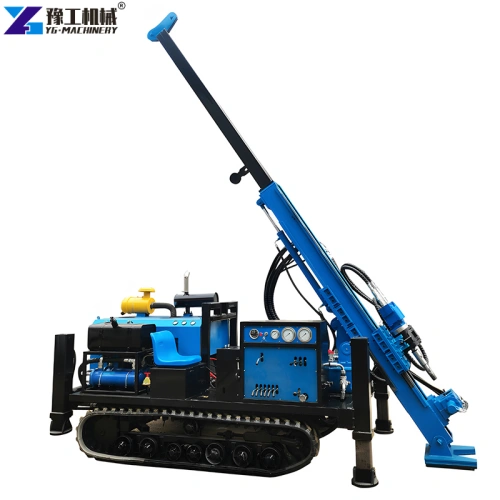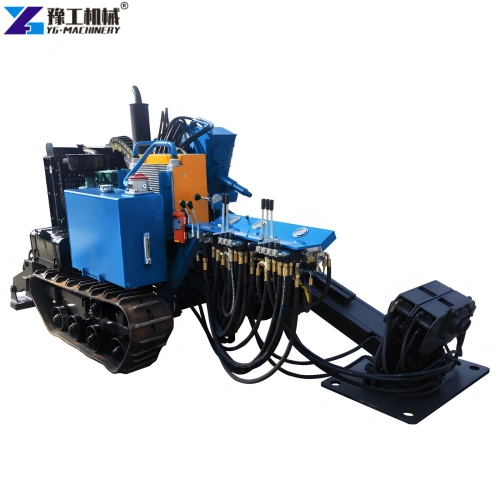


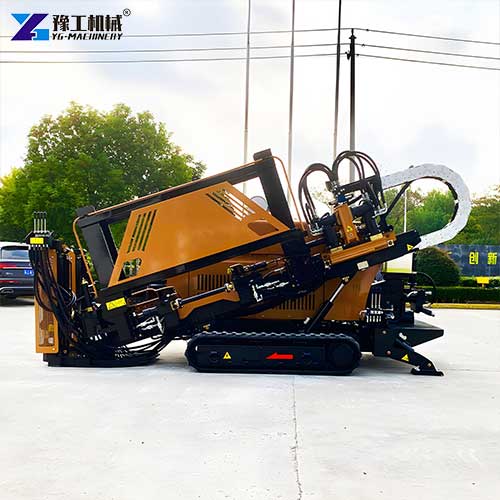
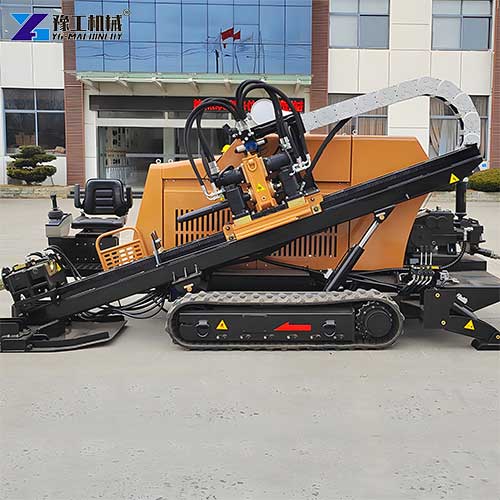
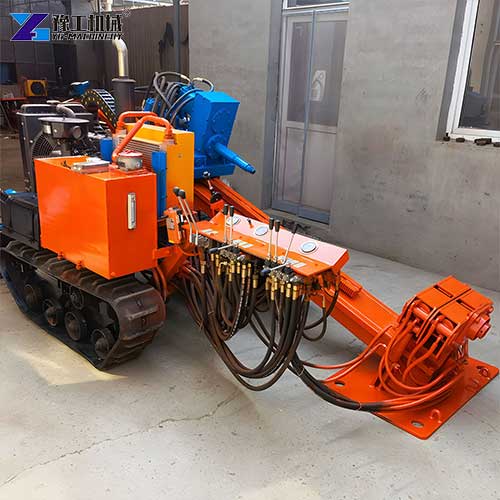
A horizontal directional drilling rig is a specialized piece of trenchless construction equipment designed to install underground utilities, pipelines, and conduits without excavating long open trenches along the entire route. Instead, this advanced machinery launches from a single entry point, drills a guided bore path through the subsurface, and resurfaces at a predetermined exit point — all while maintaining precise control over depth, angle, and alignment.
Also known as an underground pipe drilling machine, this technology has transformed how municipalities, utility companies, and construction firms approach underground infrastructure projects. From laying fiber optic cables beneath busy highways to installing water mains across rivers, these machines deliver results that traditional excavation methods simply cannot match in terms of efficiency, precision, and environmental stewardship.
Horizontal Directional Drilling Rig Technical Specifications
| Model | YG-160A | YG-180 | YG-280 | YG-320 | YG-320A |
| Engine rated power | 100KW | 97KW | 160KW | 140KW/160KW | 160KW |
| Push and pull | Cylinder | Motor | Motor | Cylinder | Motor |
| Maximum drag/feed force | 160/100KN | 180/180KN | 280/280KN | 320/320KN | 320/320KN |
| The maximum torque of the powerhead | 5000N.n | 6000N.n | 10000N.n | 12000N.n | 12000N.n |
| Powerhead speed | 0-180r/min | 0-140r/min | 0-120r/min | 0-140r/min | 0-140r/min |
| Moving speed of the powerhead | 30m/min | 20m/min | 20m/min | 20m/min | 20m/min |
| Maximum reaming hole diameter | Φ600mm | Φ600mm | Φ750mm | Φ800mm | Φ800mm |
| Drill rod length (single) | 3m | 3m | 3m | 3m | 3m |
| Drill pipe diameter | Φ60mm | Φ60mm | Φ73mm | Φ73mm | Φ73mm |
| Drill pipe diameter | 10-23° | 10-22° | 10-23° | 10-20° | 10-20° |
| Maximum mudflow | 160L/min | 250L/min | 320L/min | 320L/min | 320L/min |
| Maximum mud pressure | 100bar | 80bar | 80bar | 80bar | 80bar |
| Overall quality | 6700kg | 8500kg | 12500kg | 11500kg | 11200kg |
| Dimension(length*width*height) | 5700*1820*2400mm | 6400*2270*2340mm | 7100*2260*2450mm | 7100*2250*2450mm | 7662*2162*2450mm |
5 Applications of the YG Horizontal Directional Drilling Rig
The versatility of the horizontal directional drilling rig shines across a wide range of industries and project types. Understanding where this technology excels helps project owners make smarter decisions about when to deploy it.
1. Municipal Utility Networks
Cities and towns constantly expand and upgrade their water, sewer, and gas distribution systems. In dense urban areas where roads, sidewalks, and existing infrastructure leave little room for open trenches, trenchless methods become not just preferable but essential. An underground pipe drilling machine can install new utility lines beneath streets without closing lanes, disrupting businesses, or requiring costly pavement restoration afterward.
2. Telecommunications and Fiber Optics
The global push for faster internet and expanded 5G coverage has created enormous demand for fiber optic cable installation. HDD equipment technology allows telecom providers to route cables under roads, railways, and waterways with minimal community impact — a critical advantage when building networks in established neighborhoods and commercial districts.
3. Oil, Gas, and Energy Infrastructure
Cross-country pipelines, distribution lines, and renewable energy projects all rely on directional drilling for sensitive crossings. Whether running a gas line under a protected wetland or installing conduit for a solar farm interconnection, the precision and low environmental footprint of HDD make it the method of choice.
4. River, Highway, and Railway Crossings
Some obstacles are simply too large, too busy, or too environmentally sensitive to cross with open-cut methods. Directional drilling handles these challenges routinely, creating deep, stable bore paths that keep navigation, traffic, and ecosystems fully operational during construction.
5. Environmental and Remediation Projects
From installing groundwater monitoring wells to creating subsurface barriers for contamination control, the underground pipe drilling machine plays a growing role in environmental engineering. Its ability to work with minimal surface disturbance makes it ideal for projects in parks, nature reserves, and brownfield sites.


How Horizontal Directional Drilling Rig Work?
Pilot Hole Drilling: The operation begins with the rig drilling a small-diameter pilot hole from the entry point toward the exit point. A steerable drill head, guided by an electronic tracking system, follows a predetermined curved path. The operator continuously monitors depth, angle, and position, making real-time adjustments to stay on course. This precision is what separates directional drilling from simpler boring methods.
Pre-Reaming: Once the pilot hole reaches the exit point, the drill bit is removed and a reamer — a cutting tool wider than the final product pipe — is attached. The reamer is then pulled back through the pilot hole, enlarging it to the diameter needed for the pipeline. Depending on soil conditions and the final pipe size, multiple reaming passes may be required. Drilling fluid, typically a bentonite mixture, circulates throughout this process to lubricate the borehole, carry cuttings to the surface, and stabilize the surrounding soil.
Pipe Pullback: With the borehole properly sized and conditioned, the product pipe is connected to the reamer via a swivel and pulled back through the entire length of the bore. The swivel prevents the pipe from rotating, ensuring it arrives at the entry point intact and properly aligned. Once the pipe is fully in place, both entry and exit pits are cleaned up, and the installation is complete — usually with only small patches of disturbed ground at either end.
HDD vs. Other Trenchless Methods: A Comparison
Directional drilling is just one tool in the trenchless toolbox. Understanding how it stacks up against alternative methods helps you choose the right approach for each project.
1. HDD vs. Microtunneling
Microtunneling uses a remotely controlled boring machine with a jacking frame to push pipe segments forward from a launch shaft. It excels at very deep installations and large-diameter pipes in challenging ground, and it offers millimeter-level accuracy. However, it requires larger entry and exit shafts and typically costs more per foot than HDD. For most utility-scale installations under 1,500 feet, HDD delivers the better balance of speed, cost, and precision.
2. HDD vs. Pipe Jacking
Pipe jacking works similarly to microtunneling but often uses simpler excavation methods like auger or slurry systems. It works well for shorter drives in stable ground. HDD offers greater flexibility in alignment — it can follow curved paths and handle variable depths — and requires smaller work areas at both ends. If your project involves a crossing with limited surface access, HDD usually comes out ahead.
3. HDD vs. Auger Boring
Auger boring is a straightforward, cost-effective method for short, straight bores — typically under 400 feet — in stable soil conditions. It cannot steer, so it works only for straight-line installations. HDD adds steerability, longer reach, and the ability to handle a wider range of soil types. If you need an HDD drilling machine for sale because your projects involve curved alignments, longer crossings, or variable ground, auger boring simply will not meet your needs.

Why Choose YG’s Horizontal Directional Drilling Rig?
When you partner with YG, you get more than just equipment — you gain a manufacturer with nearly two decades of drilling industry experience and a track record of serving customers across more than 30 countries. Our rigs combine robust construction, advanced hydraulic systems, and precise guidance technology to deliver reliable performance across soil types and project scales. We offer a range of models to match different project requirements, along with comprehensive parts support, technical guidance, and operator training.
If you are evaluating HDD equipment or comparing options for an HDD drilling machine for sale and want a solution that balances performance, durability, and value, reach out to our team today. Tell us about your typical projects, ground conditions, and production targets, and we will help you specify the right rig for your operation.