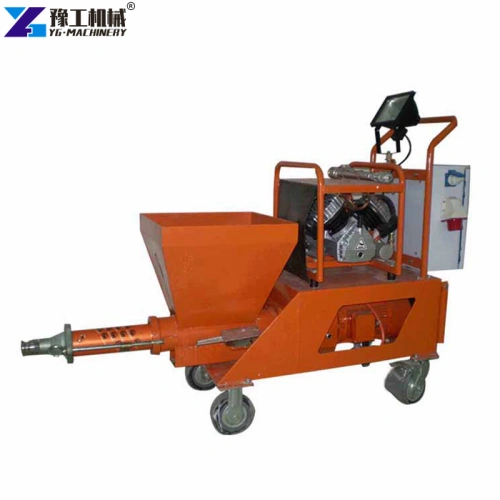
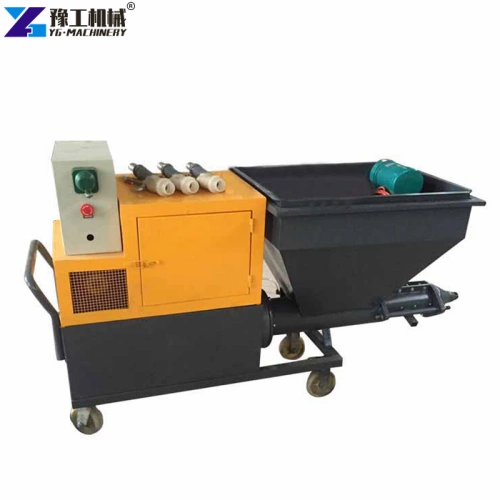
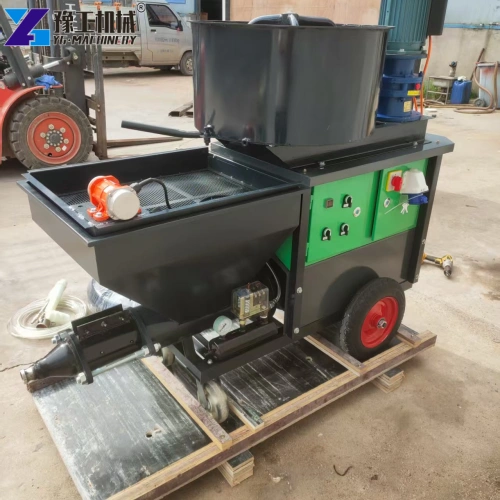
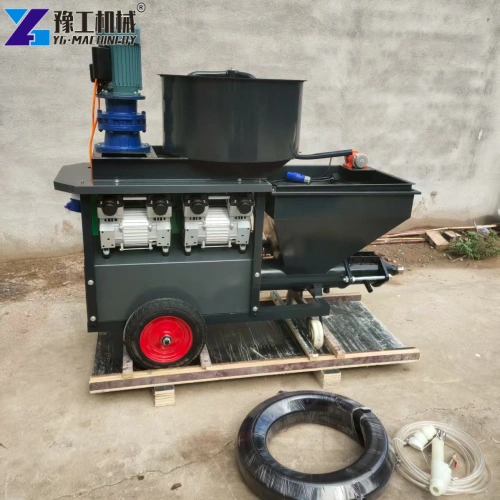
A mortar spraying machine is a construction machine powered by electricity, hydraulics, or pneumatics. It pressurizes and transports pre-mixed mortar via a pump, then atomizes it through a spray gun and evenly sprays it onto the work surface. Its core function is to replace traditional manual plastering, achieving mechanized and standardized mortar spraying operations. Mortar spraying machines solve pain points such as low manual efficiency, uneven coating, and significant material waste. They eliminate the need for scaffolding and frequent equipment movement, allowing for free spraying of corners and ceilings. This shortens the construction period and saves on scaffolding material costs, making them essential equipment for building decoration, tunnel, and bridge projects. If you are interested, please contact us immediately for more product information.
YG Mortar Spraying Machine Parameter
| Model | YG311 | YG318 | YG500 | YG711 |
| Greatest Pressure | 3Mpa | 3Mpa | 3Mpa | 3Mpa |
| Capacity | 3㎡/h | 3㎡/h | 3㎡-4㎡/h | 4㎡/h |
| Applicable material ratio(water, ash, sand) | 0.7-1:1:3 | 0.7-1:1:3 | 0.7-1:1:3 | 0.7-1:1:3 |
| Main motor power | 4KW | 7.5KW | 8hp/12hp | 7.5KWstrength |
| Particle Size | ≤4mm | ≤8mm | ≤8mm | ≤8mm |
| Conveying Distance | H:30m/V:20m | H:50m/V:30m | H:50m/V:30m | H:50m/V:30m |
| Hopper Volume | 60L | 80L | 80L | 100L |
| The diameter of the feed pipe | 32mm | 32mm | 32mm | 32mm |
| Weight | 200KG | 320KG | 320KG | 320KG |
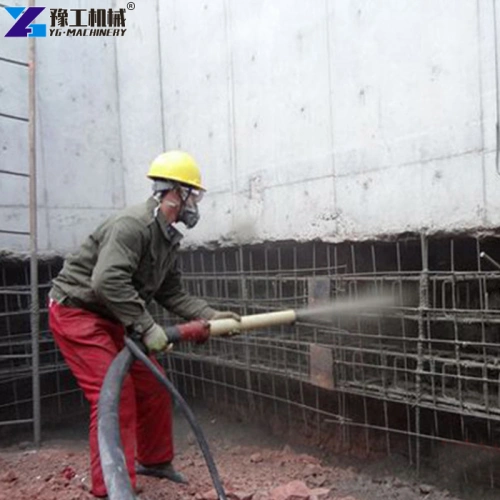
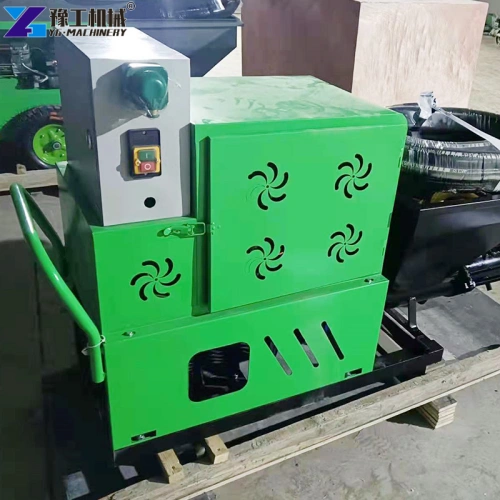
Working Principle of a Mortar Spraying Machine
The core working principle of a mortar spraying machine is “pressurized conveying + atomized spraying,” mainly consisting of three key steps:
- Pre-treatment of Feed: The well-mixed mortar (cement mortar, gypsum mortar, etc.) is poured into the equipment’s hopper. The mixing device inside the hopper continuously agitates the mortar to prevent sedimentation and clumping, ensuring the material’s flowability meets spraying requirements. This is a crucial prerequisite for avoiding subsequent pipe blockage.
- Pressurized Conveying: A motor-driven pump (screw type, plunger type, etc.) pressurizes the mortar. Screw-type machines rely on the meshing and rotation of a screw and rubber stator for extrusion and conveying, achieving pressures of 8–15 MPa with stable, pulse-free discharge. Plunger-type machines use the reciprocating motion of a piston to suck and discharge mortar, reaching pressures up to 25 MPa, suitable for conveying high-viscosity mortars. The pressurized mortar is then precisely delivered to the spray gun through a conveying pipeline.
- Atomized spraying: After the mortar reaches the spray gun, it is subsequently atomized through the nozzle and then sprays evenly onto construction surfaces like walls and floors. Operators can precisely control the spray thickness (adjustable from 0.5-5cm) by controlling the spray gun angle and movement speed, in conjunction with the equipment’s flow rate adjustment function, achieving a smooth and dense coating effect.
- Note: The main difference between cement plaster spraying machines and gypsum spraying machines lies in pump compatibility. Specifically, cement plaster spraying machines mostly adopt high-pressure plunger pumps, which suit high-viscosity cement mortar. In contrast, gypsum spraying machines mainly apply screw pumps to avoid solidification and blockage of gypsum mortar during delivery, thus ensuring smooth construction operations.
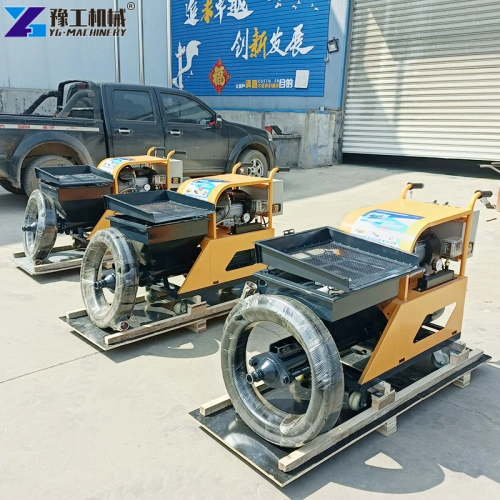
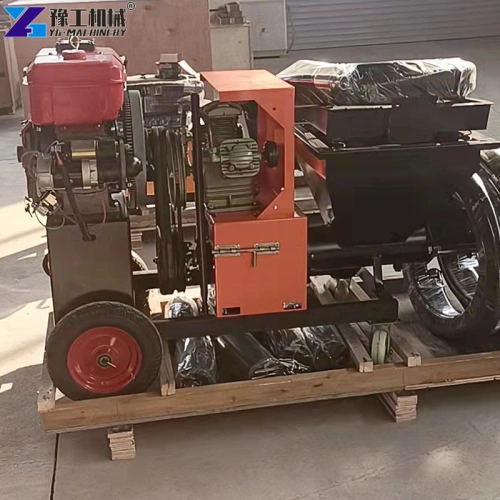
Core Advantages of Mortar Spraying Machines:
- High Efficiency and Labor Saving: One Mortar Spraying Machine can complete 150-200㎡ (2cm thick) of spraying work per hour, averaging 900-1500㎡ per day. Its efficiency is 5-8 times that of manual labor. Only 3 people are needed to operate it, replacing 10-20 skilled workers, significantly reducing labor costs and shortening the construction period.
- Stable Quality: Mechanized spraying ensures a uniform and dense mortar coating with high adhesion, reducing problems such as hollow areas, cracks, and uneven thickness. It achieves a smooth and even gypsum coating, eliminating the need for subsequent secondary sanding and saving steps. The high-pressure delivery of the cement plaster spraying machine ensures a stronger bond between the mortar and the substrate, improving wall durability.
- Energy Saving and Cost Saving: Mortar Spraying Machines generate no mortar spillage during construction, thereby saving over 20% on mortar materials. In addition, they remove the need for scaffolding, which further cuts overall material expenses. Moreover, the machine features a compact structure and excellent mobility; it comes with a remote control switch and a 360° rotating spray gun. Consequently, it delivers easy operation, simple maintenance, and low-cost spare parts, ultimately lowering comprehensive construction costs.
- Wide Compatibility: It is compatible with various water-soluble materials such as cement mortar, gypsum mortar, fireproof coatings, and insulation materials, and is suitable for various scenarios such as indoor and outdoor plastering, gypsum leveling, insulation construction, and roughening treatment, making its adaptability far superior to traditional equipment.
Application Areas of Mortar Spraying Machines
1. Core Scenarios in Building Construction
For interior and exterior wall plastering in residential buildings, factories, and office buildings, cement plastering spraying machines are the preferred choice. They are suitable for spraying cement mortar and mixed mortar, efficiently completing the basic wall preparation.
For interior wall leveling and finishing, gypsum spraying machines are the first choice, enabling automated gypsum mortar application, improving construction efficiency and wall smoothness, and are suitable for interior decoration scenarios in residential buildings and office buildings.
2. Special Engineering Scenarios
For support spraying and wall plastering in tunnels, subways, and civil defense projects, high-pressure plunger-type mortar spraying machines are selected. With their high pressure and large flow rate, they are suitable for thick-layer spraying and long-distance delivery.
For bridge reinforcement and slope protection projects, hydraulic plunger-type mortar spraying machines can be selected to meet the needs of ultra-thick layers and high-intensity continuous operation. For explosion-proof scenarios (such as chemical plants), pneumatic mortar spraying machines can be selected; they are lightweight, explosion-proof, and suitable for construction in confined spaces.
3. Other Extended Applications
The Mortar Spraying Machine efficiently adapts to a wide range of application scenarios. It handles thermal insulation system construction, such as EPS board plastering and rock wool board plastering, performs waterproofing and fireproofing spraying for basement and tunnel waterproofing, as well as building fireproof coating spraying, completes wall roughening treatment to boost substrate adhesion, and carries out protective layer spraying for artificial mountains and steel structures. This allows for multiple uses in one machine, reducing equipment investment costs.
Choose YG Manufacturer
When selecting a mortar spraying machine, it’s crucial to accurately match the equipment type and model with your construction needs. Consider not only cost-effectiveness but also the equipment’s performance, adaptability, and the manufacturer’s strength. The YG series of plastering machines, with their comprehensive range, stable performance, and reasonable prices, is the preferred choice for construction teams of all sizes. Choosing the right equipment can improve construction efficiency, control costs, and ensure project quality. Please contact us for more details.