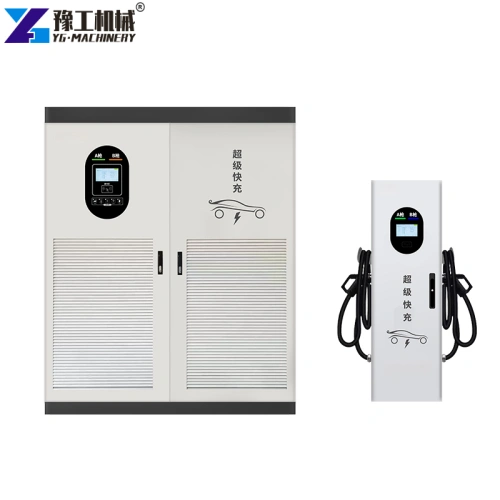
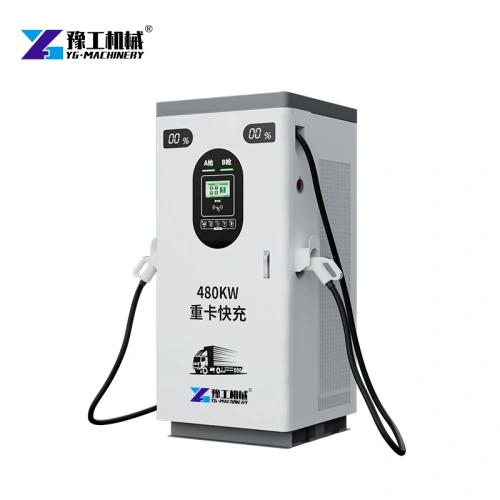
EV charging piles are dedicated power equipment designed to provide electrical replenishment for new energy vehicles (pure electric vehicles, plug-in hybrid electric vehicles, etc.). They are analogous to “gas stations” for traditional gasoline vehicles, their core function being to convert grid power into electrical energy that can be absorbed by the electric vehicle’s battery, achieving safe and efficient charging.
Among the many types of EV charging piles, DC rapid chargers, mobile DC fast chargers, and AC slow chargers together form a complete energy replenishment network. Specifically, DC fast chargers boast high power and fast charging speed, making them the core equipment of 120kW charging stations. Meanwhile, mobile energy storage charging piles feature plug-and-play installation with no grid renovation required, effectively filling charging shortages in remote areas and temporary scenarios. In addition, AC slow charging piles stand out for their low cost and steady long-hour charging, perfectly suiting daily usage scenarios like residences and residential communities.【WhatsApp/WeChat/Phone】+86 138 3814 7859.
Electric Charging Machines Parameters
| Product number | YG-60KW | YG-80KW | YG-120KW | |
| Detailed specification | rated power | 60KW | 80KW | 120KW |
| Charging equipment | User Interface | 7-inch LCD color display touchscreen | ||
| installation | Floor-standing/Down in down out | |||
| Routing mode device size | 635*423*1600(mm) | |||
| Input voltage | AC380V±20% | |||
| Input frequency | 45~65Hz | |||
| The output voltage | 200-750VDC | |||
| Single gun output current range | 200V-500V | 200V-500V | 200V-500V | |
| The output voltage | 0-90A | 0-120A | 0-160A | |
| Single gun output current range | 200V-750V | 200V-750V | 200V-750V | |
| The output voltage | 0-60A | 0-80A | 0-107A | |
| Charging equipment | Single gun output current range | 0-112A | 0-150A | / |
| Cable length | 5m | |||
| Electrical index | Measurement accuracy | Level 0.5 | ||
| Current limit protection value | ≥110% | |||
| Voltage regulation accuracy | ≤±0.5% | |||
| Steady flow accuracy | ≤±1% | |||
| Ripple coefficient | ≤±0.5% | |||
| effectiveness | ≥94.5% | |||
| Power factor | ≥0.99 (50% load or more) | |||
| Harmonic content THD | ≤5% (50% load or more) | |||
| Feature design | HMI | 7-inch LCD color display touch screen, LED indicator | ||
| Charging mode | Auto full / fixed power / fixed amount / fixed time | |||
| payment method | Credit card payment / APP payment /scan code payment | |||
| Communication Interface | Ethernet 2/3/4G (optional) | |||
| Safety design | Executive standard | GB\T 20234, GB/T 18487, GB/T 27930, NB\T 33008 | ||
| security function | Charge gun temperature detection, overvoltage protection, undervoltage protection, overload protection, short circuit protection, grounding protection, over temperature protection, low-temperature protection, insulation monitoring protection, polarity reverse connection protection, lightning protection, emergency stop protection, leakage protection | |||
| Environmental indicators | Operating temperature | -25°C~+50°C | ||
| Working humidity | 5%~95% non-condensing cream | |||
| Working elevation | <3000m | |||
| Protection level | IP54 | |||
| cooling method | Forced air cooling | |||
| Noise control | ≤60dB | |||
| MTBF | 100,000 hours | |||
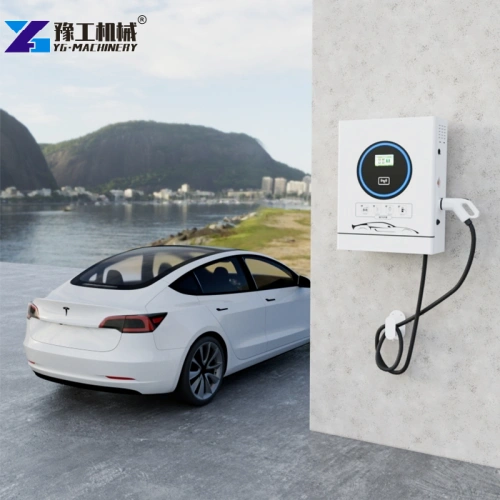
The Working Principle of EV Charging Pile
The essence of EV charging pile operation is “energy conversion + intelligent adaptation.” The core process revolves around “grid access—energy conversion—intelligent matching—safe charging.” The working principles of DC rapid chargers (DC charging piles) and mobile energy storage charging piles are most representative, and are explained in detail below:
- Grid Access and Pre-processing: All EV charging piles need to be connected to the power grid (AC slow charging connects to 220V single-phase power, DC rapid chargers and 120KW charging stations connect to 380V three-phase industrial power). Through filtering, lightning protection, and metering modules, energy purification, monitoring, and metering are completed to provide a basis for billing.
- Energy Conversion (Core Component): This is the core difference between different EV charging piles. AC slow charging directly outputs AC power, requiring an onboard charger for AC-DC conversion, resulting in low efficiency. DC rapid charging chargers (DC charging piles) incorporate IGBT or silicon carbide power modules, autonomously completing AC-DC conversion with an efficiency of≥95%, directly charging the power battery. Mobile DC fast chargers add energy storage modules, allowing for pre-stored electricity, eliminating real-time reliance on the grid, flexibly replenishing energy, and alleviating grid load.
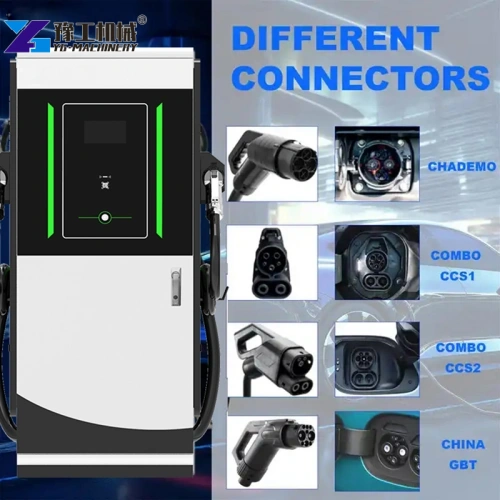
- Intelligent Communication and Parameter Control: After the charging gun connects to the vehicle, the EV charging pile communicates in real-time with the vehicle’s BMS system via national standards such as GB/T and CCS to obtain core battery parameters, dynamically adjusting output voltage and current to match the optimal charging curve, balancing efficiency and battery life.
- Safety Protection and Charging Completion: The system monitors dozens of safety indicators, including overvoltage and overcurrent, cutting off output within 100ms in case of abnormalities. Charging automatically stops once finished; meanwhile, it generates complete charging and billing records. In addition, it supports multiple payment methods, including QR code scanning, card swiping, and APP payment, thus perfectly adapting to various commercial scenarios.
In simple terms, AC slow charging is like “the grid sends raw materials, and the vehicle processes them itself,” DC rapid charging is like “the factory directly supplies finished products, which are directly injected into the battery,” and mobile energy storage charging piles are like “having their own finished product reserves, replenishing anytime, anywhere.”
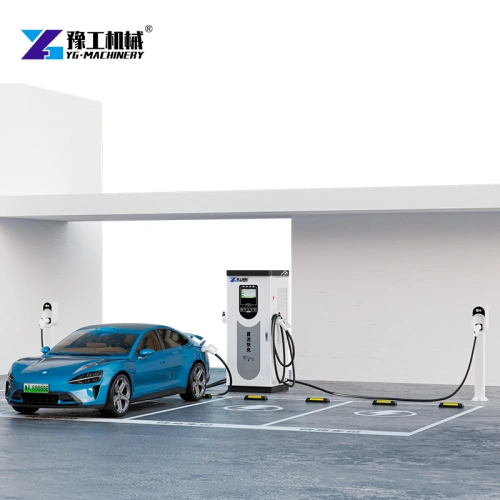
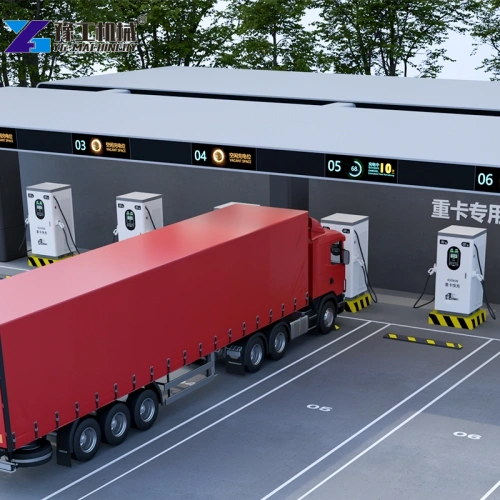
Types of EV Charging Pile
I . Classification by Charging Method (Core Classification)
- AC Slow Charging Stations: Power typically ranges from 3.3KW to 22KW, outputting AC power and relying on onboard chargers for conversion. Charging speed is relatively slow (it takes 6-8 hours to fully charge a vehicle with a 400km range). They are simple in structure, low in cost, and easy to install, suitable for everyday slow charging scenarios such as home use, private parking spaces in residential areas, and company parking lots.
- DC Rapid Chargers (DC Charging Pile): Power ranges from 30KW to 480KW. Their core advantage is rapid energy replenishment, capable of replenishing 60%-80% of a vehicle’s battery within 30 minutes. They require connection to 380V three-phase industrial power. They feature complex structure and high technical content; more importantly, they serve as a core component of public charging stations, including 120KW charging stations, highway service areas, and urban commercial districts. They are suitable for long-distance travel, emergency energy replenishment, and efficient turnover needs of commercial vehicles (ride-hailing vehicles, logistics vehicles), and are currently the “mainstay” model of public charging stations.
- AC/DC Integrated Charging Pile: This type combines AC slow charging and DC fast charging functions, allowing for flexible switching of charging modes according to vehicle needs. Its multi-gun design maximizes space utilization, making it suitable for diverse charging scenarios such as large public parking lots and logistics parks. However, it has a relatively high cost and maintenance complexity, making it suitable for scenarios requiring diverse charging options.
II . Classification by Form and Function
- Fixed Charging Pile: Divided into integrated (power module, control system, and charging gun integrated into a single cabinet) and split (power module and control terminal separated, allowing multiple guns to share power). Once installed, it remains stationary, suitable for fixed scenarios such as 120kW charging stations, residential areas, and commercial districts. It offers strong stability and convenient maintenance.
- Mobile Energy Storage Charging Pile: Built-in energy storage battery and charging module, it does not rely on the power grid, can be moved freely, and is plug-and-play. The power range covers 20KW-60KW. Firstly, it addresses energy replenishment needs across underdeveloped power grids, remote areas, temporary events like exhibitions and competitions, as well as peak charging demands at highway service areas. Furthermore, it effectively solves the common pain point of “abundant EV charging piles yet insufficient power supply”, and meanwhile aligns perfectly with national new energy storage development policies.
Choose YG
As a professional EV charging pile manufacturer, YG has been deeply involved in the industry for over a decade, focusing on the R&D and production of DC rapid chargers and mobile energy storage charging piles. With its core advantages of independent and controllable technology, stringent and reliable quality, customized adaptation, and full lifecycle service, YG has become the preferred brand for 120KW charging station construction, providing efficient and stable energy replenishment solutions to thousands of customers worldwide and helping them achieve profit growth.
In the future, YG will continue to deepen technological innovation, optimize its product portfolio, and launch more high-quality products adapted to market demands, becoming your trusted long-term partner. For detailed parameters of YG EV charging piles, customized solutions, or to obtain an accurate quote, please feel free to contact us for one-on-one professional consultation services.【WhatsApp/WeChat/Phone】+86 138 3814 7589.