
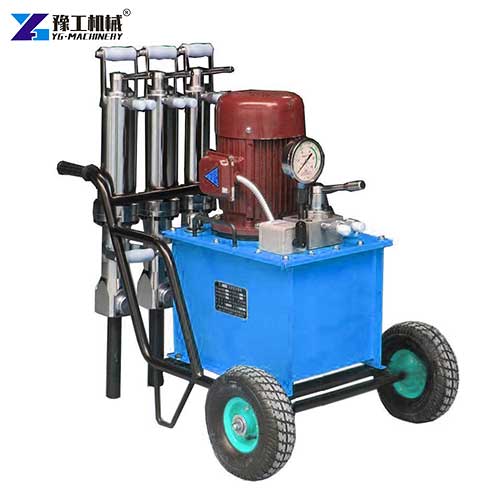

A hydraulic stone splitter is a specialized demolition tool that uses controlled hydraulic force to split rock, stone, and concrete along natural or pre-determined lines. Instead of breaking material with impact like a breaker or explosive, this tool works from the inside out — you drill a hole, insert the splitting wedge, and apply steady hydraulic pressure to create a clean, controlled crack.
The rock splitter machine consists of three main components: a power unit, high-pressure hoses, and one or more splitting guns. The power unit — available in electric or diesel versions — generates hydraulic pressure that travels through the hoses to the splitting gun. Inside the gun, a wedge mechanism expands when pressurized, pushing outward against the walls of the drilled hole and creating a precise crack in the material.
YG Hydraulic Stone Splitter Parameters:
| Model | YG-250 | YG-350 | YG-450 |
| Wedge Length(mm) | 250mm | 350mm | 450mm |
| Piston Stroke(mm) | 90/220mm | 90/220mm | 90/220mm |
| Drilling Depth(mm) | >500mm | >700mm | >900mm |
| Punching Diameter(mm) | 42mm | 46mm | 46mm |
| Crack Width(mm) | 10-20mm | 10-20mm | 10-20mm |
| Cleavage Time(s) | 10-15/s | 10-15/s | 10-15/s |
| Splitting Force(T) | 500t | 800t | 800t |
| Weight(kg) | 240kg | 250kg | 260kg |
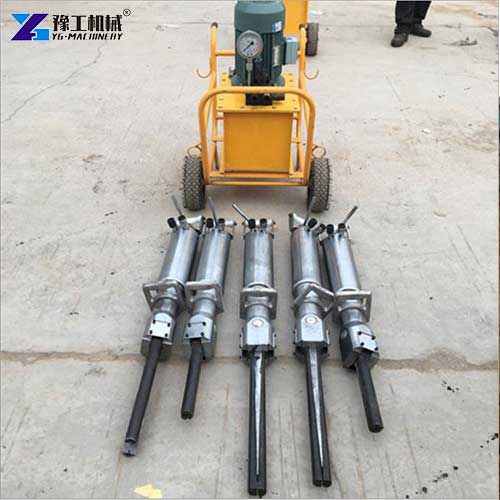
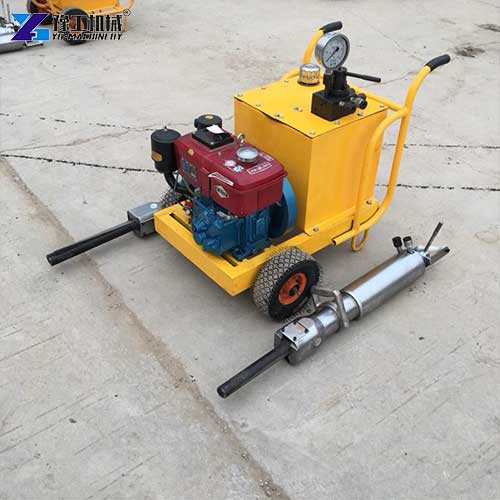
Key Applications of Hydraulic Stone Splitter
A rock splitter machine serves a surprisingly wide range of industries and project types. Any job that requires breaking hard material in a controlled way is a candidate for this equipment.
- Quarrying and stone extraction are among the most common uses. In granite, marble, and limestone quarries, operators use splitters to extract large blocks of stone with clean, straight edges. This produces higher-quality material than blasting and reduces waste from irregular breakage. Quarry operators can split stone along natural grain lines for better yield and more marketable blocks.
- Concrete demolition and removal is another major application. A hydraulic concrete splitter works well for removing foundations, retaining walls, bridge abutments, and other reinforced concrete structures where you need control over where the material breaks. It is especially useful in tight spaces where larger equipment cannot reach.
- Urban and indoor demolition relies heavily on splitting technology because of the low noise and zero vibration. In city centers, residential areas, and occupied buildings, traditional demolition methods often face restrictions. Splitters let you work during normal hours without disturbing neighbors or causing structural concerns from vibration.
- Mining and tunneling operations use splitters for ore extraction and tunnel development. In underground environments where ventilation and safety are critical, the lack of dust, fumes, and shockwaves makes splitting a preferred method for certain types of rock removal.
- Historical building restoration and renovation also benefit from this approach. When you need to remove parts of an old structure without damaging the rest, controlled splitting gives you precision that impact tools cannot match.
- Other uses include landscaping rock shaping, trench work in rocky ground, and emergency rescue operations where you need to free someone trapped under concrete or rock.
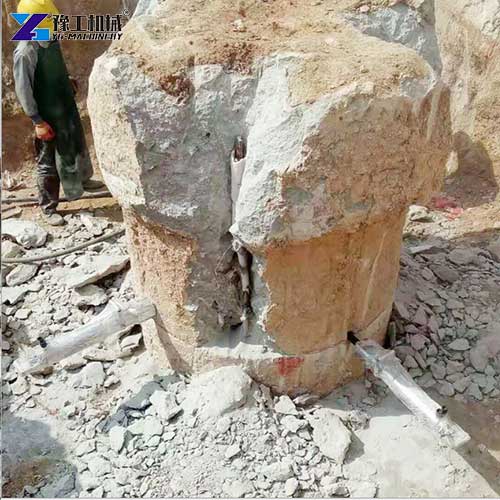

5 Advantages of Hydraulic Stone Splitter
- High splitting force in a compact package: The numbers tell the story. Models range from 500 to 800 tons of splitting force, depending on the size. That is tremendous power from a tool you can move around a job site relatively easily. The force comes from hydraulic pressure amplified through the wedge mechanism, so even a relatively small power unit generates an impressive cracking force.
- Static, controlled operation: Unlike impact tools that hit material repeatedly, a splitter applies steady, static pressure. This means no shockwaves, no recoil, and no flying debris. The operator controls exactly where the crack starts and in which direction it propagates. This level of control is essential when you are working near structures you want to keep intact.
- Low noise and zero vibration: This is one of the biggest advantages for urban and indoor work. A splitter produces very little noise — mostly just the sound of the power unit, which is comparable to other hydraulic equipment. There is no impact noise, no hammering, and no ground vibration. This means you can work in noise-sensitive areas, near occupied buildings, and even indoors without creating a disturbance.
- Environmentally friendly operation: No dust clouds, no flying rock fragments, no chemical explosives. The process is clean and produces minimal airborne particles. This matters in environmental projects, near water sources, and in areas where dust control regulations are strict.
- Electric and diesel power options: You can choose the power source that fits your job site. Electric units work well where you have access to power and want zero exhaust emissions. Diesel units offer full portability for remote sites and areas without electricity. Both options deliver the same splitting performance.


How Does a Hydraulic Stone Splitter Work?
The process starts with drilling a hole into the rock or concrete. The hole diameter and depth depend on the splitter model and the material you are working with. Smaller models require a 42mm diameter hole, while larger ones need 46mm. Drilling depth ranges from 500mm to over 900mm depending on the model. Proper hole preparation is critical — the hole needs to be straight, clean, and deep enough for the wedge to fully engage.
Next, you insert the splitting gun into the drilled hole. The gun contains a central wedge and two side wedges. When the gun is in position, you make sure it is properly seated and aligned with the direction you want the crack to travel.
Then you activate the hydraulic pressure from the power unit. As pressure builds, the central wedge pushes forward between the two side wedges, forcing them outward against the walls of the hole. This outward force is what creates the crack in the material.
The crack forms and propagates along the path of least resistance. In stone, this often follows natural grain lines. In concrete, it follows the direction you set with the wedge orientation. With proper hole placement and spacing, you can predict and control exactly where the material will split.
Cleavage time is remarkably fast — typically 10 to 15 seconds per split. After the crack forms, you release the pressure, retract the wedge, and move to the next hole. The process repeats until you have removed the desired section of material.
Hydraulic Rock Splitter Price – YG Machinery Factory Price
We support our customers with parts availability, technical guidance, and help in selecting the right model for their specific application. Whether you are looking at hydraulic rock splitter price points for your first unit or adding to an existing fleet, we help you choose equipment that fits your work and your budget. If you have questions about specifications, model selection, or how a hydraulic stone splitter would improve your demolition or quarrying operation, reach out. We will walk you through the options and help you find the right fit.