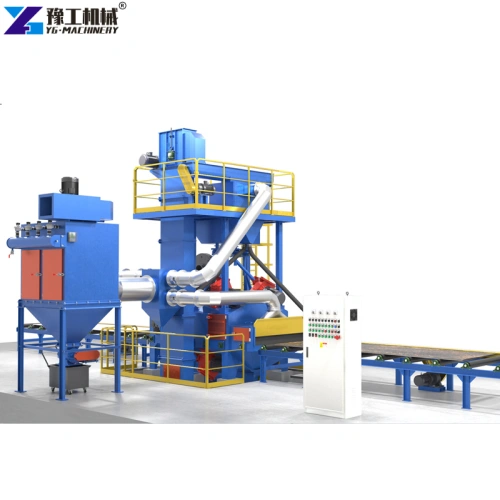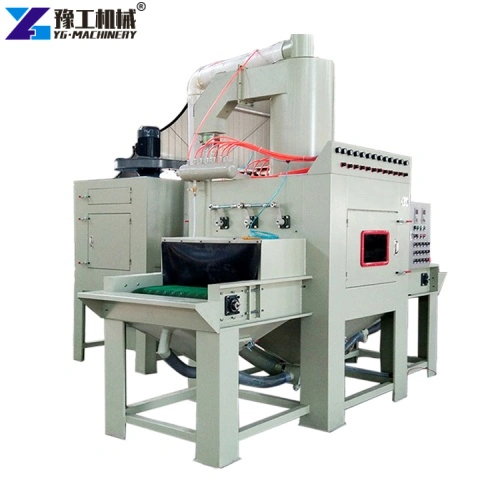
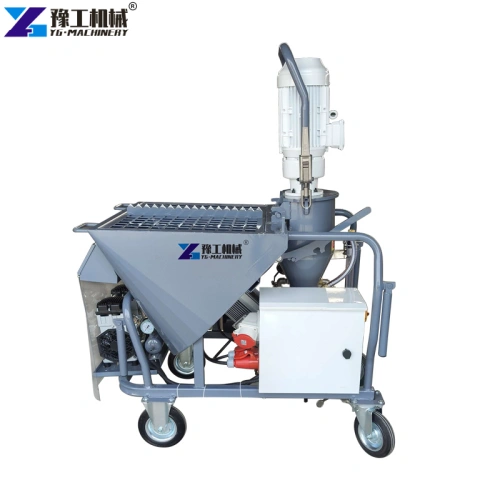
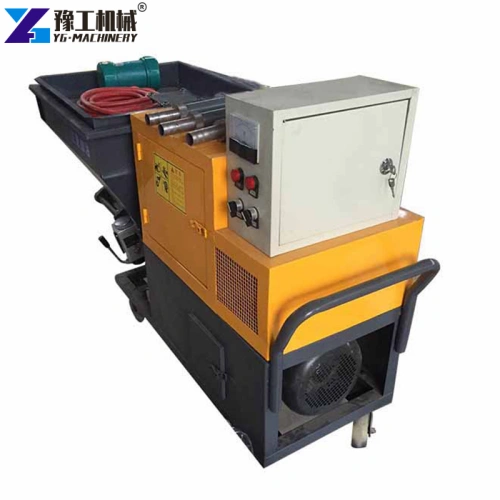
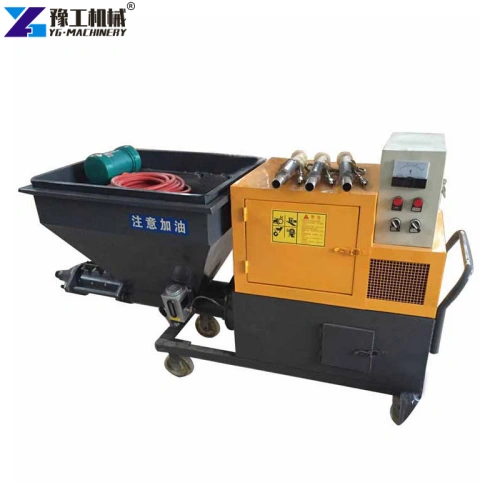
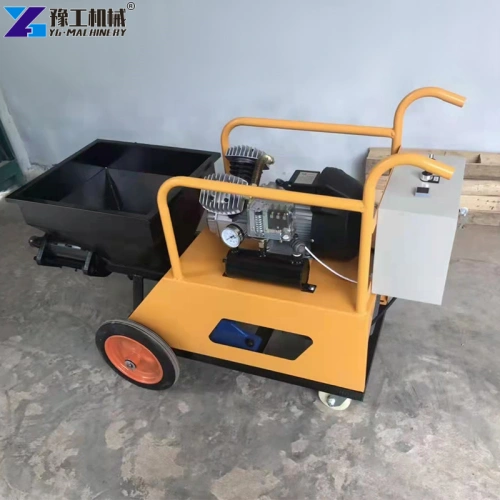
Stucco machines, also referred to as mortar spraying machines or concrete spraying machines, are not standalone equipment. Instead, they form a complete system that covers multiple subtypes, including cement plastering, spraying machines, and gypsum spraying machines. They are suitable for different construction scenarios, and their price range varies depending on the model and features. Cement plastering spraying machines are primarily used for spraying cement mortar and mixed mortar, suitable for basic plastering of interior and exterior walls. Gypsum spraying machines focus on automated application of gypsum mortar, often used for leveling and finishing interior walls. Although their focuses differ, both rely on the core technology of mortar spraying machines (plastering machines) to significantly reduce construction intensity. Contact us now for more machine details.
YG Stucco Machine Parameter
| Model | YG311 | YG318 | YG500 | YG711 |
| Greatest Pressure | 3Mpa | 3Mpa | 3Mpa | 3Mpa |
| Capacity | 3㎡/h | 3㎡/h | 3㎡-4㎡/h | 4㎡/h |
| Applicable material ratio(water, ash, sand) | 0.7-1:1:3 | 0.7-1:1:3 | 0.7-1:1:3 | 0.7-1:1:3 |
| Main motor power | 4KW | 7.5KW | 8hp/12hp | 7.5KWstrength |
| Particle Size | ≤4mm | ≤8mm | ≤8mm | ≤8mm |
| Conveying Distance | H:30m/V:20m | H:50m/V:30m | H:50m/V:30m | H:50m/V:30m |
| Hopper Volume | 60L | 80L | 80L | 100L |
| The diameter of the feed delivers the pipe | 32mm | 32mm | 32mm | 32mm |
| Weight | 200KG | 320KG | 320KG | 320KG |
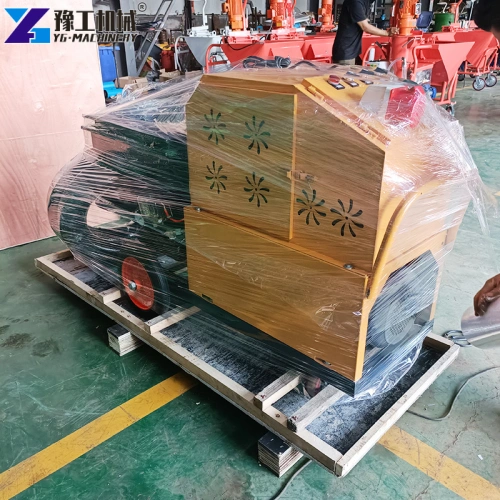
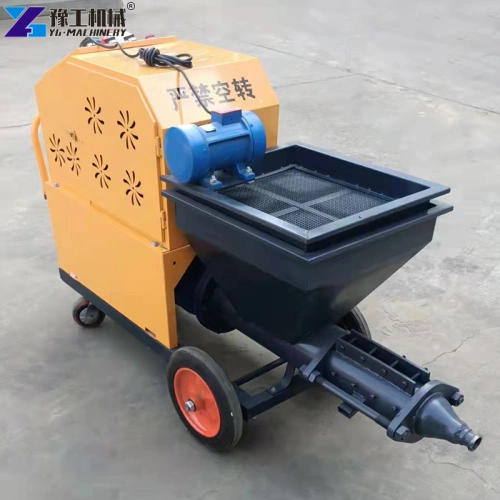
Stucco Machine Core Type Classification
Plastering machines are classified into four main categories based on their working principle and pump structure, adapting to different construction needs. This is also the core basis for distinguishing between cement plastering, spraying machines, and gypsum spraying machines:
1. Screw-type Mortar Spraying Machine
The motor drives a screw that meshes with a rubber stator to extrude and convey mortar. The pressure is 8-15MPa, resulting in stable, pulse-free discharge and low noise.
Advantages: Suitable for medium to low viscosity mortars (gypsum mortar, ordinary cement mortar), ideal for indoor plastering, thermal insulation spraying, and roughening treatments. Simple operation and compact size.
Disadvantages: Wear parts (screw, stator) require regular replacement, resulting in higher maintenance costs. Not suitable for high viscosity or coarse aggregate mortars.
Further subdivision: Generally used for gypsum spraying machines, often employing a screw-type structure to prevent gypsum mortar from hardening and clogging.
2. Plunger-type Mortar Sprayer
Motor/hydraulic drive piston reciprocating motion, pressure 10-25MPa, large flow rate, long conveying distance.
Advantages: Suitable for high-viscosity, coarse-aggregate cement mortar, ideal for thick-layer plastering of exterior walls, tunnel support, and slope protection projects; few vulnerable parts, high durability.
Disadvantages: Slight pulsation during discharge; requires careful control of flatness during operation; relatively heavy equipment.
Sub-categories: Plunger-type is the mainstream type for general cement plastering and spraying, suitable for high-intensity, large-area construction.
3. Hydraulic Plunger-type Mortar Sprayer
The hydraulic station drives the plunger, providing stable pressure and a high degree of automation; it is a heavy-duty model.
Advantages: Enables ultra-long-distance (horizontal 80m+, vertical 40m+) and ultra-thick-layer spraying, suitable for large-scale infrastructure projects, bridge reinforcement, and tunnel engineering.
Disadvantages: Complex structure, difficult maintenance; relatively high price.
4. Pneumatic Mortar Sprayer
Driven by compressed air, with low pressure and a small flow rate.
Advantages: Explosion-proof, lightweight, suitable for confined spaces, maintenance projects, chemical plants, and other non-electrical/explosion-proof environments;
Disadvantages: Relatively low efficiency, not suitable for large-scale continuous construction.
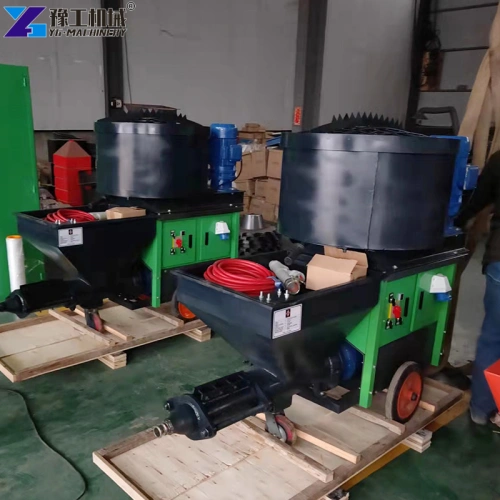
Key Considerations for Selecting a Plastering Machine
1. Select Based on Construction Materials
For sprayed gypsum and thermal insulation mortar, select a YG screw-type gypsum spraying machine; for cement mortar and coarse aggregate mortar, select a YG plunger-type cement plastering spraying machine; for special thick-layer mortar, select a YG hydraulic plunger-type machine.
2. Select based on project scale
Small-scale home renovations, partial repairs → Small screw press; Medium-scale construction, interior and exterior wall plastering → Medium-sized plunger press; Large-scale infrastructure projects, tunnels and bridges → Heavy-duty hydraulic press.
3. Select based on conveying distance
Horizontal < 30m, vertical < 20m → Small machine; Horizontal 30-50m, vertical 20-30m → Medium machine; Horizontal > 50m, vertical > 30m → Heavy-duty hydraulic press.
4. Select based on budget and cost-effectiveness
Short-term rentals, small projects → Screw type preferred, cement plastering sprayers are affordable; Long-term construction, large projects → Plunger/hydraulic type, high durability and low long-term maintenance costs.
Prioritize YG Stucco Machine Manufacturer
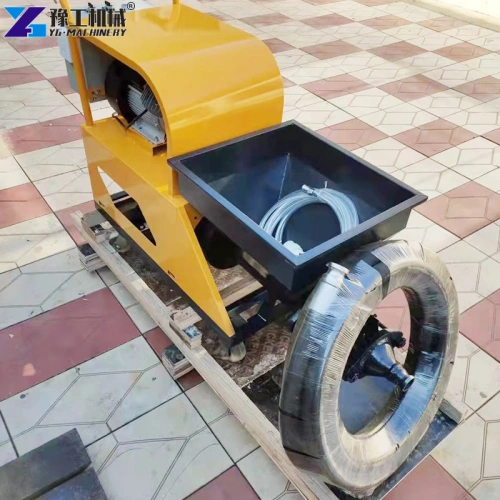
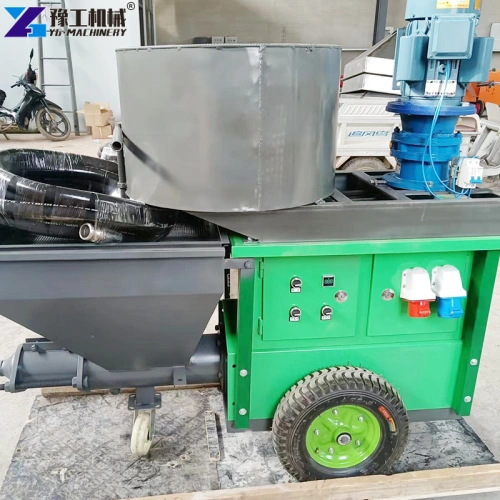
- Complete Model Range: Covering screw, plunger, hydraulic, and pneumatic types, including all categories of cement plastering sprayers and gypsum sprayers, offering a one-stop selection.
- Reliable Quality: Core components use wear-resistant materials, vulnerable parts are standardized, and after-sales spare parts are supplied promptly, avoiding downtime losses.
- Transparent Pricing: Mortar sprayer and cement plastering sprayer prices are clearly marked, with no hidden costs, offering better value than generic equipment.
- Technical Support: Providing operational training, troubleshooting services, and technical optimizations to adapt to different construction scenarios.
YG Stucco Machine FAQs
Q1: Are YG gypsum spraying machines and cement plastering spraying machines interchangeable?
A: Not entirely interchangeable. YG cement plastering spraying machines (especially plunger type) are primarily for cement mortar. If used for gypsum mortar, they are prone to solidification, pipe blockage, and wear on parts. Gypsum spraying machines are mostly screw-type, suitable for low-viscosity gypsum mortar, but cannot withstand the pressure of high-viscosity cement mortar. It is recommended to select a model specifically for the construction material.
Q2: What are the replacement cycles and costs for wear parts of mortar spraying machines?
A: Screw type (gypsum spraying machine): Screw and stator replaced every 3-6 months; Plunger type (cement plastering spraying machine): Piston and sealing rings replaced every 8-12 months. Overall, maintenance costs are lower than the savings from manual plastering.
Q3: There is a large price difference in mortar spraying machines. Is it worth buying a low-priced machine?
A: I don’t recommend buying cheap, no-name brand machines. Their core components are made of poor materials, they are prone to pipe blockage, and they frequently malfunction, resulting in high maintenance costs later on. YG models have transparent pricing, stable quality, and are more cost-effective for long-term construction.