

A small road roller is a compact compaction unit built to handle tight‑access work zones where large heavy‑duty rollers cannot operate. It works to compress asphalt layers, gravel backfill, sand bedding and topsoil across repair patches, sidewalks, curbsides, parking lot edges and landscaping projects. Contractors rely on this equipment to achieve consistent compaction density without over‑sizing machinery for limited‑space sites. When job sites feature narrow passages, partial‑depth road repairs or confined renovation zones, this machine fills a critical gap in on‑site compaction workflows.
Small Road Roller Technical Specifications:
| Model | YG-600S | YG-600D | YG-850 | YG-880 |
| Type | Walk-behind | Walk-behind | Ride-on | Ride-on |
| Drum number | 1 | 2 | 2 | 2 |
| Engine power | 5.5Hp | 6.0Hp | 6.0Hp | 25Hp |
| Walking speed | 2.4km/h | 0-4km/h | 0-4km/h | 0-5km/h |
| Walking type | Two-side | Two-side | Two-side | Two-side |
| Drive Type | Hydraulic | Hydraulic | Diesel | Hydraulic |
| Drum size | 426*600 | 426*600 | 580*700 | 800*850 |
| Vibrate force | 15KN | 25KN | 35KN | 50KN |
| Climbing ability | 25% | 30% | 30% | 30% |
| Weight | 330kg | 550kg | 750kg | 1000kg |


Why Compaction Quality Matters For Road Maintenance?
Many project teams focus only on paving materials yet overlook compaction performance, which directly defines long‑term pavement service life. Poor compaction creates hidden voids inside asphalt or aggregate layers. Over traffic cycles, these voids trigger settlement, surface cracking and early pavement failure. Even premium asphalt mixes cannot deliver expected durability if compaction stays inconsistent.
A reliable compaction machine locks particle structures tightly together. It minimizes internal gaps and improves surface load‑bearing capacity. For road repair and routine road‑preservation tasks, consistent compaction stops premature damage from forming along curbs, joint seams and patch boundaries. This is exactly where a small road roller brings unmatched practical value.
Key Product Features of Small Road Roller
Built for confined‑area compaction, these units split into walk‑behind and ride‑on configurations, each with targeted mechanical advantages.
1. Walk‑behind units (YG‑600S, YG‑600D)
- YG‑600S mini road roller compactor uses a single drum layout. It holds compact turning radius and fits extremely narrow working strips. Its gear‑adjustable handle adapts for operators of different heights. High ground clearance on both side and end sections lets it run close alongside walls and stone edges. The hydraulic drive delivers steady travel during asphalt and aggregate compaction.
- YG‑600D adopts a dual‑drum design. It moves forward and backward with responsive steering, lowering operator physical fatigue. A forced reverse lever boosts operating safety. The foldable handle collapses completely, reducing occupied space for storage. Travel speed adjusts continuously to match different material compaction requirements.
2. Ride‑on units (YG‑850, YG‑880)
These ride‑on small road rollers deliver far higher vibratory force compared with walk‑behind versions. YG‑850 runs on diesel power while YG‑880 uses hydraulic drive. Both carry a dual‑drum setup. Their compact overall footprint still supports operation in relatively narrow work zones. Adjustable folding handles suit varied operator physiques. Robust vibration output achieves deeper compaction depth on thicker fill layers. Every ride‑on model supports variable forward‑reverse travel speed.


Matching Machine Type Against Your Job Site Constraints
Most purchasing mistakes happen when buyers only compare horsepower figures, ignoring actual site limitations. Three practical site factors guide proper model selection.
- Working space dimensions: If you operate along curb edges, inside narrow trenches or on small patch repair spots, walk‑behind variants make more sense. Their narrow body can squeeze into areas inaccessible for ride‑on compaction gear. When you handle larger continuous zones such as small parking lots or extended pathway sections, ride‑on units cut total working time significantly.
- Target compaction depth and material type: Light‑duty soil compaction or thin asphalt surface patches work well with YG‑600S. Dual‑drum YG‑600D mini road roller compactor brings more vibratory force for gravel and thicker bedding layers. For substantial fill depth and high‑density asphalt compaction, shift to YG‑850 or YG‑880 for stronger vibratory output.
- On‑site slope conditions: Job locations with frequent slope segments require attention to climbing capability. Every model holds a clear climbing capacity rating. You should match machine climbing performance against the maximum gradient you regularly encounter on your projects.
This is also where road roller for sale listings can mislead buyers. Many generic listings only display engine power, without clarifying drum configuration and gradient limits. Always cross‑reference these real‑world site constraints before finalizing your selection.

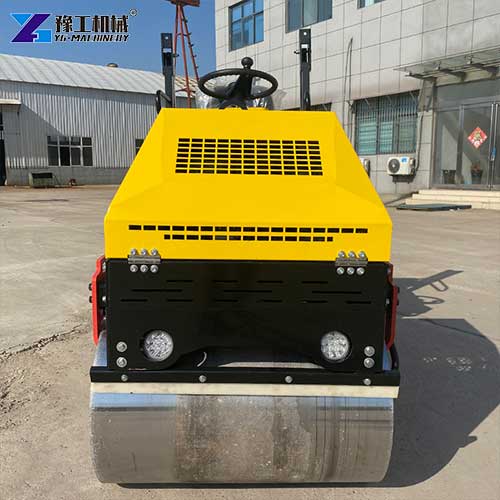
Road Roller For Sale – Factory Price
All small road roller variants go through factory assembly and functional testing before leaving production facilities. YG Machinery supplies both walk‑behind and ride‑on compaction units built for real‑world construction and road‑repair scenarios. Each model respects practical‑site constraints including narrow space access, slope travel and varied compaction‑depth demands.
We avoid over‑specifying units for small‑scale assignments, and we also prevent under‑powered selections for heavy‑duty compaction tasks. If you handle sidewalk renovation, pothole repair, landscaping backfill or small parking‑lot paving jobs, send your project details including typical material type, working‑space dimensions and slope situations. We will share targeted model recommendations and full technical specifications for your reference.