
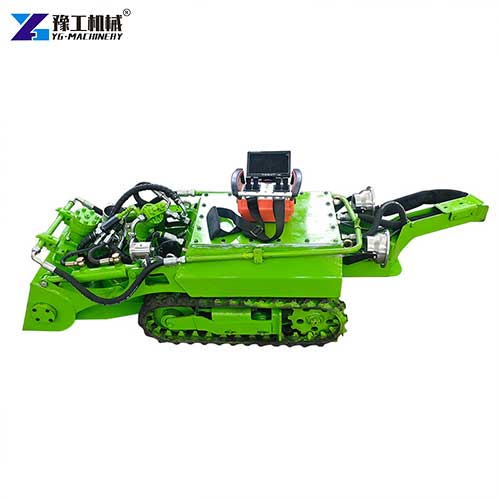
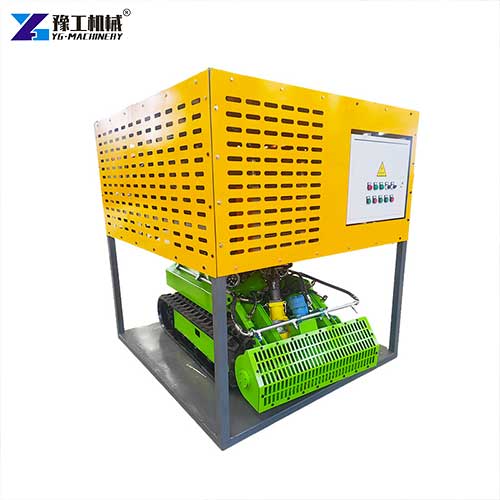
An underwater dredging robot is a remotely operated crawler machine designed to remove sediment, sludge, and debris from enclosed and open water bodies. Built with a tracked chassis and a submersible pump system, it travels along the bottom of pipes, channels, rivers, and tanks, agitates settled material and pumps it to the surface through a discharge hose.
Operators control the unit from above ground using a wireless remote panel, so no worker needs to enter confined or contaminated spaces. The machine comes in both electric and diesel power versions, with electric models being the standard recommendation for most projects due to lower cost and simpler maintenance. If you are comparing a dredging robot for sale across suppliers, pay close attention to pumping capacity, working depth, and what is included in the base package.
Underwater Dredging Robot Technical Specifications
| Model | YG-500 | YG-600 | YG-700 | YG-800 | YG-900 | YG-1200 |
| Robot dimensions | 1500*500*650mm | 1500*600*650mm | 1600*700*650mm | 1600*850*700mm | 1650*960*750mm | 1900*1200*750mm |
| Dredging width | 500mm | 600mm | 700mm | 800mm | 900mm | 1200mm |
| Track travel speed | 3-15m/s | 3-15m/s | 3-15m/s | 3-15m/s | 3-15m/s | 3-15m/s |
| Robot weight | 320kg | 350kg | 380kg | 400kg | 420kg | 500kg |
| Pump output diameter | 3inch | 3inch | 4inch | 4inch | 4inch | 4inch |
| Pump flow rate(cubic meters/ hour) | 100 m³ | 100m³ | 200m³ | 200m³ | 200m³ | 200m³ |
| Pump head | 0-30m | 0-30m | 0-30m | 0-30m | 0-30m | 0-25m |
| Hydraulic station dimensions(mm) | 2200*1200*1700 | 2200*1200*1700 | 2200*1200*1700 | 2200*1200*1700 | 2200*1200*1700 | 2120*1240*1200 |
| Main motor power | 22kw | 22kw | 30kw | 30kw | 30kw | 45kw |
| Hydraulic system pressure | 0-16Mpa | |||||
| Particle size | 15mm | 15mm | 38mm | 38mm | 38mm | 60mm |
| Reeling system speed | 0-10r/min | |||||
| Hydraulic hoses | 50m (Standard configuration) | |||||
| Control system | Wireless remote control | |||||
| Lighting system | Underwater LED lights *2 | |||||


Underwater Dredging Robot Applications
This type of underwater cleaning robot serves municipal, environmental, and industrial customers across very different types of sites.
Municipal drainage systems. Cities use them to clear sediment from stormwater pipes and inspection chambers. Regular desilting keeps drainage capacity high and reduces the risk of urban flooding during heavy rain.
Water conservancy and environmental projects. In rivers, lakes, and reservoirs, accumulated silt reduces water storage and harms aquatic ecosystems. These underwater cleaning robots carry out targeted dredging to restore water volume and support ecological recovery.
Industrial facilities. Factories and wastewater treatment plants rely on robotic tank cleaning equipment to maintain settling tanks, oxidation ponds, and process piping. Regular cleaning keeps production lines running and helps facilities meet environmental discharge standards.
Industrial chemical zones. In plants where toxic or flammable gases may accumulate, sending a machine in instead of a person removes the single biggest risk of confined-space work.
6 Advantages of the Underwater Dredging Robot
- High dredging efficiency. Depending on the model, the machine handles 100 to 300 cubic meters per hour. Compared with manual cleaning or small handheld pumps, it covers far more area per shift and finishes large projects in a fraction of the time.
- Wireless remote operation. The operator stays on the surface and guides the crawler via a wireless control panel. Live orientation and movement feedback let the driver position the unit precisely without ever entering the water or the confined space.
- Tracked chassis for varied terrain. Rubber tracks give the machine traction on soft, muddy bottoms as well as inside smooth pipe walls. The low-ground-pressure design lets it work on fine silt without sinking.
- Built-in underwater lighting. Two underwater LED lights come as standard, so operators can see the work area even in dark pipes or murky water, especially when paired with an optional camera.
- Modular hydraulic system. The hydraulic station sits on shore and connects to the robot through a 50-meter standard hose bundle. Hoses can be extended for deeper or longer-reach projects.
- Proven performance on tanks and basins. As robotic tank cleaning equipment, it handles sediment layers, settled solids, and mixed sludge without requiring draining or confined-space entry, which means facilities keep operating during maintenance.
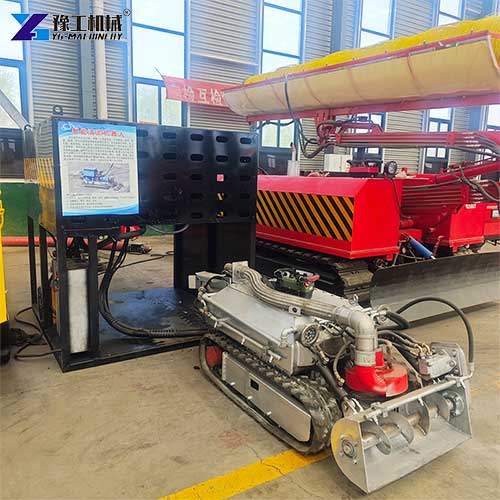

Optional Upgrades for Special Work Conditions
The base underwater cleaning robot handles most standard desilting jobs, but certain sites call for extra components. You can add the following when you need them.
Explosion-proof motor. Required for chemical plants, coal processing sites, and other areas with flammable gas or dust. This upgrade lets the machine operate in classified hazardous zones where standard electric equipment cannot enter safely.
Onboard camera system. Adds a visual feed to the control panel so the operator sees the cleaning head, the sediment level, and obstacles in real time. It is especially useful for inspection-first projects and for documenting completed work.
High-pressure water pump. Boosts breaking power for compacted or hardened sediment layers. The high-pressure jet loosens material before the main suction pump pulls it up, which improves overall speed on tough deposits.
When you are evaluating a dredging robot for sale, match these options to your actual site conditions. A facility that only handles municipal storm pipes may not need explosion protection, while a petrochemical plant will consider it essential. The right configuration keeps your upfront cost aligned with what the job actually requires.

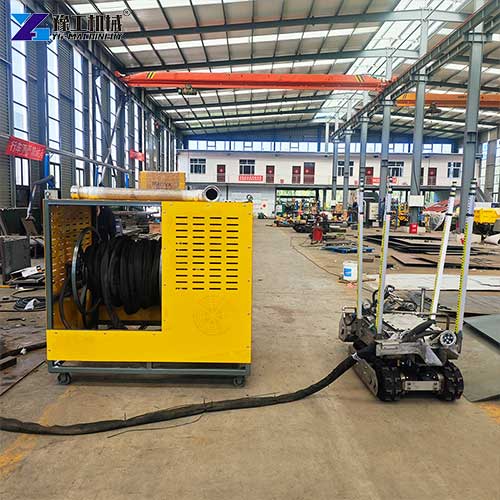
6 FAQs About Underwater Dredging Robot
A: Standard working depth ranges from 30 to 90 meters, depending on the model and hose configuration. We confirm the exact depth rating with your selected model.
A: Capacity ranges from 100 to 300 cubic meters per hour across the model lineup. Actual output depends on sediment density, particle size, and discharge distance.
A: Smaller models handle particles up to about 15 mm, while larger models can pass solids up to 60 mm. We recommend the right model based on the typical debris size at your site.
A: We offer both electric and diesel versions. We recommend electric units for most applications because they cost less upfront and are simpler to maintain. Diesel units are available for sites without grid power.
A: Hydraulic hoses are included in the standard package, with 50 meters as the base length. Additional hose can be added per meter. Discharge sewage pipes are sourced by the customer; we specify the required 4-inch connection size.
Yes. The machine operates fully submerged, so you do not need to drain the tank or basin before cleaning. This is a major advantage for facilities that cannot easily take a tank offline.