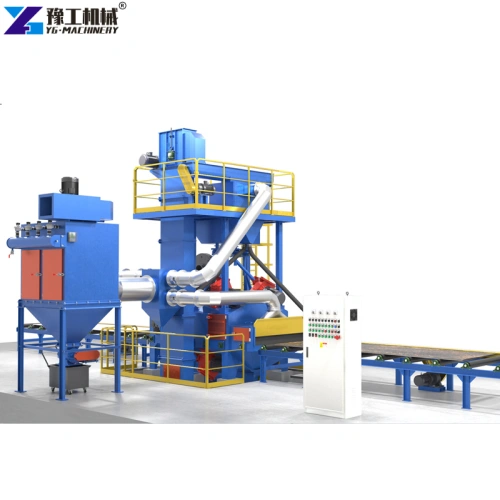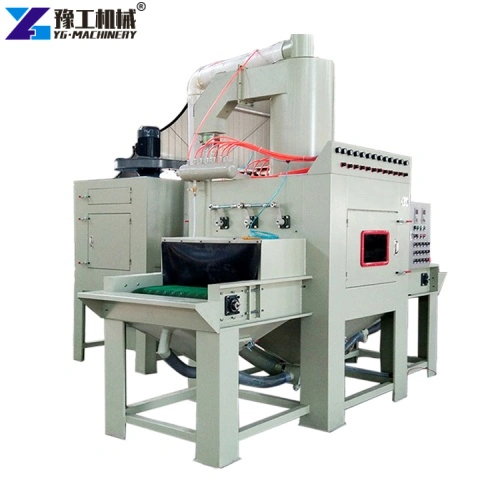


A portable rebar bending machine is a field-oriented rebar fabrication tool designed to bend round steel and deformed steel bars directly at construction job sites, eliminating the need to transport pre-cut bars back and forth from off-site workshops. This unit handles both single-wire and double-wire bending tasks with consistent ±1mm length accuracy and ±1° angle precision, and it adapts to scattered work zones and temporary project yards with its compact frame design. As an automatic rebar bender optimized for field use, it supports a maximum ±180° bending angle and interchangeable center pins, and operates reliably across a working temperature range from -5°C to 40°C for year-round construction tasks. For teams evaluating rebar bending machine for sale options for decentralized site work, this mobile model delivers far higher flexibility than fixed workshop equipment.
Portable Rebar Bending Machine Parameters:
| Model | YG-1 | YG-2 |
| Single wire | Round steel 4- 10 mm Deformed steel bar 4- 8 mm | Round steel 4- 12 mm Deformed steel bar 4- 10 mm |
| Double wire | Round steel 4- 6 mm Deformed steel bar 4- 6 mm | Round steel 4- 8 mm Deformed steel bar 4- 8 mm |
| Max bending angle | ±180° | ±180° |
| Center pin diameter | 16、18、20 | 16、18、20 |
| Maximum towing speed | 60m/min | 60m/min |
| Maximum bending speed | 800°/sec | 800°/sec |
| Machine size | 2600*800*1700mm | 3280*1000*1700mm |
| Pieces Processed | ≤2 | ≤2 |
| Air circuit system pressure | ≥0.8mpa | ≥0.8mpa |
| Total Power | 14kw | 20kw |
| Working temperature | -5°C~40° | -5°C~40° |
| Length accuracy | ±1mm | ±1mm |
| Angle accuracy | ±1° | ±1° |
| Average power | 4.5KW/h | 5KW/h |
| Total weight | 1150KG | 1350KG |


6 Applications of Portable Rebar Bending Machine
- Concrete Foundations. Foundations require bent rebar for footings, mats, and column bases. The YG series processes the rebar for these structural elements, delivering consistent quality.
- Walls and Columns. Shear walls and columns require large quantities of stirrups and ties. The YG series handles the rebar sizes and shapes required.
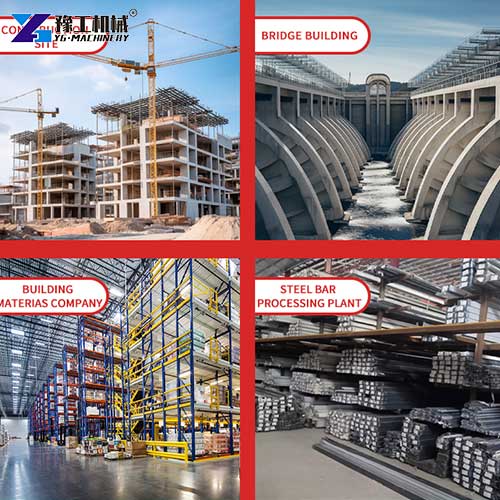
- Bridge Construction. Bridge girders and decks require precise rebar bending for stirrups and hooks. The YG series handles the rebar processing needs of bridge projects.
- Tunnels. Tunnel linings and segments require bent rebar for reinforcement. The YG series produces the stirrups and ties needed for tunnel construction.
- Precast Concrete Yards. Precast elements require large volumes of bent rebar for beams, columns, slabs, and wall panels. The YG steel bar bender provides the production capacity needed for precast operations.
- On-Site Adjustments. When rebar is already in place and needs to be bent—such as after concrete placement or during structural modifications—a portable rebar bending machine is the only practical solution.
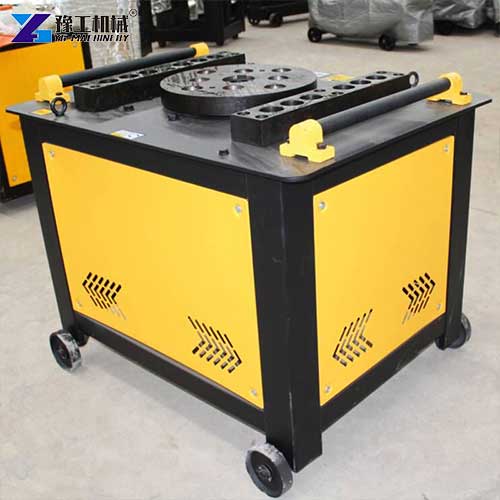
5 Features of Portable Rebar Bending Machine
1. High-speed bending, stable output.
Bending speed reaches 800°/sec—a 90° bend takes just 0.11 seconds. Combined with a 60m/min feed rate, a complete cycle from bar feed to discharge takes about 7-8 seconds for a standard stirrup. One machine produces 400-500 stirrups per hour. Output depends on the machine’s speed, not the operator’s hands.
2. ±1mm length accuracy, ±1° angle accuracy.
Bending precision determines whether stirrups fit in formwork and whether hooks lap properly. The YG series holds length accuracy to ±1mm and angle accuracy to ±1°. Every bend position is measured and controlled by the CNC system—no reliance on the operator’s eyes or experience. The machine does not fatigue, does not lose focus, and delivers the same results from the first bar to the last.
3. Single-wire and double-wire modes for doubled output.
The YG automatic rebar bender supports both single-wire and double-wire bending. Single-wire mode processes larger diameters (round steel up to 10- 12 mm, deformed bar up to 8- 10 mm). Double-wire mode bends two smaller-diameter bars simultaneously (round steel 6- 8 mm, deformed bar 6- 8 mm) in the same cycle time—doubling output without doubling the machine. No second machine required.
4. CNC control with multiple program storage.
Traditional manual benders require re-marking and re-aligning for every shape change. The YG steel bar bender stores multiple bending programs. The operator selects the program, and the machine executes the bends automatically. Switching stirrup shapes takes seconds, not setup time. New operators become productive quickly—precision is handled by the machine, not by years of experience.
5. Two models for different diameter ranges.
YG-1 processes round steel 4- 10 mm and deformed bar 4- 8 mm with 14kW power and a 2600×800×1700mm footprint. YG-2 processes round steel 4-12mm and deformed bar 4-10mm with 20kW power and a 3280×1000×1700mm footprint. Both models share the same speed, accuracy, and bending angle—the only difference is capacity and power. Choose the model that matches your maximum rebar diameter.

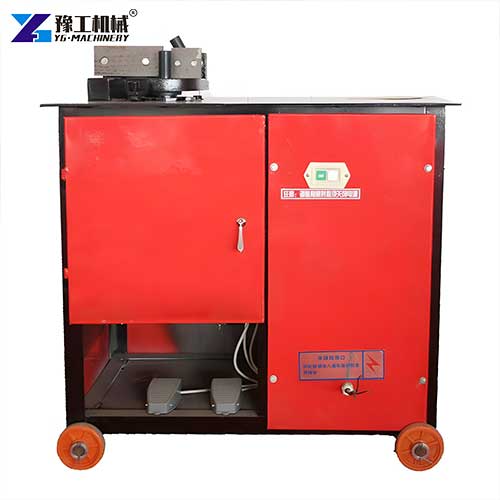
Bending Speed and Accuracy
Speed and accuracy are the two numbers that determine how many bars a portable rebar bending machine can produce per shift—and whether those bars will actually fit in the formwork.
1. 800°/sec bending speed
The YG series bends at 800° per second. A 90° bend takes 0.11 seconds. A standard stirrup with four 90° bends takes 0.44 seconds of actual bending time. Add feed time, and the total cycle per bar is 6-7 seconds. One machine can process 400-500 stirrups per hour.
2. 60m/min feed speed
The steel bar bender pulls rebar through at 60 meters per minute. A 6-meter bar feeds through in 6 seconds. Fast feed means less positioning time and more bending time. The practical output is 4-5 tons of rebar per 8-hour shift, depending on bar size and bend complexity.
3. ±1mm length accuracy
Every bend position is measured by the CNC feed system. Each bar is positioned to within ±1mm before bending. This matters because a stirrup that is 2mm too wide won’t fit in the beam formwork. A stirrup that is 2mm too narrow won’t enclose the main bars properly. The YG series holds this tolerance consistently, shift after shift.
4. ±1° angle accuracy
Every bend angle is controlled to within ±1°. A 90° bend is between 89° and 91°. A 135° hook is between 134° and 136°. This matters because hooks and bends need to engage properly with adjacent reinforcement. If the angle is off by 2°, gaps form between the bent bar and the main bars—compromising the connection. The portable rebar bending machine does not get tired, does not get distracted, and does not vary between morning and afternoon.

Rebar Bending Machine For Sale
If you are looking for reliable rebar bending machine for sale options for your on-site construction teams, or need help selecting the right model for your typical bar sizes and daily output, reach out to our team today. We will provide detailed specification sheets and targeted configuration recommendations to match your exact project requirements and help you select the most cost-effective mobile bending solution.