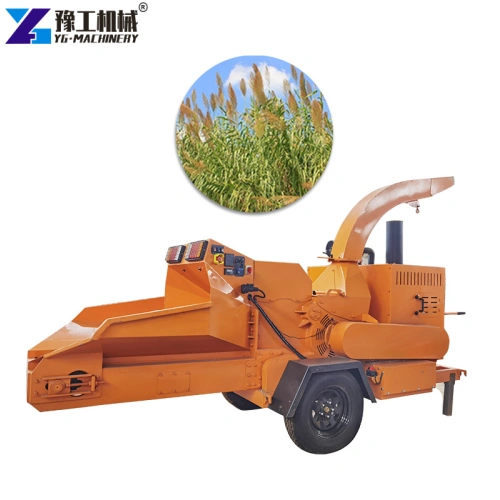
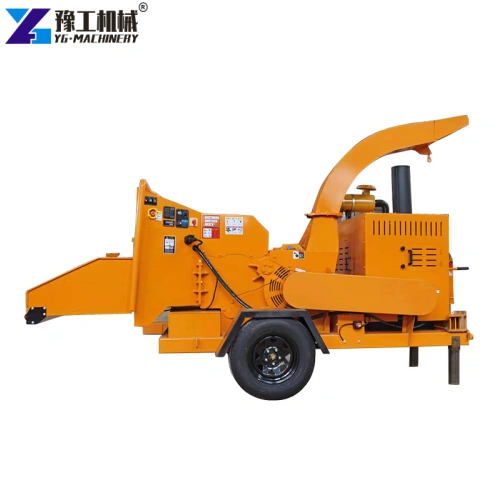
When purchasing a mobile woodland chipper, wheeled and tracked models are the two main walking configurations, differing significantly in terms of passability, mobility, operating costs, and suitable scenarios. Many users choose models solely based on price, ultimately encountering problems such as getting stuck, difficulties in relocation, and equipment damage. This article, considering terrain features, working conditions, and operating costs, clearly compares the advantages and disadvantages of the two models of woodland chippers, provides precise selection solutions for different sites, and supplements with accessory reference suggestions to help purchasers make quick decisions.
Mobile Wood Chipper Parameter
| Model | YG-6130 | YG-6145 |
| Motor Type | Diesel motor, electric start | Diesel motor, electric start |
| Capacity | 2 tons/hour | 5 tons/hour |
| Dimensions | L2300*W1300*H1800 | L3200*W1700*H2400mm |
| Knife Roller Diameter | 300 mm | 500 mm |
| Equipped with power | 23.6KW diesel engine | 75KW (102 hp) diesel engine |
| Host speed | 2600r/min | 2500r/min |
| Number of blades | 4 moving knives, 1 stationary knife | 4 moving knives, 1 stationary knife |
| Maximum broken branch diameter | 130mm | 250mm |
| Feed throat size mm | 300*180 | 450*380 |
| outlet direction | The 360-degree quick adjustment device | 360-degree quick adjustment device, outlet angle adjustment, outlet nozzle, height adjustment |
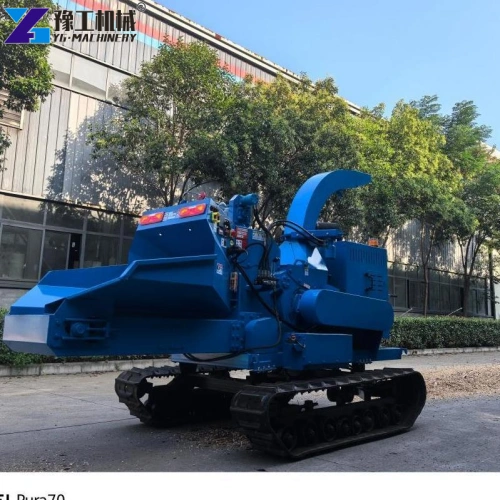
I. Comparison of Core Structure and Basic Characteristics
1. Wheeled Woodland Chippers
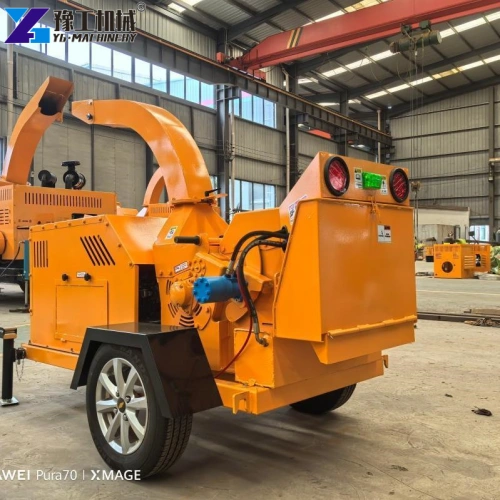
These rely on rubber tires for movement and are divided into two main categories: push-wheeled and towed wheeled types. This is also the standard structure for small and medium-sized woodland chippers on the market.
- Core Advantages: Lighter overall weight and simpler structure; faster travel speed on paved roads, flexible steering, saving time and effort for short-distance relocation; less tire wear, simple daily maintenance, inexpensive tires, bearings, and other parts, resulting in low long-term maintenance costs; less vibration during travel, causing no damage to flat ground, suitable for paved roads in factories and industrial parks.
- Inherent shortcomings: Small ground contact area, limited traction, easily slipping and getting stuck on soft, muddy, and steep surfaces; weak climbing ability, with conventional wheeled models having a maximum climbing angle of only about 15°, unable to handle mountainous or sloping terrain; tires are easily punctured by gravel and branches during prolonged travel on unpaved surfaces.
2. Tracked Woodland Chippers
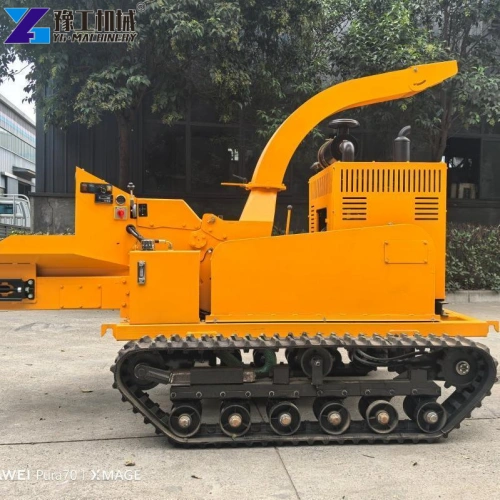
Utilizing a combination of rubber tracks and load-bearing wheels, these are mostly self-propelled designs and represent the mainstream configuration for engineering-grade mobile wood chippers.
- Core advantages: Large track ground contact area, low unit pressure, and extremely strong anti-slip and anti-sinking capabilities; standard climbing angle of 30°~35°, stable passage on mountains, slopes, and uneven dirt roads; low center of gravity, smooth travel, less prone to tipping over on complex and bumpy roads, and higher safety for heavy-duty operations; strong all-terrain adaptability, not limited by road surface or soil conditions.
- Inherent drawbacks: The purchase price is slightly higher than wheeled models of the same specifications; the tracked structure is complex, resulting in greater weight and slower speed on flat ground.
II. Precise Selection Based on Terrain and Scenario
1. Flat and Hardened Roads (Preferred: Wheeled Woodland Chipper)
- Included sites: Urban main roads, residential parks, factory floors, logistics parks, indoor factories, hardened rural roads, and asphalt/cement sidewalks.
- Selection recommendations: Prioritize push-wheeled and towed wheeled wood chippers.
These sites have firm and flat surfaces, eliminating the risk of slipping or getting stuck. Wheeled models are maneuverable and have high relocation efficiency. When operating in residential areas, wheeled models have relatively less vibration and noise, better meeting the requirements of the surrounding environment.
Additional note: If only operating on hardened roads, there is no need to add a tracked chassis, avoiding unnecessary increases in the purchase budget.
2. Soft Soil/Muddy Sites/Slope Terrain (Catalyst: Tracked Woodland Chipper)
- Site Types Included: Loosening wood in woodlands, muddy greenbelts after rain, riverbanks, farmland dirt roads, sandy soil, and newly tilled nursery grounds.
- Selection Recommendation: Tracked wood chippers must be used.
Soft mud and sand have poor load-bearing capacity; wheeled tires are prone to sinking, slipping, and not only hindering normal operation but also potentially causing tire jamming and machine tilting. Tracked tires provide strong traction, easily handling slopes up to 35°, stabilizing the machine’s center of gravity, and significantly improving safety when going uphill, downhill, or sideways, allowing for smooth and stable movement without getting stuck. Tracked models are particularly advantageous in typical scenarios such as Middle Eastern sandy areas and southern rainforest regions.
3.Mixed and Complex Terrain (Catalyst Preferred; Wheeled + Trailer Optional for Small-Scale, Scattered Operations)
- Site Types Included: Full-line operations in greening projects, with alternating sections of paved roads, dirt roads, small slopes, and forest trails.
- Selection Recommendations: For long-term, full-area construction projects → Tracked; For scattered locations and short daily relocation distances → Wheeled + transport trailer.
If the project requires frequent switching between various terrains, tracked vehicles can travel autonomously throughout the entire process, eliminating the need for equipment loading/unloading and trailer transport, resulting in higher overall efficiency. For small teams with scattered operations and concentrated daily work areas, high-performance wheeled models can be purchased, paired with small trailers for cross-terrain transport, balancing cost and maneuverability.
4. Narrow Forest/Pathways (Choose one, depending on road surface)
- Included sites: Dense forests, orchard rows, narrow rural lanes, park paths.
- Selection Recommendations: For cement/hard soil surfaces → Wheeled; For soft, undulating surfaces → Tracked.
Both types of vehicles can be designed with a compact body to meet the needs of narrow passages. The core criterion remains the road surface. Wheeled vehicles offer greater flexibility on hard surfaces, while tracked vehicles provide better protection against sinking and slipping on soft, undulating surfaces.
Summarize
When selecting a woodland chipper, prioritize terrain considerations, followed by the scale of operations and budget. Don’t judge quality solely by price. For special working conditions such as overseas projects, Middle Eastern sandy areas, and mountainous forest farms, tracked woodland chippers are essential; while for conventional scenarios like urban residential areas, factories, and orchards in plains, wheeled models are perfectly adequate. Choosing the right machine based on your specific working conditions will maximize its value. Contact YG now for a complete solution and quote!