When contractors evaluate dredging equipment for sale, the focus often falls on excavation volume. However, in environmental remediation and reservoir cleaning, moving the maximum amount of sediment creates a different problem. Dredging operations routinely remove benthic substrate, resuspend contaminants, and leave residual layers that continue to release pollutants after the project ends. As a result, a robotic dredging machine has become the preferred specification for projects with strict ecological compliance targets.
This article compares conventional methods—including any standard dredging machine—with our crawler-based robotic system, and explains how its design parameters address the three most common environmental failure points. If your project requires low turbidity and precise layer removal, send us your site conditions and our engineers will confirm the suitable configuration.
TL;DR: Traditional dredging removes benthic habitat, creates turbidity plumes, and leaves contaminated residuals that keep releasing pollutants. Our sand dredging machine system addresses these failures through crawler-based underwater operation, a high-capacity pump (100–200 m³/h), particle handling up to 60 mm, and wireless remote control. For eco-compliance, precision and containment outperform raw excavation power.
Why Does Conventional Dredging Trigger Environmental Red Flags?
If you are comparing dredging equipment for sale, the environmental record of conventional methods deserves scrutiny before you commit.
Loss of Benthic Habitat and Substrate
Dredging physically removes the substrate that benthic organisms depend on for habitat. Furthermore, the excavation process alters seabed topography and disrupts the ecological functions of the sediment bed. For reservoirs and rivers under environmental oversight, this habitat loss is a direct compliance concern.
Turbidity and Contaminant Resuspension
Cutter suction and mechanical dredging methods generate turbidity and resuspend fine sediments. Consequently, contaminants attached to those particles can travel beyond the work zone. Monitoring programs track turbidity as a surrogate for suspended solids and potential contaminant release.
Residual Layers That Keep Releasing Contaminants
Even after a dredging pass, a residuals layer of contaminated sediment often remains in place. Meanwhile, that layer continues to release contaminants into the water column. Therefore, the cleanup target may fail even when the equipment has left the site.

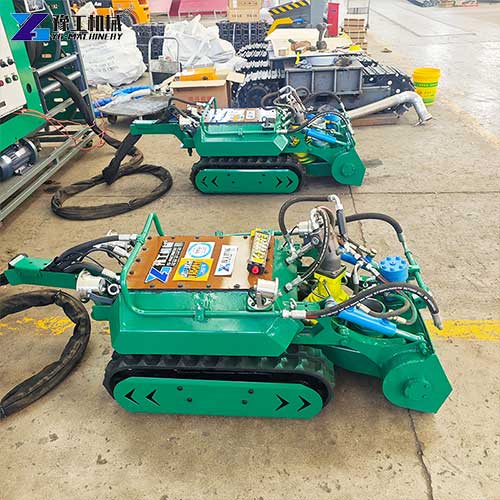
How Does Our Robotic Dredging Machine Address These Failures?
| Model | YG-500 | YG-600 | YG-700 | YG-800 | YG-900 | YG-1200 |
| Robot dimensions | 1500*500*650mm | 1500*600*650mm | 1600*700*650mm | 1600*850*700mm | 1650*960*750mm | 1900*1200*750mm |
| Dredging width | 500mm | 600mm | 700mm | 800mm | 900mm | 1200mm |
| Track travel speed | 3-15m/s | 3-15m/s | 3-15m/s | 3-15m/s | 3-15m/s | 3-15m/s |
| Robot weight | 320kg | 350kg | 380kg | 400kg | 420kg | 500kg |
| Pump output diameter | 3inch | 3inch | 4inch | 4inch | 4inch | 4inch |
| Pump flow rate(cubic meters/ hour) | 100 m³ | 100m³ | 200m³ | 200m³ | 200m³ | 200m³ |
| Hydraulic station dimensions(mm) | 2200*1200*1700 | 2200*1200*1700 | 2200*1200*1700 | 2200*1200*1700 | 2200*1200*1700 | 2120*1240*1200 |
| Main motor power | 22kw | 22kw | 30kw | 30kw | 30kw | 45kw |
| Hydraulic system pressure | 0-16Mpa | |||||
| Particle size | 15mm | 15mm | 38mm | 38mm | 38mm | 60mm |
| Reeling system speed | 0-10r/min | |||||
| Hydraulic hoses | 50m (Standard configuration) | |||||
| Control system | Wireless remote control | |||||
| Lighting system | Underwater LED lights *2 | |||||
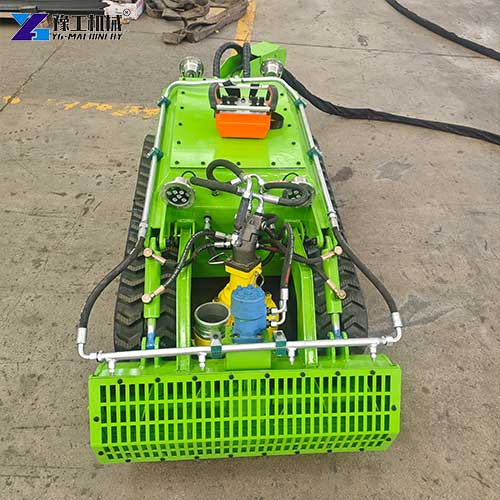
To meet ecological compliance, the equipment must remove the target sediment without draining the water body or disturbing the surrounding habitat. Our system achieves this through crawler-based underwater operation and remote control.
Crawler Movement on Muddy and Shallow Surfaces
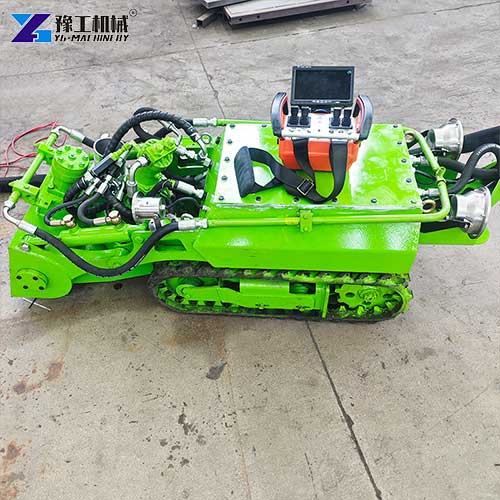
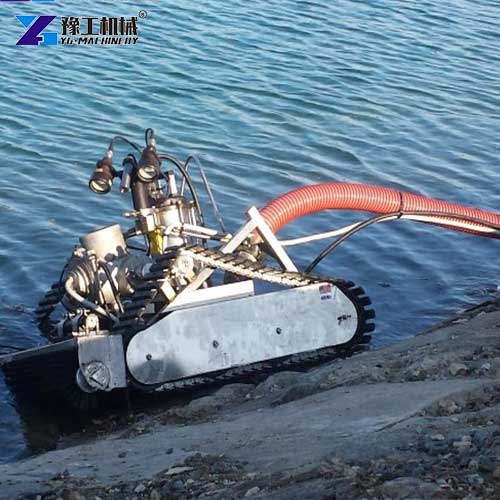
The crawler structure provides stable movement on muddy surfaces and in shallow water areas. This means the machine operates directly in the water body, without cofferdams or dewatering. As a result, the aquatic ecosystem remains in place during dredging, and benthic habitat outside the work zone stays intact.
High-Capacity Pump for Concentrated Slurry
Our pump flow rates range from 100 m³/h to 200 m³/h, with particle handling from 15 mm to 60 mm depending on the model. Consequently, the system moves a high-concentration slurry rather than large volumes of contaminated water. This reduces the downstream treatment burden and limits the spread of suspended solids.
Remote Operation and Real-Time Monitoring
The wireless remote control system allows operators to manage movement and dredging functions from a safe location. Furthermore, two underwater LED lights provide visibility for monitoring the working process in low-light or turbid conditions. Therefore, operators can adjust the cutting depth and position without entering the water, which lowers safety risk and improves targeting accuracy.
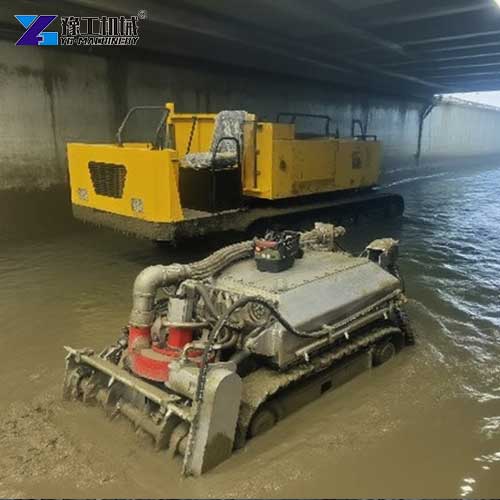
Why Dredging Machine Operations Must Evolve for Eco-Projects
A conventional sand dredging machine prioritizes volume. Eco-projects prioritize containment. The difference lies in how the equipment interacts with the sediment bed.
Targeted Removal Instead of Bulk Excavation
Our robotic system is designed for controlled, continuous sediment removal rather than bulk excavation. Industry research on low-impact dredging robots emphasizes “precise dredging, only where necessary” to reduce turbidity and ecological disturbance. Consequently, the operator can focus on the contaminated layer while leaving the underlying sand-gravel substrate in place for benthic recovery.
What to Confirm Before Specifying Robotic Dredging Machine
Before you commit to any dredging equipment for sale, confirm these site parameters with our technical team:
- Working depth and water body condition. Confirm whether the site requires underwater operation without dewatering.
- Sediment particle size. Our models handle 15 mm to 60 mm particles; confirm the debris profile matches the selected model.
- Discharge distance. The standard hydraulic hose is 50 m; confirm whether your discharge point requires an extended configuration.
Send us these inputs, and our engineers will confirm whether our robotic configuration meets your environmental compliance requirements.
Customer FAQ About Eco-Dredging Equipment Selection

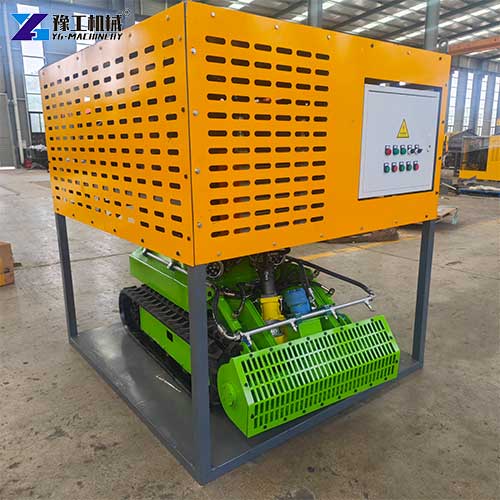
A: Conventional dredging removes benthic habitat and leaves residual contaminated layers that continue to release pollutants. Our robotic system operates underwater on crawlers, uses remote control to keep operators out of the water, and handles high-concentration slurry with pump flow rates from 100 to 200 m³/h. This configuration reduces turbidity and supports precise layer removal. You can find detailed specifications on our product page.
A: No. The crawler chassis of the robotic dredging machine moves on muddy surfaces and in shallow water areas without draining the water body. This keeps the aquatic ecosystem intact and avoids the habitat loss associated with dry excavation.
A: The robotic system operates with controlled suction and a cutting mechanism that targets the sediment layer rather than churning the entire bed. Combined with high-concentration pumping, this approach limits the volume of water disturbed and reduces turbidity plumes.
A: Our models handle particle sizes from 15 mm up to 60 mm, depending on the configuration. This range covers soft sludge, sand, and heavier debris typical of river and reservoir projects.
Factory Support & CTA
Our factory provides site-specific configuration reviews for robotic dredging machine projects. If your project has strict turbidity limits or residual-layer targets, send us your sediment profile and compliance thresholds. Our engineers will confirm the suitable model, pump configuration, and control setup, and respond with a technical assessment within one business day.
Send us your working depth, sediment type, and discharge distance—our team will confirm whether our robotic system meets your environmental requirements.