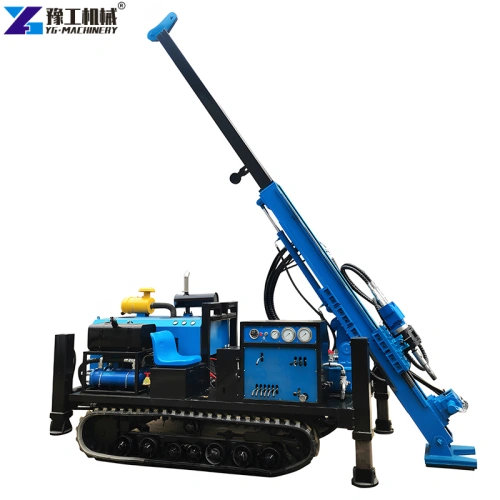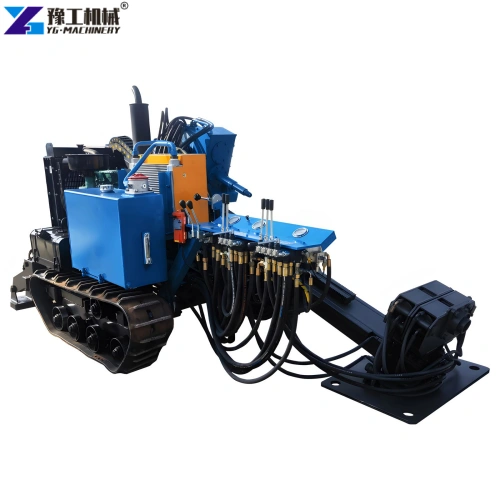
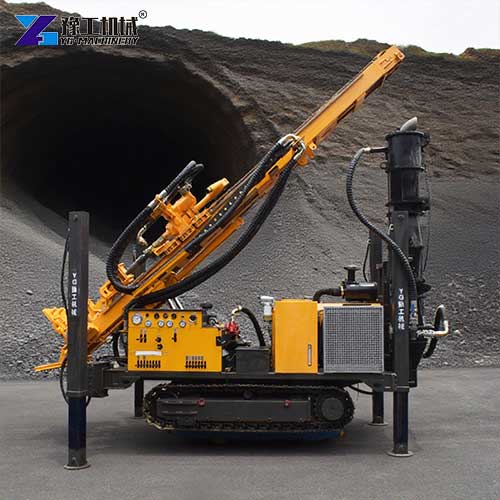
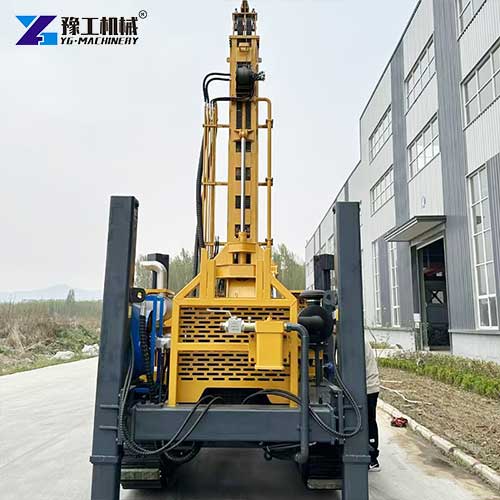
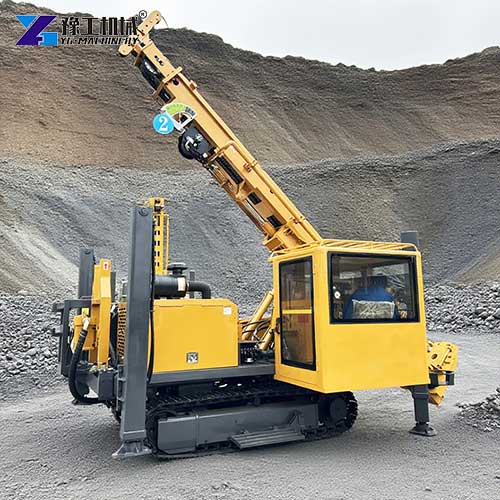
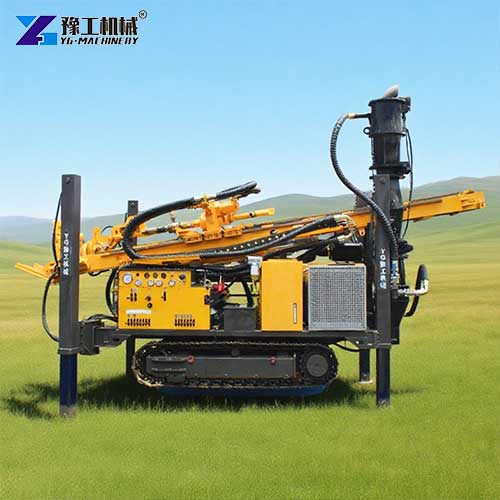
An RC drilling machine is a crawler-mounted reverse circulation drilling unit that uses compressed air to drive a down-the-hole impactor and carries cuttings back to the surface through a central inner tube, delivering uncontaminated formation samples for geological analysis while containing dust at the source. This reverse circulation drill rig adopts the latest RC drilling technology, in which compressed air flows down the annulus between the outer drill rod and inner sample tube to the bottom of the hole, powers the impactor to break rock, and carries the cuttings upward through the sealed inner tube to the surface cyclone separator for sample collection.
RC Drilling Machine Technical Parameters:
| Model | YG150RC | |
| Drill rig weight(crawler mounted) | kg | 9000 |
| Engine Power | kW | 125 |
| Length × Width × Height (normal) | mm | 6750x2200x2950 |
| Ambient Temperature Range | °C | -10~38 |
| Drill Ability | ||
| Nominal Drill Depth | m | 150 |
| End-hole Diameter | mm | 110-250 |
| Drill angle | ° | -10-90 |
| Horizontal hole height | m | 1.85-2.8 |
| Drill head output | ||
| Max Output Torque | N.m | 8000 |
| Output Rotation Speed(continuity) | rpm | 30 / 60, 54/108rpm |
| Output Rotation Speed(interval) | rpm | 62 / 124105/210rpm |
| Feeding | mm | 3500 |
| Thrust Force | kN | 45 |
| Lifting Capacity | kN | 65 |
| Pipe-puller Device Output | ||
| Output Rotation Speed | rpm | 40 |
| Max Output Torque | N.m | 30000 |
| Hole-through Diameter | mm | 370 |
| Auxiliary Winch | ||
| Pull Force of the First Layer | kN | 11 |
| Rope Diameter | mm | 14 |
| Rope Capacity | m | 60 |
| Engine(Cummins) | 6BTA5.9-C125 | |
| Power | kW | 125 |
| Rotary Speed (Max.) | rpm | 2200 |
| Track Chassis Base | ||
| Walk Speed | Km/h | 1.2 |
| Unit Pressure | MPa | <0.05 |
| Climb Ability | ° | Drill rig weight(crawler-mounted) |
Technology of Reverse Circulation Drilling Equipment
The reverse circulation method differs from conventional drilling in how cuttings travel to the surface. In conventional drilling, cuttings move up the annulus between the rod and the hole wall, mixing with upper formations and producing contaminated samples. In reverse circulation, the dual-wall drill string sends air down the outer annulus to power the impactor, and cuttings return through the sealed inner tube directly from the hole bottom, with no contact with the wall rock. This delivers uncontaminated, depth-specific samples for geological logging and resource estimation. At the surface, the cyclone separator collects cuttings into sample containers, and the dust collector captures remaining fine particulate. The closed system also eliminates open dust discharge around the hole, making the reverse circulation drill rig suitable for urban and environmentally sensitive sites.
Features of YG RC Drilling Machine
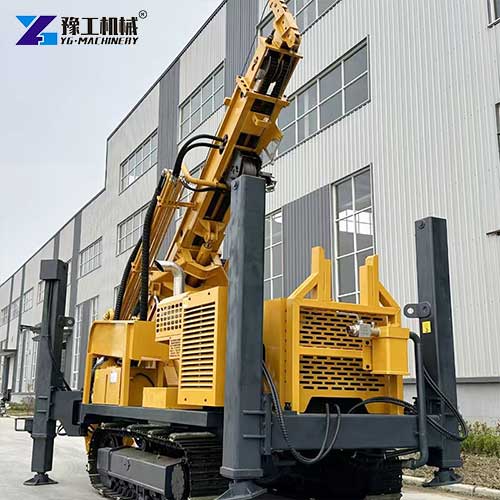
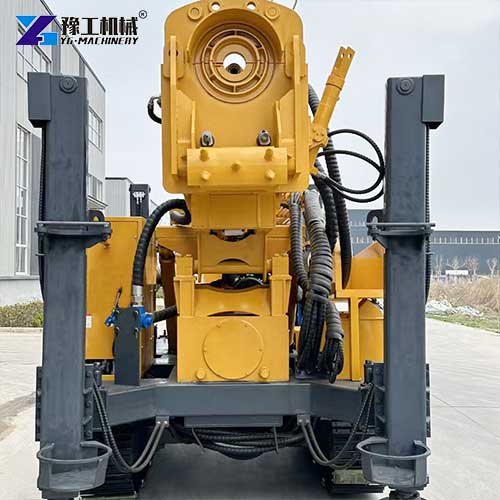
- Compensating Slide Plate Protects Rod Threads: The compensating slide plate automatically protects drill rod threads during connection and disconnection, preventing cross-threading and impact damage that occur when rods are manually aligned under load. This protection extends drill rod service life and reduces downtime from damaged threads.
- Hydraulic Wrench Rod Handling: The combination of a rod lead-in tool and hydraulic wrench makes rod connection and disconnection safe, convenient and fast, eliminating the manual hammering and heavy physical effort required on conventional rigs. The hydraulic wrench applies consistent, controlled torque, and the lead-in tool guides rods into alignment before connection, reducing hand injury risk and increasing operational efficiency.
- Drill Centralizer With Level: The RC drilling machine’s uniquely designed drill centralizer, supplemented by a built-in level instrument, ensures accurate hole starting and vertical alignment from the first rod. The centralizer opens and closes freely, and the combined clamp plates have variable inner diameters that match the drill tool exactly, providing stable support without binding. This accurate starting alignment reduces hole deviation in the critical first meters.
- 90 Percent Air Pre-Filtration: The patented air pre-filter removes more than 90 percent of dust from engine intake air and automatically discharges collected dust without manual cleaning. This pre-filtration reduces engine wear, extends engine life and improves efficiency in harsh, dusty environments, and the automatic discharge means operators do not need to stop drilling for filter maintenance.
- Specialized Oil Mist Lubricator: The specialized oil mist lubricator in the compressed air system delivers consistent lubrication to the down-the-hole impactor, reducing internal wear and maintaining impact performance over longer periods. This extends impactor service life and reduces the frequency of impactor replacement or rebuild.
Common Problems and Solutions of RC Drilling Machine
Understanding potential issues and their solutions helps operators maintain productivity and avoid costly downtime. Here are the most common challenges encountered when operating an RC drilling machine and how to address them.
1. Sample Blockage in the Inner Tube
Cause: Hard, brittle, or fractured formations can cause rock fragments to block the return path. Large gravel pieces may jam at the entrance of the inner pipe, preventing cuttings from reaching the surface.
Solution: Lift the drill string a short distance off the bottom, then lower it back down—repeat this several times. If this does not work, use a reverse-circulation adapter to switch the system from reverse to forward circulation and clear the blockage with high-pressure airflow.
2. Dual-Wall Pipe Annulus Blockage
Cause: Forgetting to start the air supply before lowering the drill string, or lowering the drill string too quickly. Also, opening the return valve too quickly after stopping the air supply can create a vacuum that draws material into the annulus.
Solution: Once the annulus becomes blocked, the only reliable remedy is to pull the drill string out of the hole and clear the blockage on the surface. Prevention is better: always start the air supply before lowering the drill string and open the return valve gradually.
3. Mud Ring and Stuck Pipe
Cause: Fine rock particles returning up the outside of the dual-wall pipe can stick to wet sections of the borehole wall, gradually building up a mud ring. Alternatively, wet, soft formations such as fault gouge can swell and squeeze the drill pipe.
Solution: Lower the drill string slightly below the mud ring position. Switch from reverse to forward circulation using the reverse-circulation adapter. Inject clean water into the air stream while continuing to blow air. The atomised water mist travels up the borehole wall at high speed, cleaning and lubricating the mud ring and gradually eroding it away.
4. Hole Collapse and Buried Drill String
Cause: Drilling in fractured, water-bearing formations where broken rock fragments flow down the borehole with groundwater. Over time, the collapsing material can build up and surround the drill string, causing a stuck pipe or buried string.
Solution: If the collapse occurs near the target depth, you can force drilling to completion. If the stuck pipe occurs well before the target depth, pull the drill string and re-drill the hole, taking preventive measures before reaching the fractured zone. For shallow collapsed sections, install casing to isolate the unstable zone.
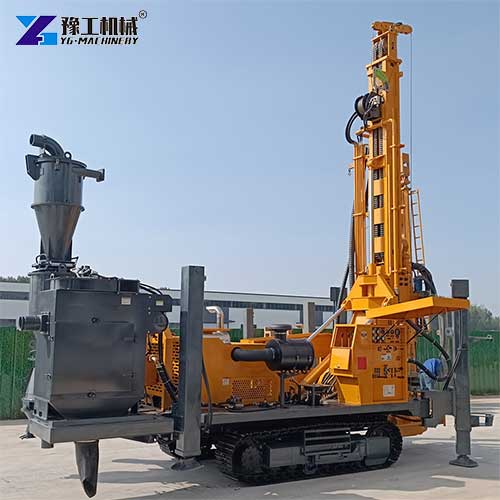
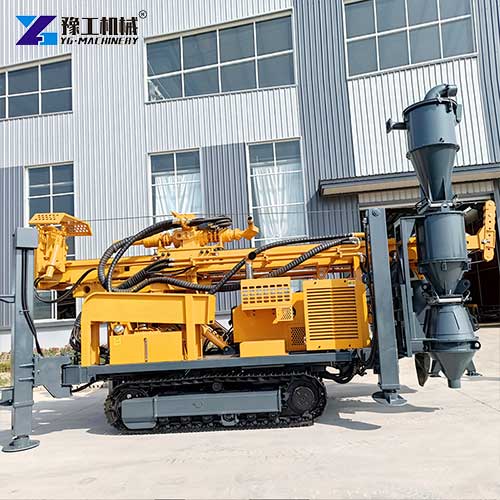
RC Drill Rig For Sale
Your choice of an RC drilling machine determines drilling speed, sample quality, and ultimately your project’s success. The YG150RC reverse circulation drill rig offers 150 metres drilling depth, 8000Nm output torque, and the environmental performance that modern projects demand.
Contact the YG sales team with your drilling requirements—target depth, hole diameter, and typical ground conditions. They will recommend the configuration that matches your operational needs and provide a competitive quotation for this RC drill rig for sale. Put the power of reliable reverse circulation drilling equipment to work on your next exploration, water well, or civil engineering project.