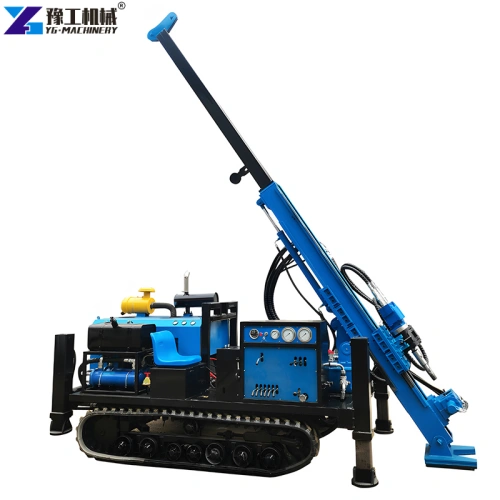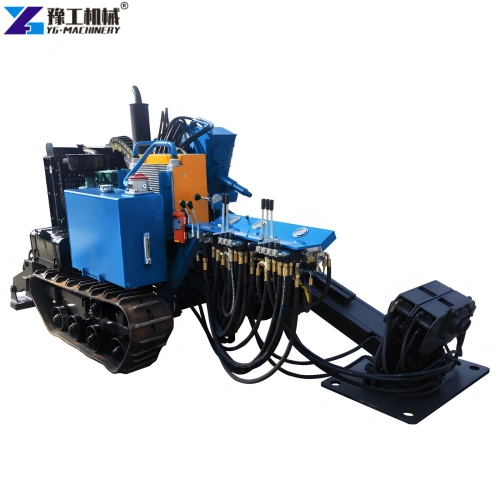
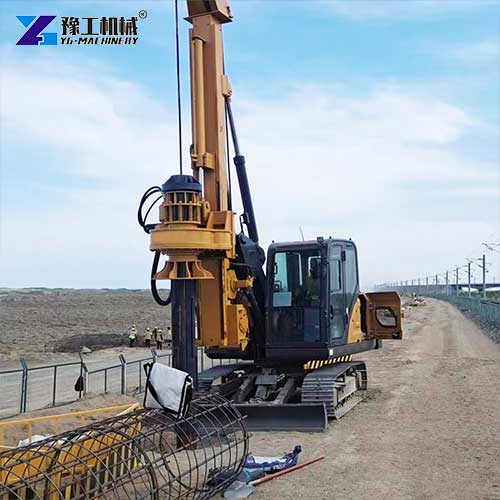
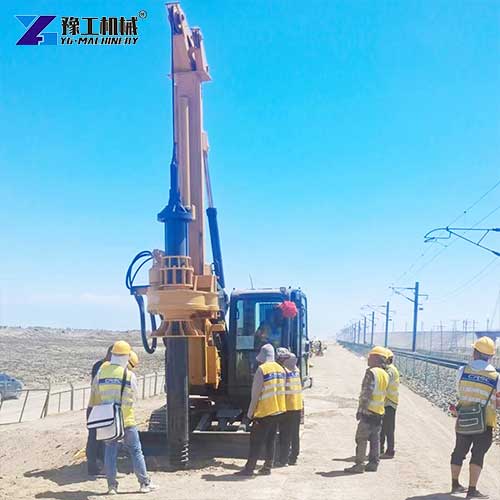
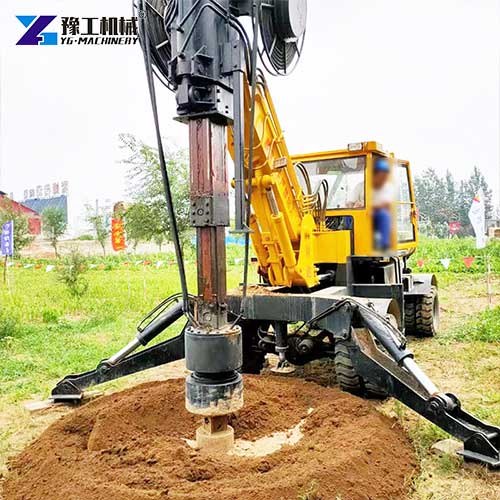
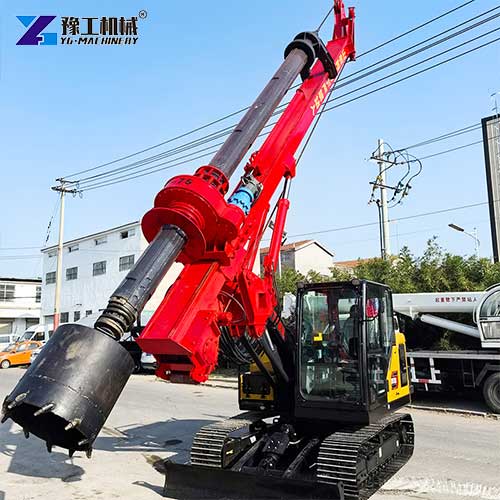
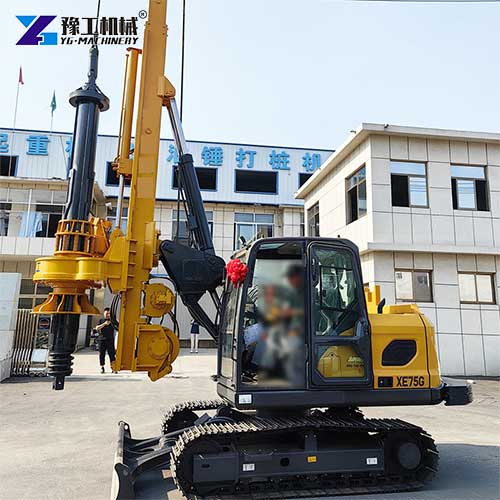
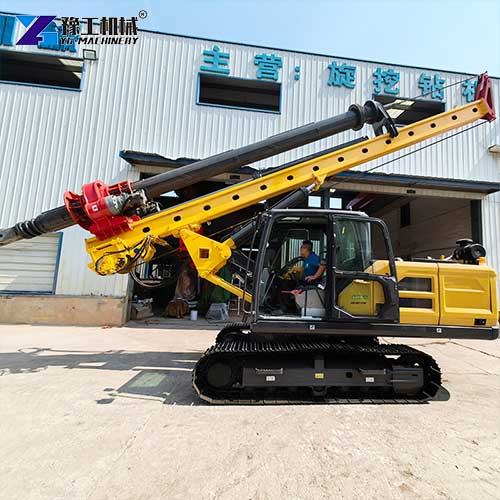
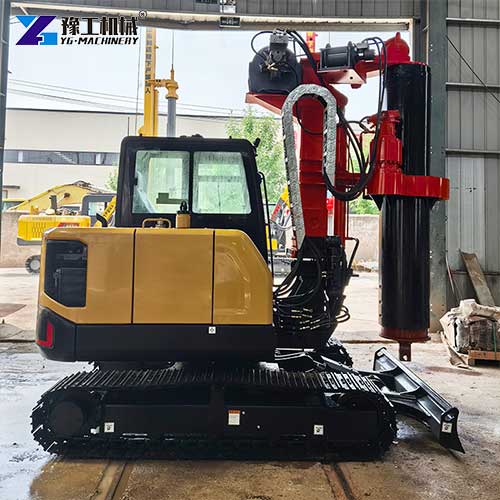
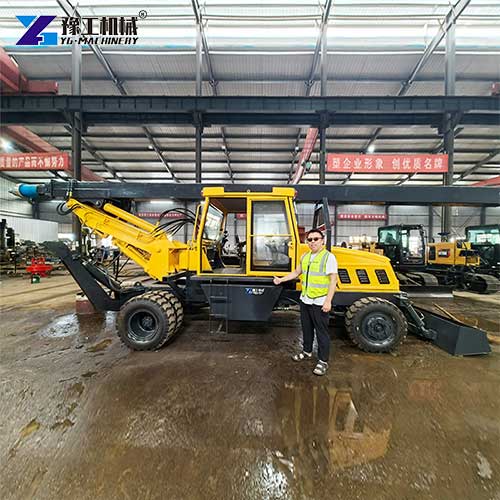
A pile foundation drilling machine is the essential equipment that creates the deep cylindrical holes required for cast-in-place concrete piles, transferring structural loads from buildings, bridges, and railways down to competent bearing strata. This hydraulic-powered machine uses a power head to rotate the drill stem and bucket, cutting through soil and rock while extracting spoil with each lift. As a modern rotary piling machine, it integrates mechanical, hydraulic, and electronic control systems into one cohesive unit, enabling foundation contractors to handle everything from soft clay to moderately weathered rock.
YG Pile Foundation Drilling Machine Parameters:
| Dimensions (mm) | 7900*2260*3100 |
| Vehicle mass (kg) | 8000 |
| Wheelbase (mm) | 3150 |
| Wheelbase (mm) | Front 1400 After 1060 |
| Drilling depth (m) | 13 |
| Drilling diameter (mm) | 600-1600 |
| Rotation angle | 180 degree |
| Walking speed (km/h) | 50 |
| Gear pump model | CBJT2080 |
| Hydraulic system working pressure (MPa) | 20-25 |
| Hydraulic system displacement (ml/r) | 80 |
| engine model | 4108 |
| Engine power (kW) | 88 |
Where a Pile Foundation Drilling Machine Proves Indispensable?
- Bridges and elevated highways – Cross-sea and cross-river bridges demand deep, large-diameter piles that can handle massive vertical and lateral loads. The rotary piling machine penetrates through water-bearing strata and rock formations that would stop smaller equipment cold. Highway overpasses and interchange structures similarly depend on drilled shafts for stability in tight urban corridors.
- High-speed railways – Rail lines require exceptional settlement control. A pile foundation drilling machine delivers the precision and depth consistency that railway specifications demand, particularly for viaducts and station foundations.
- Commercial and residential high-rises – Tall buildings transfer enormous loads to the ground. Bored piles created by a pile foundation drilling machine provide the bearing capacity needed for structures exceeding 20 stories, with diameters up to 1600mm handling the heaviest column loads.
- Transportation hubs and terminals – Airports, bus terminals, and railway stations sit on foundations that must remain stable under dynamic loads. The pilling machine creates the deep, uniform piles that keep these structures level through decades of use.
- Utility and renewable energy infrastructure – Power transmission towers, photovoltaic panel foundations, and coal mining operations all depend on drilled piles. The hydraulic rotary rig adapts to the relatively shallow depths and varied ground conditions typical of energy sector projects.
The Piling Process: From Layout to Concrete Pour
- Step 1: Site preparation and pile positioning. The contractor levels the working platform and marks each pile location according to the engineering drawings. Surveyors verify coordinates to ensure every pile falls within the specified tolerance.
- Step 2: Machine positioning. The hydraulic rotary rig moves into position over the first pile location. The operator uses the 180-degree slewing capability to align the drill stem precisely without repositioning the entire undercarriage—a significant time saver when drilling multiple piles in a grid pattern.
- Step 3: Initial drilling and casing installation. The machine drills the first 2-3 meters to establish hole alignment. The crew then presses in a temporary steel casing that supports the borehole walls, preventing collapse in loose or water-bearing ground. The casing protects both the hole and the surrounding worksite.
- Step 4: Main drilling and spoil removal. The rotary piling machine advances the drilling bucket through the designated strata. Soil and rock cuttings enter the bucket, and the operator lifts it to the surface for dumping. This cycle repeats until the hole reaches the specified depth. For challenging formations, the operator may switch between different bucket types—auger buckets for soft ground, core barrels for rock.
- Step 5: Depth verification and hole cleaning. Once the drill reaches target depth, the crew checks hole depth and cleans the bottom of loose material. This step ensures the pile bears on undisturbed material rather than debris.
- Step 6: Reinforcement cage and concrete placement. The crew lowers the steel reinforcement cage into the hole, then places the tremie pipe for concrete pouring. Concrete flows from the bottom up, displacing any remaining water or drilling fluid and forming a solid, defect-free pile.
- Step 7: Casing removal. After concrete placement, the crew extracts the temporary casing. The casing can be reused on subsequent piles, reducing material costs across the project.
Matching the Pile Foundation Drilling Machine to Ground Conditions
Clay tends to stick to drilling buckets, reducing cutting efficiency. Operators should use auger buckets with wide flight spacing and aggressive teeth to clear material effectively. The machine’s hydraulic torque control prevents binding in plastic clays.
Silty soil holds high moisture and often experiences hole shrinkage after drilling. Rapid advancement and immediate casing support are essential. The 88kW engine provides the sustained power to pass through silt before instability develops.
Sand is loose and prone to collapse. Buckets must include effective sealing—flap closures with tight tolerances—to prevent sand from washing back during extraction. Hydraulic precision allows accurate bucket positioning, reducing disturbance to the surrounding formation.
Gravel contains abrasive particles that accelerate wear on teeth and edges. Heavy-duty carbide-tipped cutters and reinforced bucket structures withstand the intermittent loads of gravel drilling.
Weathered rock requires high torque and specialized core barrels with carbide or roller-cone bits. The 88kW engine and hydraulic system deliver the steady power needed for rock penetration without overheating.
Tool selection follows a clear logic: auger buckets suit soft formations like clay, silt, and sand; rotary drilling buckets handle clay and silty soils with better spoil retention; core barrels tackle moderately to highly weathered rock where standard buckets cannot penetrate.
Rotary Drilling Machine Price
Your choice of a pile foundation drilling machine determines drilling speed, hole quality, and ultimately project profitability. The YG series offers the multifunctional configurations, hydraulic precision, and geological adaptability that foundation contractors need to stay competitive.
Contact the YG sales team with your typical project specifications—diameter requirements, depth targets, and predominant ground conditions. They will recommend the exact configuration and tooling package that matches your operational needs and provide a rotary drilling machine price quotation. Put the power of a reliable hydraulic rotary rig to work on your next foundation project.