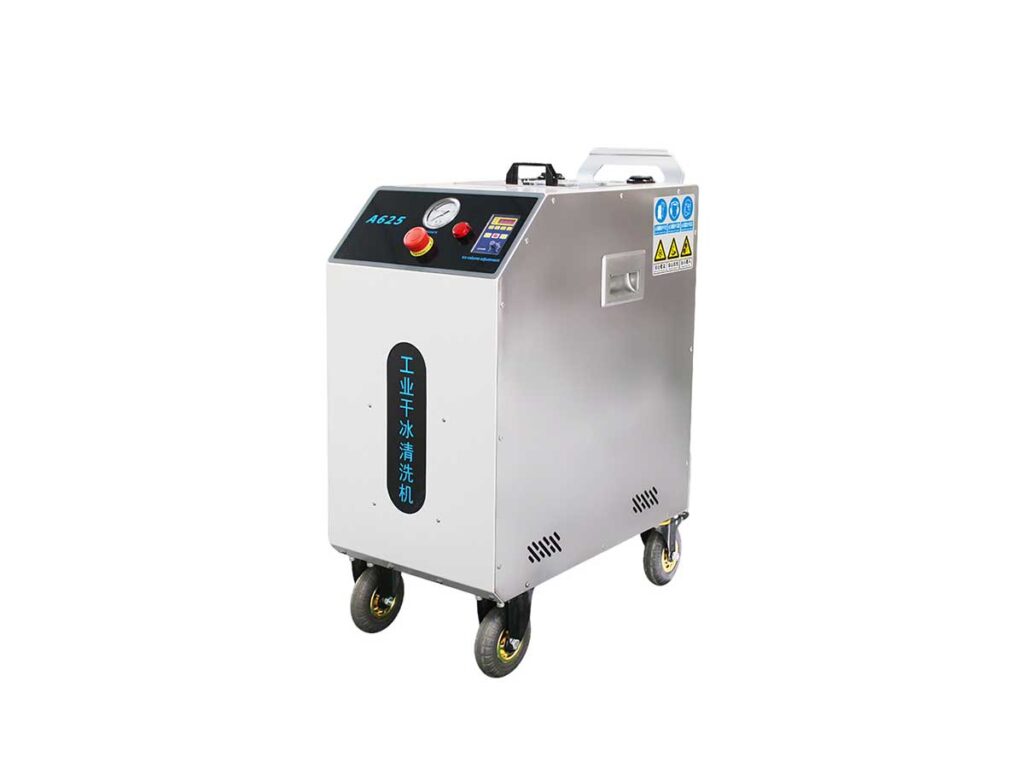
Industrial maintenance workshops, construction‑renovation teams, and mining‑site service crews often face stubborn surface‑cleaning challenges. Traditional sand‑blasting and chemical‑washing methods produce large volumes of secondary waste residue, damage base‑material surfaces, or require lengthy disassembly‑and‑reassembly work for mechanical equipment. Dry ice sand blaster for sale utilizes the solid‑state dry‑ice pellet sublimation effect. High‑speed compressed‑air jet accelerates dry‑ice pellets onto target surfaces. Pellets sublimate instantly upon impact, removing grease, carbon deposits, paint residues, and dirt without residual abrasive media after cleaning operations.
Product Full Technical Specifications Of Dry Ice Sand Blaster For Sale
| Model | ICE-JET 3.0 | ICE-JET 6.0 | ICE-JET 15 | ICE-JET 40 |
| Dry Ice Capacity | 3KG | 6KG | 15KG | 40KG |
| Dry Ice Consumption | 20-50KG/H | 20-50KG/H | 30-100KG/H | 30-100KG/H |
| Supply Pressure | 3-10bar | 13-10bar | 3-10bar | 3-10bar |
| Air Consumption | 1-2m³/min | 1-3m³/min | 1-4m³/min | 1-5m³/min |
| Weight | 40KG | 50KG | 65KG | 80KG |
| Dimensions | 460x340x750mm | 460x350x850mm | 550x445x985mm | 650x550x1000mm |
| Total Power | <500W | <800W | <800W | <800W |
Working Principle Of Dry Ice Car Cleaning Machine
The dry ice washer price, a compressed air source generates high‑velocity airflow. Dry‑ice pellets are quantitatively fed into the airflow channel through an adjustable feeding mechanism. Accelerated pellets shoot out through the blast nozzle and strike contaminated surfaces. Low‑temperature impact creates a micro‑thermal‑shock effect to crack contamination layers. Pellets sublimate directly from solid to gas on contact, so no solid abrasive waste remains after cleaning. It enables non‑abrasive stripping of dirt, paint, carbon accumulation, and oil grime on metal, rubber, and composite‑material substrates.
Core Product Features & Performance Advantages Of Dry Ice Washer Price
- Residue‑Free Non‑Abrasive Cleaning Mode: Dry‑ice pellets sublimate completely after impact. No sand or grit waste is generated, cutting secondary‑waste disposal workload compared with conventional sand‑blasting processes.
- Adjustable Pellet‑Feeding Output: Feeding‑rate range from 20‑80 kg/h. Operators tune pellet consumption according to contamination thickness, balancing cleaning efficiency and dry‑ice material cost.
- Wide‑Voltage Compatibility: Supports 110V and 220V single‑phase power supply. Fits workshop‑site power‑grid conditions in different overseas regions without extra transformer modification.
- Multiple Interchangeable Nozzle Options: Swappable nozzle assemblies of dry ice sand blaster for sale adapt to flat, large‑area cleaning and narrow‑gap partial‑spot removal tasks for complex‑shaped mechanical components.
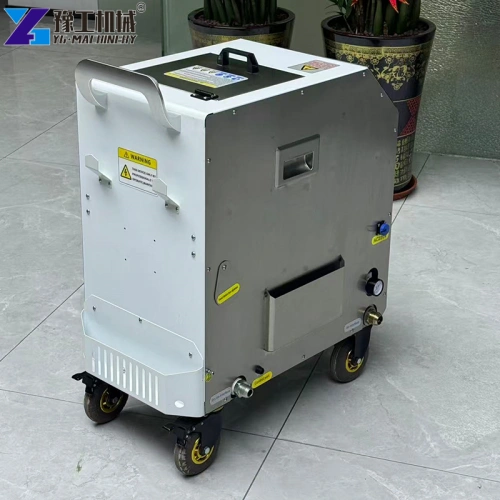
- Mobility‑Friendly Layout: Compact overall dimensions together with a standard 10‑meter blast hose permit operators to reach hard‑to‑access equipment surfaces without full machine relocation.
- Lower Component‑Disassembly Requirement: Many cleaning assignments can proceed with equipment partly assembled. It shortens the overall maintenance cycle for production machinery and vehicle‑repair projects.
Main Industry Application Scenarios Of Dry Ice Sand Blaster For Sale
- Industrial mechanical‑equipment carbon‑deposit and grease removal for production‑plant maintenance
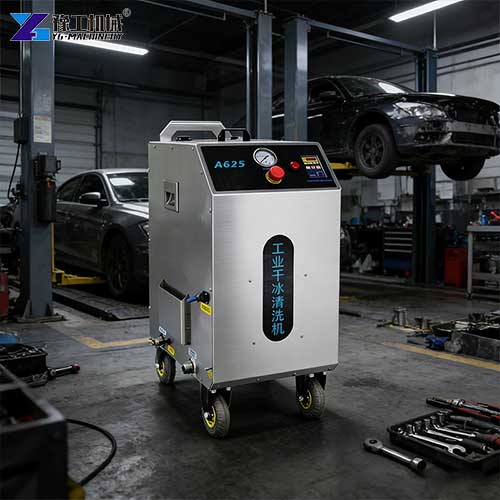
- Automotive workshop car‑body paint‑stripping, engine‑bay carbon‑build‑up cleaning work
- Construction‑machinery surface dirt, old‑paint and rubber‑residue elimination
- Mold‑surface residue cleaning for plastic‑injection and rubber‑molding workshops
- Mining‑site heavy‑duty equipment surface decontamination without destroying base‑metal substrate
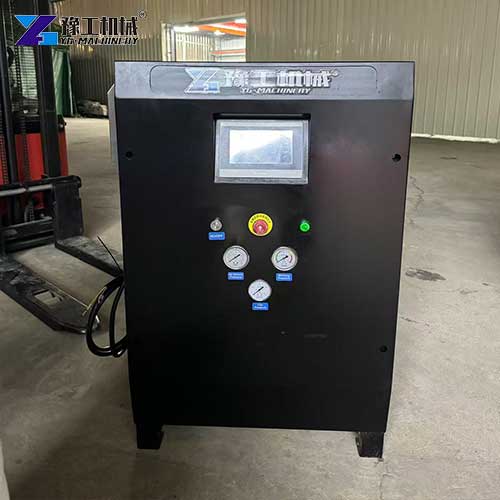
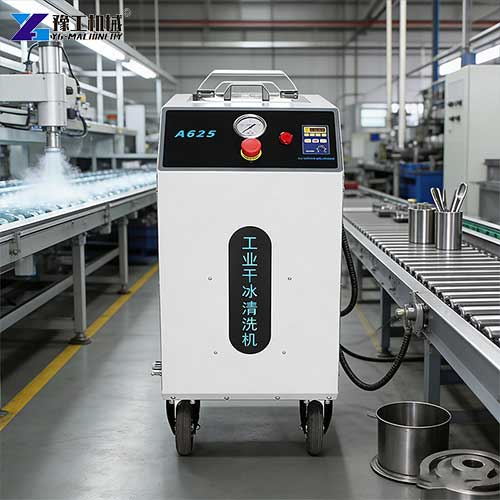
Product Purchase & Selection Guidance Of Dry Ice Car Cleaning Machine
- Confirm local stable compressed‑air‑source capacity; air compressor must satisfy 0.8‑1.2 m³/min air‑consumption requirement for normal blasting performance.
- Evaluate contamination layer thickness; select proper pellet diameter and set feeding rate to match cleaning‑task intensity.
- Verify on‑site available supply of solid dry‑ice pellets. A stable dry‑ice procurement channel is essential for continuous daily‑shift operations.
- Confirm local workshop‑voltage condition and choose between 110V or 220V power‑supply version before ordering.
- Inspect blast hose, nozzle, and feeding‑system wearing parts on a routine basis; these components sustain high‑speed particle erosion during long‑time blasting work.
Frequently Asked Questions About Dry Ice Washer Price


A: Under proper parameter settings, it delivers non‑abrasive cleaning. Excessively high pressure or oversized pellets may cause damage to thin soft‑material substrates.
A: A stable compressed‑air compressor and continuous dry‑ice‑pellet supply are two necessary pre‑conditions for field‑site operation.
A: Yes. It handles old‑paint stripping for vehicle bodies and engine‑bay carbon‑cleaning; fine‑tune air pressure settings to protect original base‑material layers.
A: Keep blast‑hose inner channel clean; check nozzle wear degree; inspect pellet‑feeding system for blockages before starting each work‑shift.
Manufacturer Supply & Inquiry Information
The factory provides pre‑sales technical‑parameter matching evaluation, multilingual‑language operation manuals, factory full‑load aging test before shipment, seaworthy export‑grade packaging, and complete customs‑declaration documents for overseas buyers. Remote online technical guidance and priority supply of wearing components are supported. Submit your primary‑cleaning‑object type, on‑site air‑compressor parameters, and local‑voltage information, and obtain a targeted equipment‑configuration suggestion.