

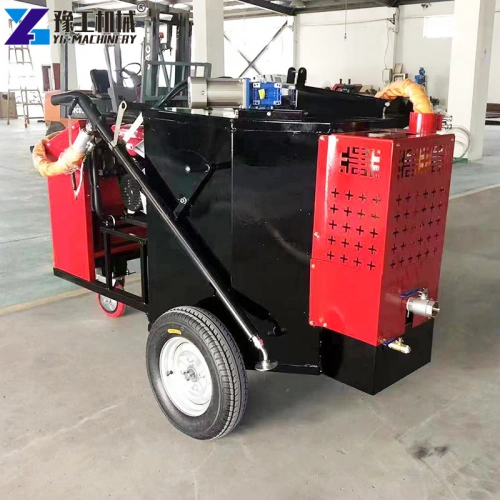
Road maintenance contractors frequently face recurring pavement crack issues. Horizontal and longitudinal cracks allow rainwater to infiltrate pavement layers, accelerating asphalt damage and triggering repeated repair work. Conventional manual crack sealing brings low working efficiency and inconsistent filling quality. This series of pavement maintenance equipment covers small scattered patch‑up jobs to large‑scale highway continuous sealing tasks, delivering uniform sealant injection and lowering long‑term road rehabilitation expenditure for road project teams.
Product Full Technical Specifications Of Asphalt Crack Sealer Machine
| Model Item | YG-50L | YG-80L | YG-100L | YG-200L | YG-350L |
|---|---|---|---|---|---|
| Hopper Capacity | 50L | 80L | 100L | 200L | 350L |
| Discharge Mode | Self-flow | Asphalt pump feed | Pump feed + hand-held gun | Pump feed | 0-30L/min adjustable output |
| Heating System | Liquefied gas | LPG + heat-transfer oil | Italian Riello diesel burner, heat-transfer oil circulation heating | Riello diesel burner, three-layer interlayer kettle | Riello 445T1 diesel burner |
| Temperature Control | 180°C sensor control | 180°C sensor control | Automatic thermostat system | SLA-5000 thermostat | SLA-5000 thermostat, 0-230°C |
| Filling Speed | 10m/min | 15m/min | 20m/min | 18m/min | 20m/min |
| Electric-Heated Hose | — | — | 4-5m | 4-5m | 6-7m |
| Walking Type | Push-type with brake | Push-type with brake | Push-and-trailer dual-use | Trailer mounted | Trailer / self-propelled |
| Mixing Mode | Manual mixing | Manual mixing | Electric stirring | Electric stirring | Electric stirring |
| Power Supply | Solar panel & battery | Solar panel & battery | 2kW imported generator | 2.8kW generator | Honda 5kW generator |
| Weight | 120kg | 150kg | 220kg | 300kg | 1000kg |
Gradient‑specification models match different project scales, from scattered township road repairs to expressway continuous construction. Multiple power supply options adapt to job sites without grid power; the crack filler machine avoids sealant carbonization by adopting indirect heat‑transfer‑oil heating technology.
Working Principle Of Pavement Crack Repair Equipment
- Pre‑treatment: Operators groove cracks and blow away dust and debris inside crack grooves.
- Melting phase: Heat‑transfer‑oil indirect heating melts asphalt sealant inside a hot‑melt kettle, preventing direct‑fire scorching of filling material.
- Feeding & injection: Asphalt pump pushes molten sealant through electric‑heating hose. Hand‑held filling gun follows crack tracks to inject material evenly into grooves.
- On‑site circulation: Electric stirring keeps sealant homogeneous during long‑duration continuous construction.
Thanks to constant‑temperature hose protection, the asphalt crack sealer machine keeps stable discharging performance under low‑temperature winter construction conditions.

Core Product Features & Performance Advantages
- Full gradient model portfolio: 50L‑350L specification range covers scattered municipal patch‑up, medium‑size municipal projects, and large highway sealing assignments. Buyers select the exact configuration instead of paying for redundant functions.
- Indirect heat‑transfer‑oil heating system: LPG and diesel burner dual heating solutions. Indirect heating eliminates sealant carbonization; thermal efficiency rises 2‑3 times to shorten material melting duration.
- Full‑length electric‑heated discharge hose: 5- 7 m constant‑temperature hose prevents sealant coagulation and hose blockage in cold weather, cutting repeated hose cleaning workload. Hand‑held gun tracks irregular cracks for uniform filling.
- Diversified stirring & discharging setup: Self‑flow, fixed pump feed, and adjustable‑flow pump output options. Electric stirring maintains homogeneous molten sealant for long‑time operation.
- Flexible mobility & off‑grid power supply: Push‑type, push‑trailer, trailer, and self‑propelled walking modes. Solar‑battery pack and built‑in generator choices support remote field jobsites without an external power grid.
- High‑quality repair output: Slotted crack sealing reaches over 95% valid repair rate, resisting summer overflow and winter cracking to extend pavement service life.
Compared with entry‑level small road maintenance units, asphalt crack sealing equipment balances lightweight transport capacity and heavy‑duty continuous construction performance.
Asphalt Crack Sealer Machine Industry Application Scenarios
- Municipal road maintenance: Crack sealing for urban streets, township roads, community pavement, and city branch road preventive maintenance.
- Highway & expressway projects: Large‑area longitudinal and transverse crack repair for highway asphalt pavement.
- Bridge & auxiliary facilities: Crack treatment on bridge deck pavement and expansion joint auxiliary sealing work.
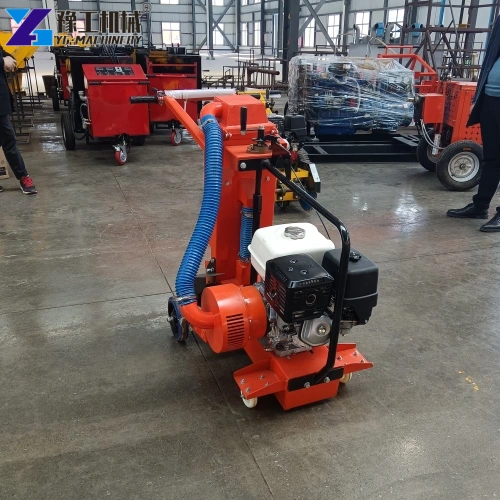
- Road infrastructure rehabilitation: Cooperate with grooving machines and air blowers to complete a full‑set pavement disease preventive maintenance workflow.
For international road maintenance project purchasers, the asphalt crack sealer machine delivers scalable crack‑repair solutions for small‑scale patch‑up and large‑volume continuous construction.
Product Purchase & Selection Guidance
Buyers need to assess the key points below before placing orders to prevent model mismatch and unnecessary project costs:
- Daily construction workload: Choose small‑capacity 50L‑80L push‑type units for sporadic scattered repair tasks; pick 100L‑350L models for continuous large‑volume highway sealing work.
- Local jobsite power condition: Select solar-battery-powered small models for scattered remote sites; generator‑equipped versions for long‑duration heavy‑duty construction.
- Local climate environment: Projects located in cold‑winter regions should prioritize units fitted with full‑length electric‑heating discharge hose to avoid pipe blockage.
- On‑site moving requirement: Confirm transportation condition; select push‑type, dual‑use push‑trailer or self‑propelled trailer specification accordingly.
- Overall project budget: Total expenditure of crack filler machine varies with kettle capacity, heating configuration, hose length, and destination logistics cost.
Frequently Asked Questions About Asphalt Crack Sealer Machine
A: Cracks need grooving treatment by a grooving machine, then dust and debris must be fully blown out by an air blower. Clean crack grooves guarantee stable bonding between sealant and pavement.
A: Indirect heating avoids direct flame contact with sealant, preventing material carbonization and waste. Thermal efficiency increases 2‑3 times to shorten melting time.
A: Molten asphalt sealant tends to coagulate in a low‑temperature environment. Constant‑temperature heated hose prevents blockage, reduces manual cleaning work, and keeps continuous construction progress.
A: Yes. Small models adopt solar panels and battery packs. Mid‑large specifications are equipped with built‑in generators, supporting fully off‑grid field road maintenance work.
A: Main influencing items include kettle capacity, heating mode, electric‑heating hose configuration, power system specification, wearing‑part kit, and international transportation fees.
Procurement planners should compare complete hardware configuration instead of merely focusing on asphalt crack sealing equipment when evaluating purchasing proposals.

Manufacturer Supply & Inquiry Information
Full supply scope contains crack‑sealer main unit, hot‑melt kettle assembly, standard discharge gun, wearing‑part kit for hose and sealing fittings. Optional upgrades include extended electric‑heating hose and spare burner components.
Available manufacturer‑provided services: Project‑oriented model‑selection consultation for municipal or highway crack‑repair assignments;Complete factory performance inspection before shipment; Printed operation and maintenance technical manual; Global spare‑parts supply for burner, hose, and pump wearing components