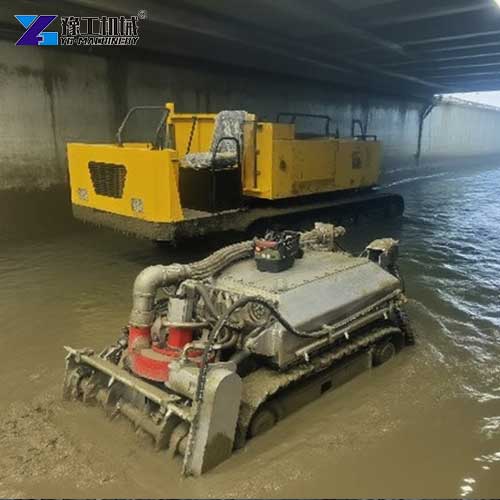
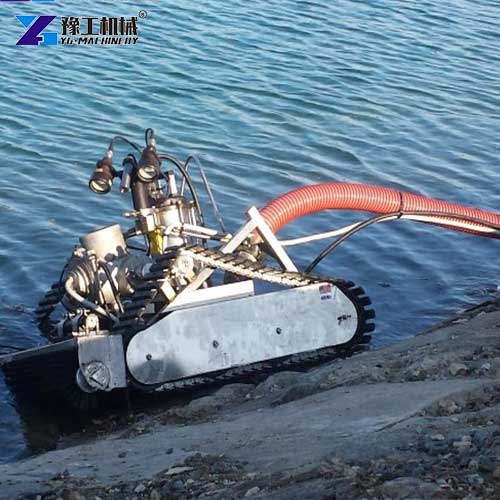
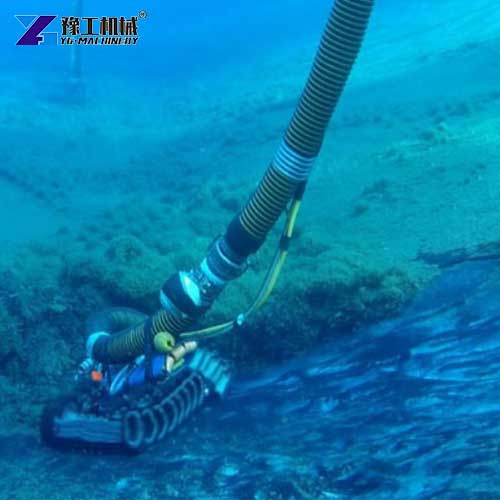
A water tank cleaning robot is a remote-controlled, crawler-based machine designed to remove sludge, sediment, and debris from tanks, basins, pipelines, and other confined water environments. Unlike traditional methods that require workers to enter hazardous confined spaces, this remote control dredging robot operates from a safe distance, eliminating the risks associated with toxic gases, drowning, and physical injury. The YG sewer cleaning robot combines a powerful suction pump, high-torque tracked drive, and real-time video monitoring to deliver thorough cleaning without draining the tank or shutting down operations.
Water Tank Cleaning Robot Technical Specifications:
| Model | YG-500 | YG-600 | YG-700 | YG-800 | YG-900 | YG-1200 |
| Robot dimensions | 1500*500*650mm | 1500*600*650mm | 1600*700*650mm | 1600*850*700mm | 1650*960*750mm | 1900*1200*750mm |
| Dredging width | 500mm | 600mm | 700mm | 800mm | 900mm | 1200mm |
| Track travel speed | 3-15m/s | 3-15m/s | 3-15m/s | 3-15m/s | 3-15m/s | 3-15m/s |
| Robot weight | 320kg | 350kg | 380kg | 400kg | 420kg | 500kg |
| Pump output diameter | 3inch | 3inch | 4inch | 4inch | 4inch | 4inch |
| Pump flow rate(cubic meters/ hour) | 100 m³ | 100m³ | 200m³ | 200m³ | 200m³ | 200m³ |
| Pump head | 0- 30 m | 0- 30 m | 0- 30 m | 0- 30 m | 0- 30 m | 0- 25 m |
| Hydraulic station dimensions(mm) | 2200*1200*1700 | 2200*1200*1700 | 2200*1200*1700 | 2200*1200*1700 | 2200*1200*1700 | 2120*1240*1200 |
| Main motor power | 22kw | 22kw | 30kw | 30kw | 30kw | 45kw |
| Hydraulic system pressure | 0-16Mpa | |||||
| Particle size | 15mm | 15mm | 38mm | 38mm | 38mm | 60mm |
| Reeling system speed | 0-10r/min | |||||
| Hydraulic hoses | 50m (Standard configuration) | |||||
| Control system | Wireless remote control | |||||
| Lighting system | Underwater LED lights *2 | |||||
5 Features of YG Water Tank Cleaning Robot
1. Multi-Sensor Navigation.
The system uses LiDAR, visual cameras and ultrasonic sensors to perceive surroundings and map tank or pipe interiors in real time, operating effectively even when the camera view is obscured by suspended sediment. The obstacle avoidance function prevents collisions with pipe walls, structural supports and debris, and the live camera feed lets the operator monitor cleaning progress and identify areas needing additional attention.
2. Three-In-One Cleaning Tools.
The high-pressure water jet breaks up and flushes away soft and moderately hard sludge, including biofilm and grease on tank walls. The mechanical arm and cutter head handle compacted sludge, hard mineral deposits and large debris such as plastic bags and branches. The vacuum suction system draws the broken-up sludge through a discharge hose to an above-ground collection point, enabling continuous cleaning without manual removal.
3. Tracked Chassis.
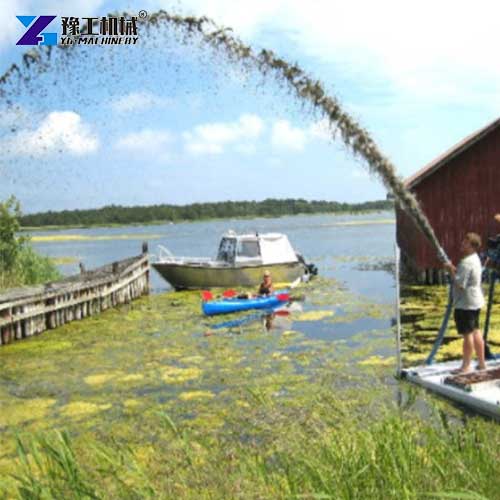
The track design distributes weight over a larger area to avoid sinking into soft sludge, and the independent track drive allows in-place turning in confined spaces. For open water operation in rivers and lakes, the sewer cleaning robot can use propeller drives instead of tracks, and the low center of gravity keeps the unit stable on sloped tank bottoms.
4.30- 60 m Diving Depth.
The sealed housing protects all electrical and hydraulic components at depths up to 30 to 60 meters, covering most industrial water tanks, municipal reservoirs, deep drainage pipelines and process tanks. The remote control dredging robot operates continuously underwater for extended periods without resurfacing for maintenance, and deeper custom configurations are available on request.
5. Remote Control Operation.
The operator controls movement, tool operation, water jet activation and suction from above ground, viewing live camera feed and real-time sensor data on a display. Remote operation eliminates worker entry into confined spaces, significantly reducing exposure to toxic gases, oxygen deficiency and physical hazards.
Core Components of the Water Tank Cleaning Robot
Robot Body
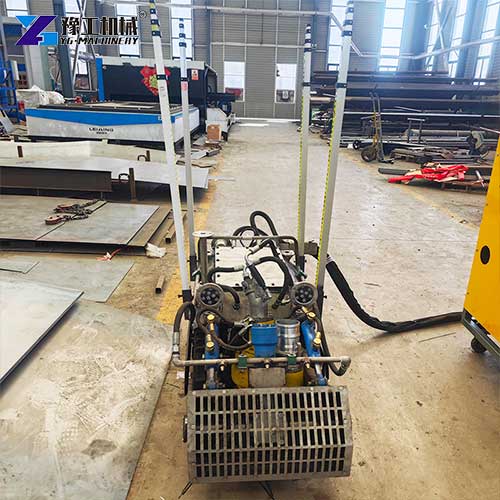
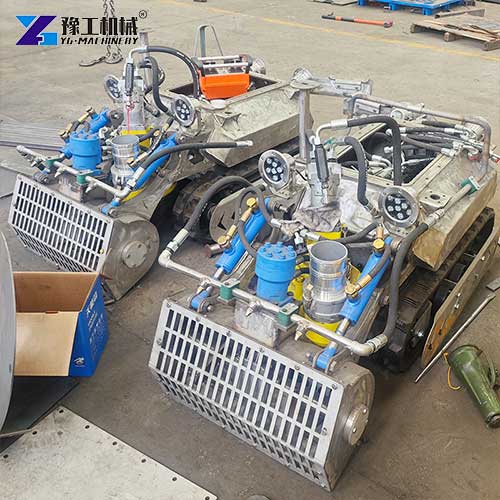
The robot body houses all the components that move through the water and perform the actual cleaning work. YG offers six models ranging from YG-500 to YG-1200, with robot dimensions from 1500×500×650mm up to 1900×1200×750mm.
- The tracked drive system gives the sludge dredging robot mobility across uneven tank floors. The tracks operate at speeds from 3 to 15 meters per second and can climb obstacles up to 130mm in height. This tracked design provides stability on slippery surfaces and allows the robot to navigate through sludge without getting stuck.
- The dredging pump handles the actual material removal. Pump outlet diameters range from 3 inches on smaller models to 4 inches on larger units. Flow rates start at 100 cubic meters per hour on the YG-500 and YG-600, reach 160 m³/h on the YG-700 and YG-800, and go up to 200 m³/h on the YG-900 and YG-1200. The pump head reaches 0-30 meters on most models.
- The underwater LED lighting system includes two LED lights that illuminate the work area. This allows the operator to see the cleaning progress clearly through the onboard camera feed, even in dark or murky water.
- Hydraulic hose and control cable connect the robot to the surface power station. The standard configuration includes 50 meters of hydraulic hoses. The cable control distance can extend up to 150 meters maximum, with 50 meters as the standard offering.
Hydraulic Power Station (Ground Unit)
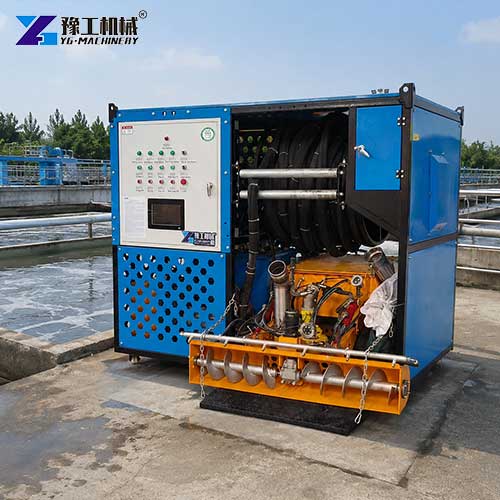
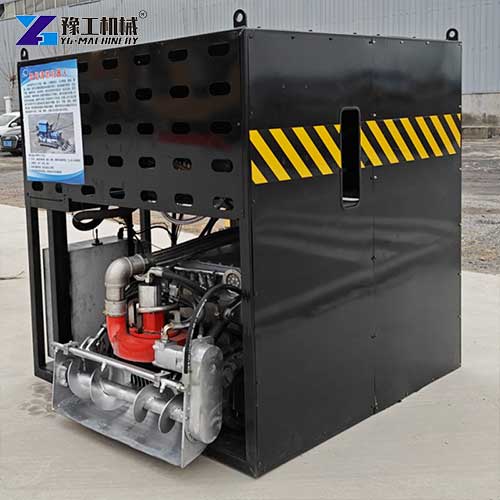
The hydraulic power station sits on the surface and supplies all the power the water tank cleaning robot needs to operate. This separation keeps the robot lightweight and maneuverable while the heavy, noisy equipment stays above ground.
- The main motor powers the entire hydraulic system. Power ratings range from 18kW on the YG-500 and YG-600, to 22kW on the YG-700 through YG-900, up to 45kW on the YG-1200. For customers who prefer diesel power, YG also offers a diesel engine option on the YG-1200 with 76kW (123HP).
- Hydraulic station dimensions measure approximately 2200×1200×1700mm across most models. The hydraulic system operates at pressures from 0 to 16MPa.
- The wireless remote control system allows operators to control the water tank cleaning robot from a safe location. The operator can see the cleaning process in real time through the onboard camera system, making adjustments as needed without ever entering the tank.
Suction and Discharge System
The sludge dredging robot requires a suction hose to draw material from the tank floor and a discharge hose to send it to a disposal location. YG includes the hydraulic hoses (50 meters standard), but the suction/discharge hoses are typically sourced by the customer. The 4-inch suction hose handles the material removed by the pump, and customers typically purchase 50 meters of this hose separately.
Depth and Environmental Operating Limits
The YG water tank cleaning robot operates underwater up to 30 meters deep. This depth covers most industrial tanks, municipal reservoirs, and river channel applications. For customers needing greater depth, YG offers customization options.
The temperature range extends from -20°C to 60°C, covering most climate conditions. The robot’s components are rated for continuous underwater operation within this range.
Humidity tolerance reaches up to 95% relative humidity. This rating ensures reliable operation in the damp conditions typical of tank interiors.
Waterproof rating meets IP68 standards. The sludge dredging robot body and all internal components are fully sealed against water ingress, allowing continuous submerged operation.
Surface condition requirements include relative flatness and the absence of standing water hazards at the deployment site. The tracked drive system handles uneven surfaces but performs best on relatively level tank floors.