

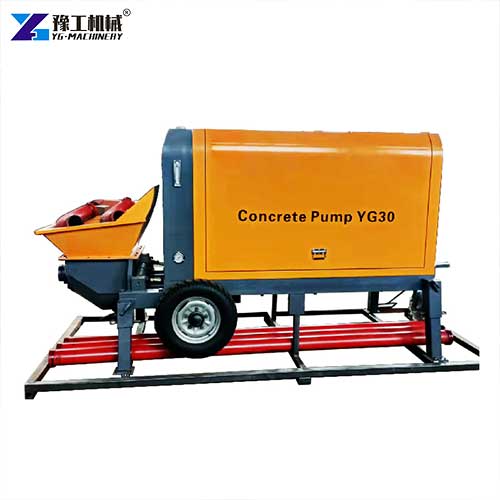
A portable concrete pumping machine is a specialized construction machine that uses hydraulic pressure to pump concrete through pipelines to where it is needed. It consists of two main parts: the pump body and the delivery pipes. Instead of moving concrete by wheelbarrow, bucket, or crane, this machine pushes liquid concrete through a series of connected pipes directly to the pour point. It works for both horizontal and vertical delivery, making it essential for projects where access is limited or concrete needs to reach high elevations or long distances.
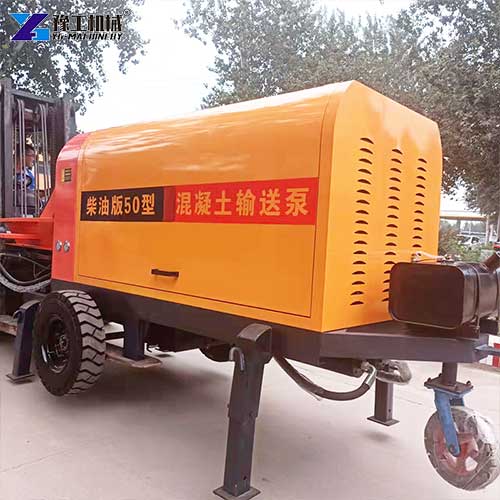
These machines come in different configurations. By structure, you have trailer-mounted pumps, truck-mounted pumps, and full pump trucks with placing booms. By power source, there are electric models and diesel-powered models. Each type serves different project scales and site conditions.
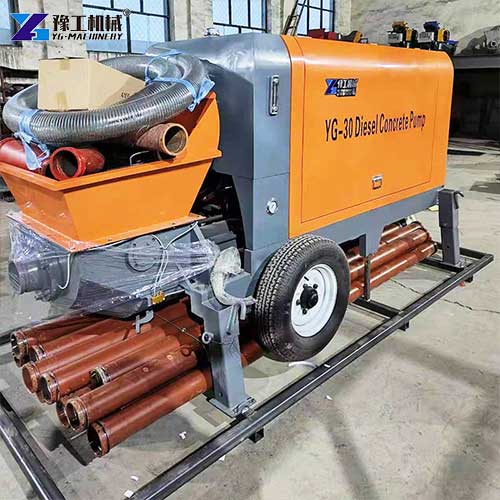
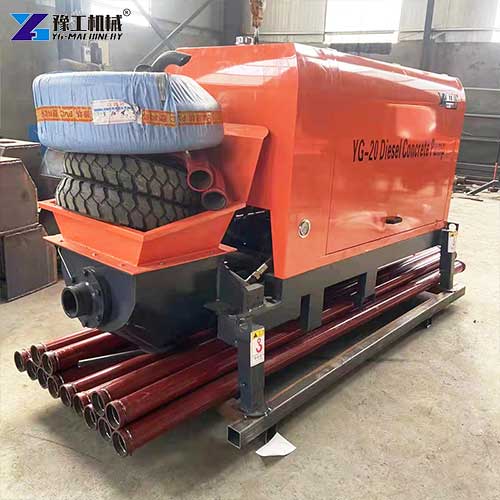
Portable Concrete Pumping Machine Technical Specifications
| Spec/Model | YG-10 | YG-20 | YG-30 | YG-40 |
| Work efficiency | 6m³/h | 12m³/h | 15-18m³/h | 20-22m³/h |
| Motor power | 15kw | 22KW | 37KW | 45KW |
| Working pressure | 15MPa/10MPa | 18MPa/12MPa | 18MPa/15MPa | 23MPa/15MPa |
| Aggregate size | 0.5- 1.5 cm | 0.5-2cm | 0.5-2cm | 0.5-2cm |
| Vertical/Horizontal conveying distance | 20m/50m | 40m/80m | 80m/100m | 120m/260m |
| Diameter of conveying pipe | 80mm | 80mm | φ80(100)mm | φ100(80)mm |
| Weight | 600KG | 1600kg | 2200kg | 2400kg |
| Dimensions | 1800*700*1100mm | 3400x1200x1600mm | 3800x1500x1600mm | 4000x1500x1550mm |
| Standard configuration | 10m steel pipe, 10m hose | 40m steel pipe, 10m hose | 90m φ80 steel pipe, 10m hose | 120m φ80 steel pipe, 10m hose |
Key Applications of the Portable Concrete Pumping Machine
Concrete pumping equipment serves a wide range of construction projects, from residential builds to large infrastructure work. Its versatility makes it a valuable asset across multiple sectors.
- Building construction is the largest application area. Whether you are pouring foundations, columns, slabs, or upper-floor concrete, a pump delivers the material exactly where you need it, even on multi-story buildings. It reduces manual handling and speeds up the entire pour.
- Bridge and highway projects rely heavily on concrete pumps for pouring bridge decks, abutments, and road beds. The long horizontal reach of larger models means you can cover significant distances without repositioning the machine.
- Tunnel and underground construction is another critical use case. In confined spaces where traditional delivery methods do not work, pumped concrete flows through pipes to reach the work face efficiently and safely.
- Other common uses include dam construction, retaining walls, swimming pool builds, and foundation repair work. Any project that requires placing concrete in hard-to-reach locations benefits from using a pump.
Advantages of the Portable Concrete Pumping Machine
Quality concrete pumps stand out because of their engineering and component quality. A small portable concrete pump from a reputable manufacturer packs a surprising amount of technology into a compact frame.
1. Smart control system
The best machines include high-low pressure switching, which lets you choose between high-pressure low-volume and low-pressure high-volume modes depending on what the job requires. Stepless flow adjustment matches the pump output to the actual pouring speed, reducing waste and improving efficiency. Automatic centralized lubrication keeps moving parts properly lubricated, extending the life of seals and wear components.
2. Hydraulic and electrical system
Dual-pump dual-circuit hydraulic systems mean the pumping circuit and the valve-switching circuit work independently. This makes the system simpler and more reliable. Forced-air cooling with a large radiator keeps hydraulic oil temperature under control, even during long continuous pours. PLC control handles the hydraulic valve switching, making the electrical side clean and dependable.
3. Pumping system
A steep-angle hopper design improves material intake efficiency, so more concrete gets into the cylinder with each stroke. An S-tube valve with smooth diameter transitions delivers consistent, blockage-free flow. High outlet pressure means the pump can push concrete farther and higher. Long-life wear parts reduce downtime and maintenance costs.
4. Quality components
Top-tier pumps use brand-name parts from trusted suppliers — hydraulic components from Kawasaki, sealing systems from Parker, electrical controls from Siemens and Schneider. These premium components cost more upfront but pay back through years of reliable service with fewer breakdowns.

Efficiency Comparison: Pumped vs. Traditional Pouring
- Speed of placement is the most obvious advantage. A team with wheelbarrows might place 5 to 10 cubic meters per hour. A mid-size pump handles 15 to 20 cubic meters per hour — two to three times faster. On large pours, that difference can shave days off the schedule.
- Labor savings are significant too. Pumped concrete requires fewer workers on the placement side. You do not need a crew hauling buckets or pushing wheelbarrows across the site. Fewer workers mean lower payroll costs and fewer safety incidents related to material handling.
- Better concrete quality comes from continuous, consistent placement. When concrete flows steadily through a pipe, it stays homogeneous and sets more evenly. Interrupted pours from slow manual delivery can cause cold joints and weaker concrete. Pumping helps ensure a single, continuous pour.
- Less waste and cleaner sites are additional benefits. Pumped concrete goes exactly where it needs to go, with minimal spillage. Traditional methods often leave concrete splattered on formwork, rebar, and the ground around the pour area. That waste adds up in material cost and cleanup time.
- Access to difficult locations is where pumping really shines. If you need concrete on the 10th floor, inside a tunnel, or across a wide site, pumping is often the only practical solution. Cranes and buckets work, but they are slower and less precise.
6 FAQ About Portable Concrete Pumping Machine
A: It depends on the model — from 20m vertical / 50m horizontal for the smallest unit, up to 120m vertical / 260m horizontal for the largest. For jobs under 30m high with aggregate under 15mm, a mid-size pump usually works well.
A: Most models handle an aggregate up to 2cm. The smallest model works best with 0.5–1.5cm stone. For fine concrete work like floor screed, aggregate is typically 5mm–1cm, which all models handle easily.
A: Use steel pipe for the main line — it handles pressure better. Add about 10 meters of flexible hose at the discharge end for mobility around the pour area. Too much hose reduces pressure capacity.
A: About 1 kilometer in open space. The remote controls the pump output so the operator can adjust the flow from the pour point. Walls and buildings reduce the effective range.
A: Yes, when the concrete pumping equipment outlet diameter differs from your delivery pipe size. Different models have different outlet sizes, and matching reducer fittings are available for smooth transitions.
A:Daily: check oil levels, clean the hopper and S-valve, grease lubrication points. Weekly: inspect seals, hoses, and pipes for wear. Follow the schedule for oil changes and filter replacements.
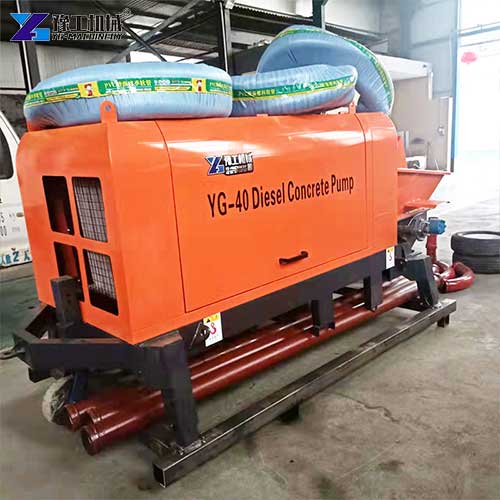
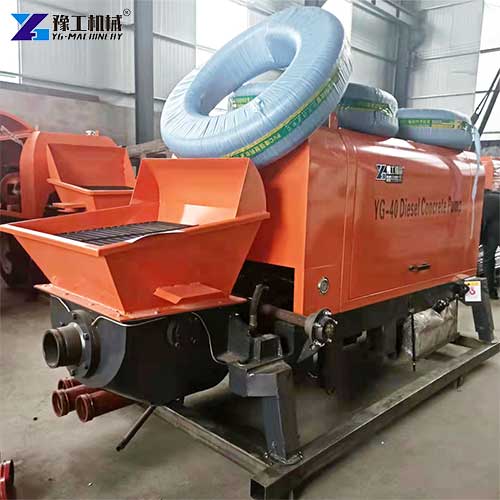
Small Concrete Pump For Sale – YG Machinery
When you are investing in a portable concrete pumping machine, you want a manufacturer that stands behind its products and delivers real value. YG brings nearly 20 years of experience building construction machinery, with a focus on practical, reliable equipment that works on real job sites. We support our customers with parts availability, technical guidance, and operator training. Whether you are looking for a small concrete pump for sale to add to your fleet or upgrading to a larger model for bigger projects, we help you find the right fit.
If you have questions about specifications, sizing, or how a pump would work on your next project, reach out. We will walk you through the options and help you choose equipment that makes your jobs faster, easier, and more profitable.