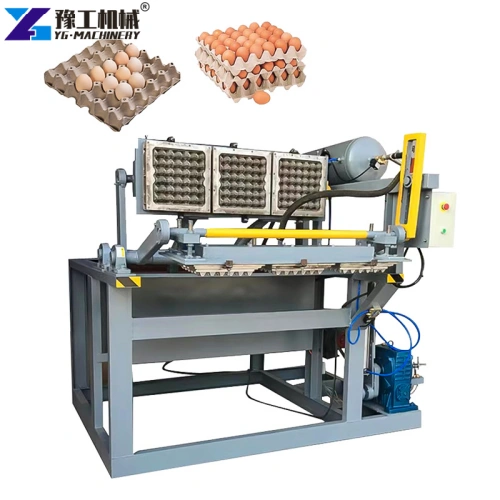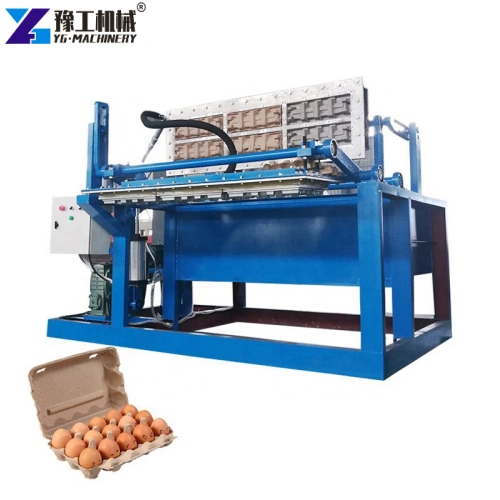


Growing demand for eco‑friendly degradable packaging pushes many packaging entrepreneurs and factories to invest in pulp‑molding production. Many new investors face common pain points: excessive initial investment, single‑product limitation, inflexible drying configuration, lack of factory layout reference, and insufficient overseas after‑sales support. This gradient pulp molding production line converts waste paper into egg cartons, egg trays, and diversified molded pulp goods. It supports phased‑investment expansion, multiple mold options, and flexible drying solutions for startup workshops and large‑scale packaging factories.
Product Full Technical Specifications Of Egg Carton Making Machine
| Model | YG-1*3 | YG-1*4 | YG-3*4 | YG-4*4 | YG-4*8 | YG-5*8 | YG-6*8 |
| Capacity (pcs/h) | 1000 | 1500 | 2500 | 3500 | 4500 | 5500 | 7000 |
| Forming Mould Quantity | 3 | 4 | 12 | 16 | 32 | 40 | 48 |
| Total Power (kW) | 40 | 40 | 50 | 60 | 130 | 140 | 186 |
| Electricity Consumption (kw/h) | 28 | 29 | 35 | 42 | 91 | 98 | 130 |
| Worker | 3-5 | 4-6 | 4-6 | 4-6 | 4-6 | 5-7 | 6-8 |
Seven‑specification model lineup covers startup small‑batch production to high‑volume industrial manufacturing. Buyers can select plastic or upgraded aluminum molds according to long‑term production volume; egg tray machine price varies with model grade, mold material, and drying system configuration.
Working Principle Of Pulp Molding Production Line
This pulp molding equipment follows a complete waste‑paper‑to‑finished‑product workflow composed of pulping, screening, proportioning, forming, dehydration, drying, and packaging stages.
- Pulping & screening: Waste paper raw materials are crushed and screened to obtain uniform pulp liquid.
- Forming stage: Vacuum adsorption attaches pulp to the inner cavity of forming molds to shape wet pulp products.
- Dehydration & drying: Wet products go through a moisture removal process; drying can adopt natural air‑drying or a hot‑air drying system.
- Post‑processing & packaging: Finished dry pulp‑molded goods are stacked and packed for delivery.
With replaceable mold groups, the egg carton making machine can switch between different pulp‑molded product types without replacing the main host unit.


Core Product Features & Performance Advantages
- Full‑gradient seven‑model matrix: Output ranges from 1000‑7000 pieces per hour. Startup workshops can begin with low‑capacity units and expand production gradually without huge one‑time capital expenditure.
- Multi‑product mold compatibility: Swap molds of egg carton making machine to produce egg trays, egg cartons, fruit trays, cup trays, wine trays, shoe supports, and electronic‑product inner packaging. Standard plastic molds are supplied, and long‑service‑life aluminum molds are available as an optional upgrade. Custom logo, shape, and color are supported.
- Wide‑range raw‑material adaptability: Waste cartons, old newspapers, printing‑plant scraps, and paper‑mill tailings can serve as raw materials. Local waste‑paper recycling cuts raw‑material cost and produces eco‑friendly degradable packaging.
- Flexible multi‑mode drying options: Natural air‑drying, brick‑kiln drying, single‑layer metal drying and multi‑layer hot‑air drying solutions are optional. New investors can start with low‑cost air‑drying and upgrade drying equipment in later phases.
- Complete factory‑planning reference data: Each model provides clear power consumption, staffing requirements, plant dimension suggestions, and drying‑area calculation references to support buyers’ pre‑investment site layout.
- Reliable after‑sales & global delivery: 1‑year full‑machine warranty and 3‑year warranty for main structural components. The equipment has been exported to over 100 countries. Multilingual technical staff can provide on‑site engineer commissioning and worker operation training.
Main Industry Application Scenarios
- Agricultural packaging factories: Mass‑production of egg cartons and egg trays for poultry farms and egg distributors.
- Eco‑packaging manufacturers: Production of fruit trays, cup trays, and degradable commodity packaging to replace plastic packaging materials.
- Electronics & light‑industry suppliers: Manufacturing shock‑absorbing inner pulp‑molded liners for small electronic goods and footwear accessories.
- New startup pulp‑molding workshops: Small‑scale waste‑paper recycling projects for regional local packaging supply business.
For cross‑border packaging project investors, the egg carton making machine delivers scalable pulp‑molding production solutions for small workshops and large packaging plants.
Product Purchase & Selection Guidance
Buyers need to assess these key factors before confirming orders to avoid model mismatch and unnecessary project expenditure:
- Target hourly output: Confirm daily production target, select 1000‑7000pcs/h model according to real order volume.
- Local raw‑material supply: Verify available waste‑paper resources on‑site to confirm raw‑material accessibility.
- Drying‑system planning: Humid‑climate regions should avoid purely natural air‑drying; select a brick‑kiln or hot‑air drying configuration for stable cycle efficiency.
- Mold selection principle: Short‑run multi‑variety orders fit cost‑effective plastic molds; mass continuous‑production scenarios recommend optional aluminum molds.
- Site & power condition: Check factory floor space, ceiling height, and transformer power capacity; high‑capacity YG‑6*8 model requires high power supply.
- Overall project budget: The total expenditure of egg tray machine price is determined by model specification, mold type, drying system selection, and destination logistics cost.


Frequently Asked Questions
A: Wet egg tray weight ranges from 200g‑350g; finished dry product weight is 80‑100g. Product weight can be adjusted by adding different auxiliary agents.
A: Aluminum molds feature longer service life and better heat‑conducting performance. Plastic molds deliver higher cost‑efficiency for frequent multi‑product small‑batch switching.
A: Under a 30℃ environment, drying takes 6‑7 hours; under a 40℃ condition, it takes 4‑5 hours. For 1000pcs/h output, a minimum of 500㎡ drying area is required.
A: Under a 30℃ environment, drying takes 6‑7 hours; under 40℃ conditions, it takes 4‑5 hours. For 1000pcs/h output, a minimum of 500㎡ drying area is required.
A: Products have been exported to more than 100 countries. Multilingual business and engineering teams can provide a full set of export documents, on‑site installation, commissioning, and operator training services. The main structure enjoys a 3‑year warranty period.
Procurement planners should evaluate complete project configuration rather than merely focusing on paper egg tray making machine when comparing purchasing proposals.
Manufacturer Supply & Inquiry Information
Full supply scope includes pulp‑molding main host, standard plastic forming molds, pulping assembly, and basic wearing‑parts kit. Optional upgrades include aluminum forming molds, a brick‑kiln drying unit, and a multi‑layer hot‑air drying production line.
Available manufacturer‑provided services: ‑ Project‑oriented model‑selection consultation for startup or large‑volume pulp‑molding projects ‑ Complete factory pre‑shipment performance inspection ‑ Printed operation, maintenance, and plant‑layout technical documentation ‑ Global spare‑parts supply for molds, pumps, and wearing components