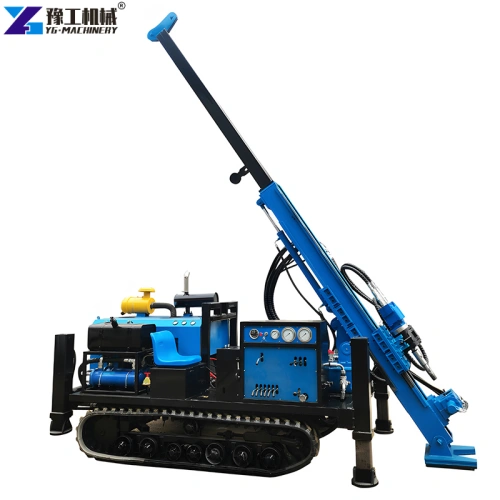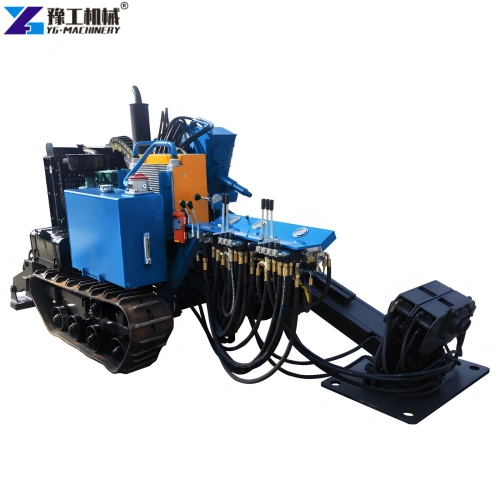
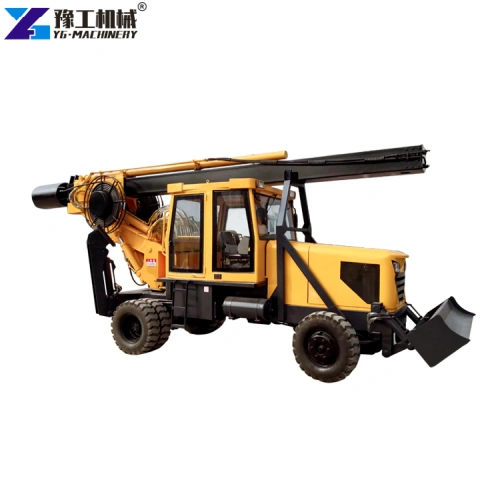
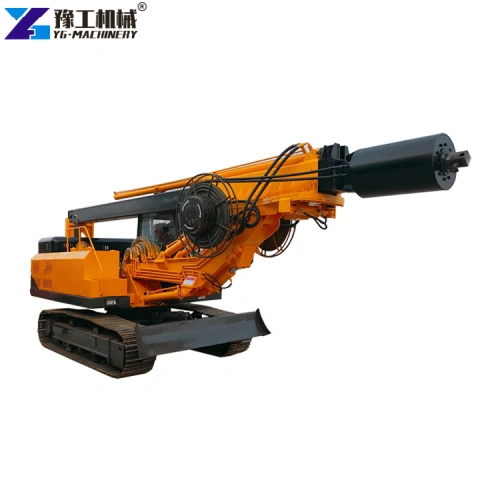
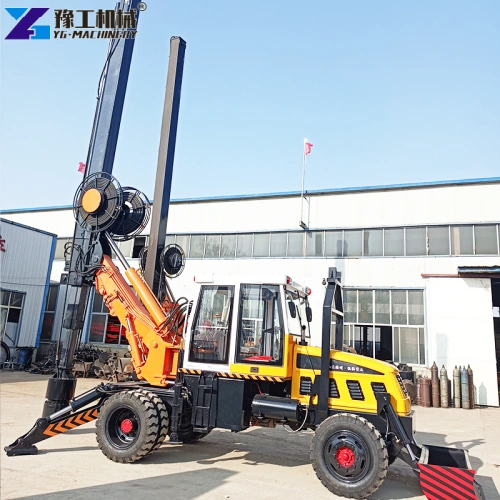
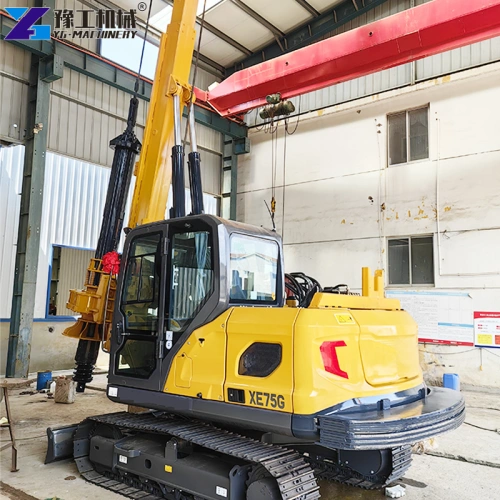
Advanced design integrates hydraulic drive, mechanical transmission, and intelligent control into rotary drilling equipment. Through rotary cutting and soil lifting operations, they drill holes in clay, sand, gravel, and rock strata. Widely used in foundation construction for buildings, bridges, and municipal engineering projects, they are currently the mainstream piling machinery, renowned for their high efficiency, low noise, and excellent pile quality. Besides, we also provide hydraulic piling rigs, horizontal directional drilling rigs, mining core drilling rigs, and fully hydraulic core drilling rigs. Please feel free to contact us with any needs!
Rotary Drilling Equipment Parameter:
| Dimensions (mm) | 7900*2260*3100 |
| Vehicle mass (kg) | 8000 |
| Wheelbase (mm) | 3150 |
| Wheelbase (mm) | Front 1400 After 1060 |
| Drilling depth (m) | 13 |
| Drilling diameter (mm) | 600-1600 |
| Rotation angle | 180 degree |
| Walking speed (km/h) | 50 |
| Gear pump model | CBJT2080 |
| Hydraulic system working pressure (Mpa) | 20-25 |
| Hydraulic system displacement (ml/r) | 80 |
| engine model | 4108 |
| Engine power (kW) | 88 |
Working Principle of Rotary Drilling Equipment
The operation of a rotary drilling rig follows five major steps: drilling, soil removal, hoisting, muck removal, and resetting. It relies on hydraulic power and mechanical structure for coordinated operation, specifically as follows:
- Positioning and Hole Protection: The equipment travels to the pile location, the mast is adjusted for verticality, and static mud (or casing) is used for hole wall protection to prevent collapse. The mud specific gravity is adjusted according to the geological conditions (sand 1.15-1.25, clay 1.05-1.1). For specific proportions, consult the manufacturer.
- Rotary Cutting Drilling: The hydraulic power head drives the telescopic drill rod and the bottom drill bucket to rotate. The cutting teeth at the bottom of the drill bucket cut the strata, and the muck enters the inner cavity of the drill bucket. The power head automatically adjusts its torque based on the stratum hardness. Specifically, it adopts low torque with high speed for soft soil layers, whereas it applies high torque with low speed for hard rock layers.
- Slag Lifting and Unloading: After the drill bucket is filled with slag, the power head stops rotating, the telescopic drill rod lifts the drill bucket to the borehole opening, and the bottom cover of the drill bucket automatically opens to unload the slag. After unloading, the drill rod returns to its original position, and the drilling process is repeated until the designed hole depth is reached.
- Hole Cleaning and Pile Preparation: After completing the hole construction, workers conduct secondary hole cleaning to control bottom sediment thickness: ≤5cm for end-bearing piles and ≤10cm for friction piles. Then, the reinforcing cage and guide pipe are lowered, and concrete is poured to complete the pile foundation construction.
The entire process is highly automated, requiring no frequent manual intervention. The drilling efficiency is 3-5 times that of traditional rotary drilling equipment, and the disturbance to the strata is minimal.
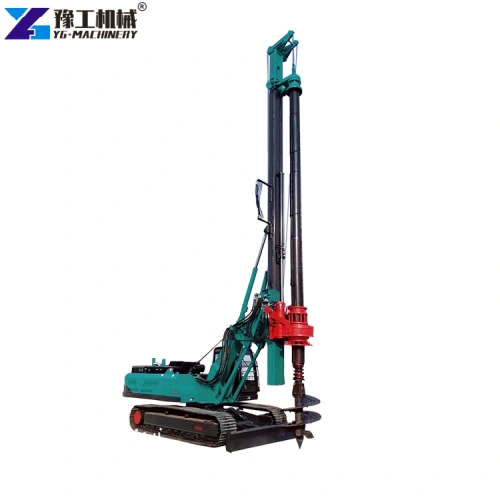
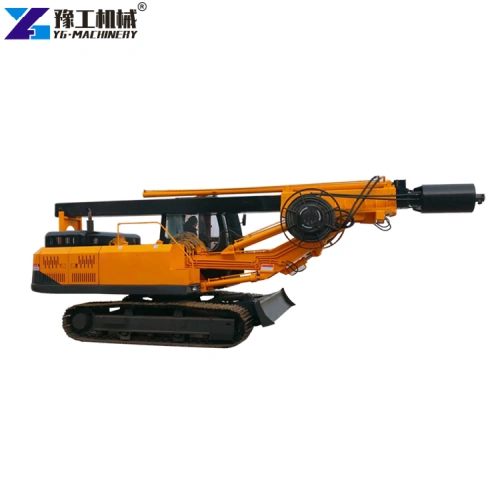
Main Types of Rotary Drilling Equipment
1. By Torque and Tonnage
- Small Rigs (100-120 kN·m): Compact design, flexible relocation, suitable for soft soil layers with pile diameter ≤ 1.5 meters and depth ≤ 45 meters, ideal for narrow sites in municipal projects and small pile foundations in civil construction.
- Medium Rigs (180 kN·m): Balanced power and balance, engine power 200 kW, drilling diameter 0.8-1.8 m, depth 40-60 m, suitable for gravel, high-speed bridge piles, large building load-bearing piles, etc.
- Large Rigs (240 kN·m and above): High torque and high lifting force, engine power 300 kW, drilling diameter 1-2.5 m, depth 80 m, total weight over 100 t, suitable for extra-large bridge piles, special structure foundation piles, etc.
2. By Movement Method
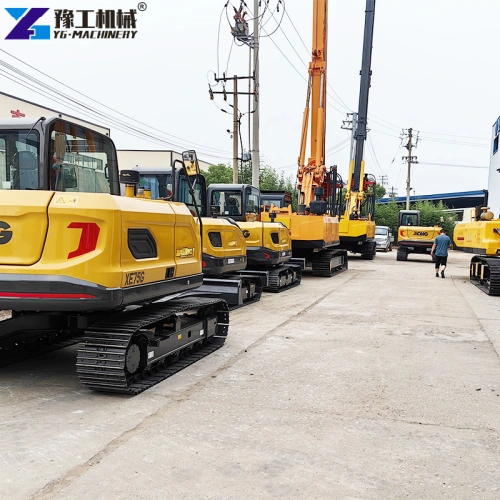
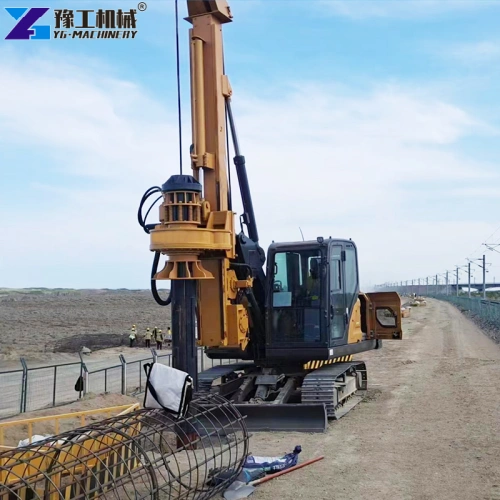
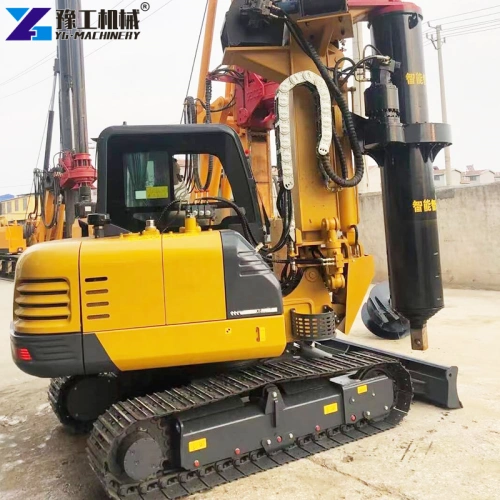
- Tracked rotary drilling rigs: Low ground pressure, strong site adaptability, stable in muddy/rough terrain, mainstream for medium and large-sized machines, suitable for field and complex construction sites.
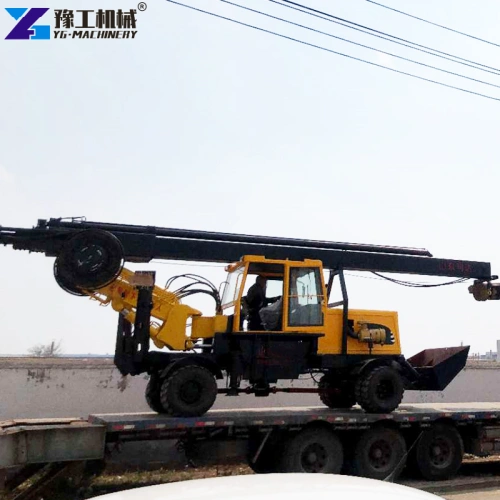
- Wheeled rotary drilling rigs: High mobility, low relocation cost, suitable for urban municipal projects and multi-site decentralized projects, commonly used for small machines, road-friendly, no trailer required.
3. By Power Source
- Diesel rotary drilling rigs: Sufficient power, no dependence on an external power source, preferred for field/electricity-free sites, standard configuration for medium and large-sized machines.
- Electric rotary drilling rigs: Low noise, environmentally friendly, low energy consumption, suitable for urban areas/residential areas, meeting green construction requirements.
YG Rotary Drilling Rig’s Core Advantages
- Outstanding Cost-Effectiveness: Compared with leading brands such as Sany, XCMG, and Zoomlion, YG rotary drilling rigs maintain reliable performance. Meanwhile, they deliver more competitive pricing, thus becoming an ideal option for small and medium-sized construction enterprises and individual investors.
- Low Purchase and Transportation Costs: Compared to large rotary drilling equipment, YG models feature lower purchase and transportation costs, along with faster investment recovery. For instance, in the rural housing construction market, a small unit can generally recoup costs within 1–3 months.
- Strong Geological Adaptability: The equipment adopts a dual-mode design of self-weight pressurization and hydraulic cylinder pressurization. As a result, it can adapt to various geological conditions, such as soft soil, clay, sand, gravel layers, and strongly weathered rock. Changing drill bits (rotary bucket, tubular drill, auger bit) can handle complex and varied geological formations.
- Easy Operation: The drilling rig can be operated by a single person. Ordinary workers can learn to operate it after simple training, reducing reliance on professional operators.
- Controllable Maintenance Costs: The machine has a simple structural design, and key components use universal standard parts, making maintenance convenient and after-sales service responsive.
YG Rotary Drilling Equipment Frequently Asked Questions
1. How long is the warranty on YG rotary drilling rigs? Is the after-sales response fast?
The entire series has a warranty of 18 months or 3000 hours (whichever comes first), and core components (hydraulic pump, power head) have a 24-month warranty; 20+ service outlets nationwide, 24-hour technical support, ample spare parts inventory, ensuring project completion on time.
2. How to choose drill bits for different formations?
- Silt/Silt: Double-bottom sand scoop (drainage holes prevent drill bit clogging);
- Clay: Single-layer straight-tube scoop (dense-tooth cutting);
- Gravel: Rock-embedded cutting tooth scoop (HRC55+ wear-resistant teeth);
- Moderately weathered rock: Short auger + roller cone screed (with mud wall protection).
3. Is it difficult to operate? How long does it take for a beginner to get started?
Equipped with a high-definition intelligent screen, one-button alignment, automatic verticality adjustment, and fault self-diagnosis, operation is simplified; novice operators can operate independently after 3-5 days of training, and become proficient and efficient after 7-10 days, reducing labor costs.
4. Is it compatible with overseas voltage and working conditions?
The entire series supports customization: voltage adaptation 415V/50Hz, 480V/60Hz; power system adaptation to high temperature (50℃), low temperature (-20℃), and high altitude (4500 meters); compliant with CE/ISO certification, adaptable to overseas infrastructure standards.
5. What is the difference between rotary drilling rigs and long auger drilling rigs?
Rotary drilling rigs rotate the drill bucket to cut soil and lift drill cuttings inside the bucket for discharge. By contrast, long auger drilling rigs push drill cuttings steadily to the ground surface via spiral blades. Furthermore, rotary drilling rigs handle large-diameter and deep pile construction well, and they can match different drill bits to adapt to various geological conditions. Meanwhile, long auger drilling rigs support fast continuous operation and deliver high efficiency in soft soil layers. Overall, the two machines serve distinct application scenarios, and users may select or combine them according to actual project demands.
Choosing a YG Manufacturer
When purchasing a rotary drilling rig, it’s essential to consider the geology, pile parameters, site conditions, and budget. Prioritize manufacturers with mature technology, modular design, and comprehensive after-sales service. YG Machinery has long specialized in piling machinery. Moreover, we supply a complete lineup of small, medium, and large models, covering both wheeled and tracked types. In addition, we adopt internationally renowned brands for all core components, while our intelligent control systems greatly lower operation barriers. Therefore, our equipment adapts to diverse geological conditions and construction scenarios globally.
For a premium manufacturer like YG, we do not merely supply equipment. Instead, we provide tailored geological adaptation solutions, professional operator training, complete maintenance networks and full spare parts support. Consequently, we effectively lower construction risks and overall operating costs. If you are interested, please feel free to contact us. We will provide you with one-on-one customized service. Don’t hesitate, act now!