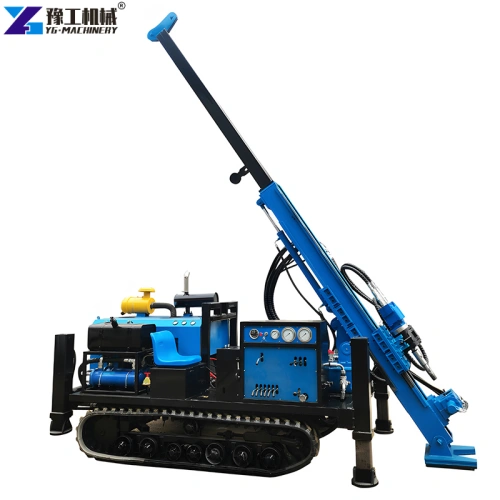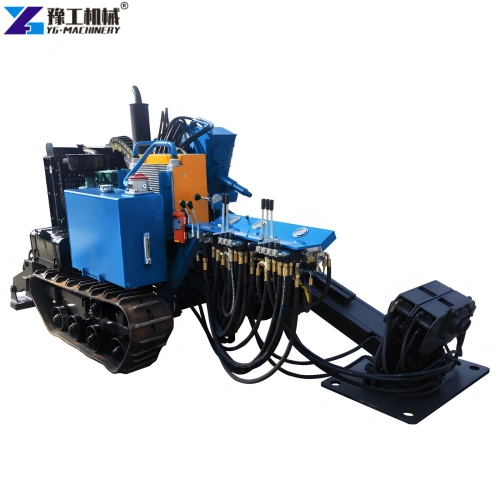

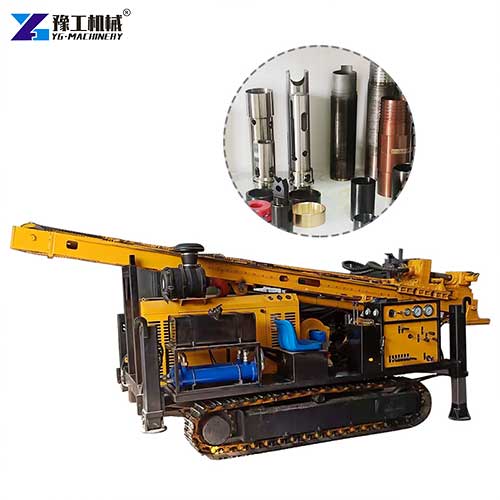

A core sample drill rig is a professional drilling equipment designed to extract intact underground core samples for geological exploration and mineral survey. It uses wireline coring technology to obtain complete, pollution-free cylindrical core samples, which provide accurate data for mineral reserve assessment and engineering design. As a full hydraulic core drilling machine, it delivers stable power and high drilling efficiency. It supports 0-90-degree drilling angle adjustment and can adapt to various complex geological conditions. This crawler-type portable core drilling rig can move flexibly on rough field terrain, which is very suitable for exploration projects in remote mountainous areas.
It is one of the most widely used core drilling equipment in modern geological exploration. You can use it for metal and non-metal mineral exploration, engineering geological survey, hydrogeological investigation and oil and gas field exploration. It has the advantages of high core recovery rate, simple operation and stable structure, and is the ideal choice for field exploration teams. In addition to core drilling equipment, YG also sells drilling rigs for various applications, including rotary drilling equipment, horizontal directional drilling equipment, DTH drilling machines, and solar pile drivers.
Core Sample Drill Rig Technical Parameter:
| Model | YGX-400 | YGX-600 | YGX-800 | YGX-1000 |
| Drilling Depth(M) | 180-400-500 | 200-600-650 | 400-800-1000 | 500-1000-1100 |
| Rated pressure(MPA) | 21 | 21 | 25 | 28 |
| Rated Flow(L/min) | 168 | 192 | 260 | 300 |
| Heat Dissipation Mode | Air cooling+water cooling | |||
| Engine Brand | Yuchai | Yuchai | Yuchai | Cummins |
| Rated power/speed | 78kW/ 2400r/min | 92kW/ 2400r/min | 92kW/ 2400r/min | 154kW/2400r/min |
| Drilling Angle(°) | 0-90 | 45-90 | 45-90 | 45-90 |
| Lifting Force(T) | 12 | 16 | 24 | 30 |
| Feed Force(T) | 6 | 8 | 12 | 15 |
| Hydraulic Mud pump flow | 30-90(L/min) | 30-90(L/min) | 90-180(L/min) | 90-180(L/min) |
| Hydraulic Mud pump power | 4-7(MPA) | 4-7(MPA) | 4-7(MPA) | 4-7(MPA) |
| Dimension | 4000*1900*1800mm | 4000*2000*1800mm | 5500*2100*2000mm | 6000*2200*2400mm |
| Weight | 4.3T | 4.5/5.5T | 6.5T | 7.5T |


How To Choose The Right Core Drill Tool?
Many first-time buyers only focus on the drilling depth of the hydraulic core drilling machine, but ignore the importance of the drill tool size. Choosing the right drill tool size directly affects drilling efficiency, core recovery rate and construction cost. You can choose the most suitable drill tool size according to your project depth and core diameter requirements.
BQ size
BQ is the smallest common wireline coring drill tool size. It has a drill bit outer diameter of 59mm and a core diameter of 36.4mm. It is suitable for shallow exploration projects or projects with a tight budget. Because of its small size, it drills faster and costs less per meter.
NQ size
NQ is the standard size for medium-depth drilling. It has a drill bit outer diameter of 75.7mm and a core diameter of 47.6mm. It is the most widely used size in conventional geological exploration and general drilling projects. And it balances drilling speed and core diameter well and is suitable for most medium-depth exploration projects.
HQ size
HQ is a larger-diameter drill tool size. It has a drill bit outer diameter of 96mm and a core diameter of 63.6mm. It is suitable for deeper drilling projects or projects that require larger-diameter core samples. Larger core samples can provide more accurate geological data for mineral assessment.
PQ size
PQ is the largest common wireline coring drill tool size. It has a larger core diameter and is suitable for deep or large-scale exploration projects that require a large number of core samples.
Common Wireline Coring Tool Specifications
| Specifications | Drill hole diameter | drill pipe diameter | core diameter | typical drilling depth |
| PQ | 122.6mm | 114.3mm | 85mm | 300-500m |
| HQ | 96mm | 89mm | 63.5mm | 500-800m |
| NQ | 75.5mm | 71mm | 47.6mm | 700-1000m |
| BQ | 60mm | 55.6mm | 36.5mm | 800-1200m |


Standard Working Process Of Core Sample Drill Rig
Step 1: Preparation work
First, level the ground at the construction site. Then adjust the core sample drill rig equipment to a horizontal state, and adjust the mast angle according to the design requirements. You also need to dig the mud pit and connect the mud pump and other supporting equipment before starting construction.
Step 2: Run casing
Just like buildings need solid foundations, drilling construction needs to run casing in advance. You need to lower the casing to the bedrock position. The surface overburden is usually relatively soft, and hole collapse may occur during later drilling if you don’t run casing, which will directly affect the smooth progress of drilling work.
Step 3: Start formal drilling
Lift and connect the double-tube drill string to the power head, start the mud pump, and then start formal drilling. Each drill rod is 1.5 meters long. After finishing one drill rod, lift the power head and connect another 1.5-meter drill rod, and repeat this cycle.
Step 4: Fish inner tube to take core samples
After completing a round of footage, the inner tube is full of core samples. At this time, you need to use the hydraulic winch to lower the fishing tool into the drill pipe with a steel wire rope. The fishing tool falls to the inner tube position under gravity, then fishes out the inner tube, and takes out the core sample from the inner tube.
Step 5: Arrange core samples and make records
After taking out the core samples, arrange them in order and make detailed records. Accurate core records provide the most basic data for subsequent geological analysis and mineral reserve assessment.
Step 6: Hole deviation survey
According to design requirements, you usually need to measure the inclination angle of the hole after drilling to a certain depth. This ensures that the drilling hole meets the inclination angle requirements and the core samples come from the target geological layer.
Step 7: Finish drilling and seal the hole
After completing all collection work, you can lift out the drill rods and casings in the hole in turn. Then seal the hole with cement, level the work site, and restore the original site as much as possible.
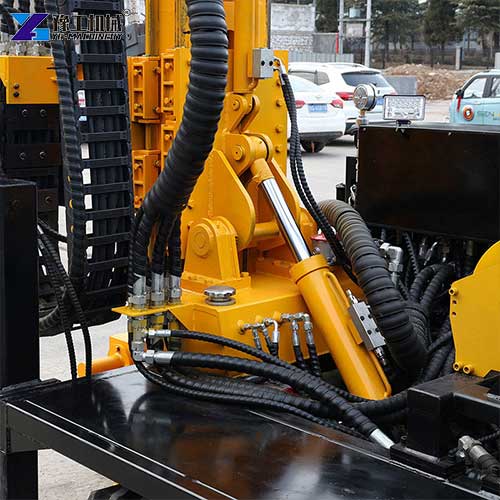
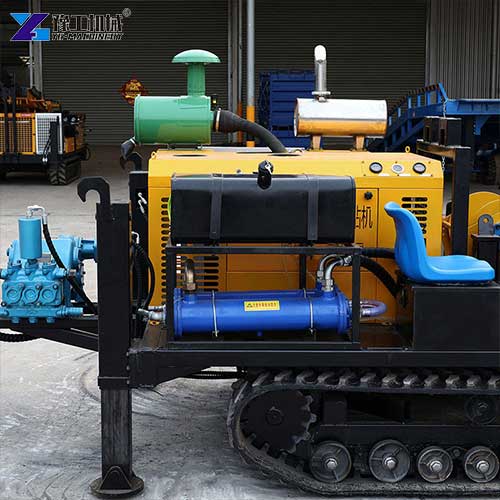
Key Components Of A High-Quality Core Sample Drill Rig
A reliable core sample drill rig relies on several core components to maintain stable performance in harsh field exploration environments. You can judge the quality of a rig by focusing on these key parts:
- Full hydraulic power system: A stable hydraulic system is the core of the rig. It provides steady power output, supports stepless speed regulation, and ensures a smooth drilling process with low vibration, which directly affects drilling efficiency and core recovery rate.
- Crawler walking chassis: A heavy-duty crawler chassis can adapt to various complex terrains such as mountains and muddy ground. It allows you to move the core drilling equipment flexibly between different drilling points without extra transportation tools.
- Telescopic mast structure: The telescopic mast does not require an additional drilling tower. You can fold and unfold it quickly, which greatly reduces the preparation time before construction and the difficulty of transportation.
- Overpressure protection system: A reliable overpressure protection system can automatically adjust pressure when encountering hard rock or abnormal conditions, which avoids damage to the hydraulic system and drill tools and extends the service life of the portable core drilling rig.