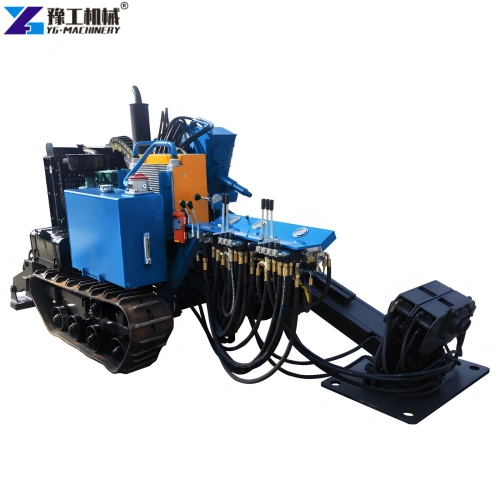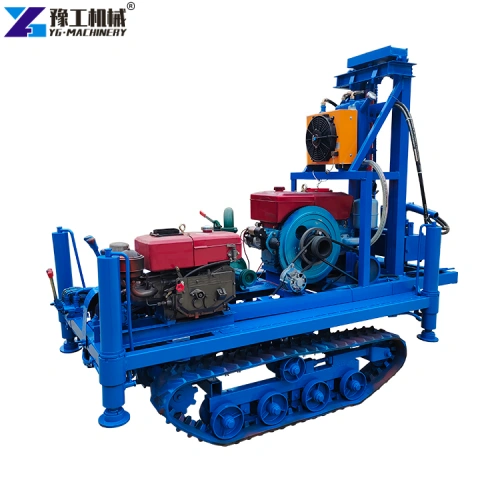
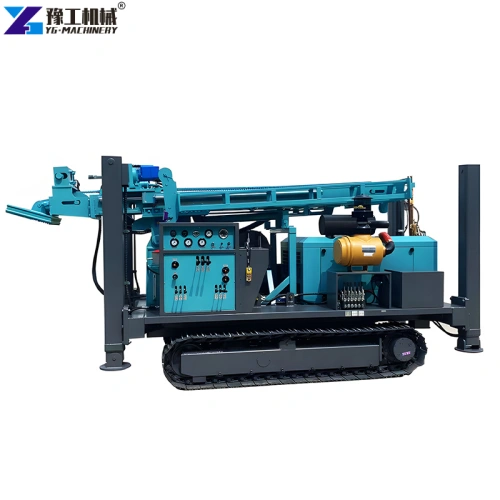
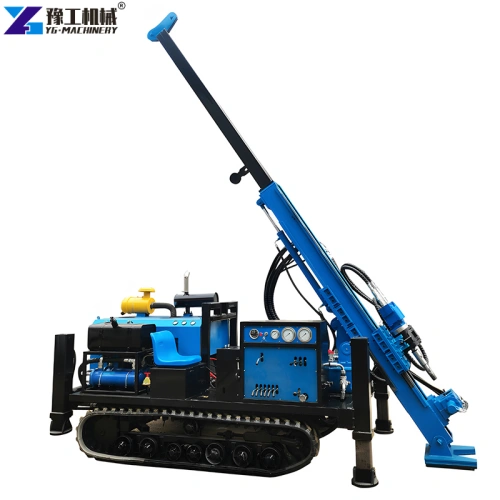
A hydraulic core drill is a core drilling device that uses a hydraulic system as its sole power source to drill underground rock cores. It is widely used in geological exploration, mining, water conservancy projects, and geological disaster management. With its powerful performance, ease of operation, high drilling efficiency, and strong adaptability, the hydraulic core drill has become a core piece of construction equipment. This article, based on practical industry experience, helps you quickly select a high-performance, cost-effective rig suitable for your specific working conditions, balancing practicality and economy. Contact us now for more product information.
Hydraulic Core Drill Parameters
| Model | YGX-400 | YGX-600 | YGX-800 | YGX-1000 |
| Drilling Depth(M) | 180-400-500 | 200-600-650 | 400-800-1000 | 500-1000-1100 |
| Rated pressure(MPA) | 21 | 21 | 25 | 28 |
| Rated Flow(L/min) | 168 | 192 | 260 | 300 |
| Heat Dissipation Mode | Air cooling+water cooling | |||
| Engine Brand | Yuchai | Yuchai | Yuchai | Cummins |
| Rated power/speed | 78kW/ 2400r/min | 92kW/ 2400r/min | 92kW/ 2400r/min | 154kW/2400r/min |
| Drilling Angle(°) | 0-90 | 45-90 | 45-90 | 45-90 |
| Lifting Force(T) | 12 | 16 | 24 | 30 |
| Feed Force(T) | 6 | 8 | 12 | 15 |
| Hydraulic Mud pump flow | 30-90(L/min) | 30-90(L/min) | 90-180(L/min) | 90-180(L/min) |
| Hydraulic Mud pump power | 4-7(MPA) | 4-7(MPA) | 4-7(MPA) | 4-7(MPA) |
| Dimension | 4000*1900*1800mm | 4000*2000*1800mm | 5500*2100*2000mm | 6000*2200*2400mm |
| Weight | 4.3T | 4.5/5.5T | 6.5T | 7.5T |
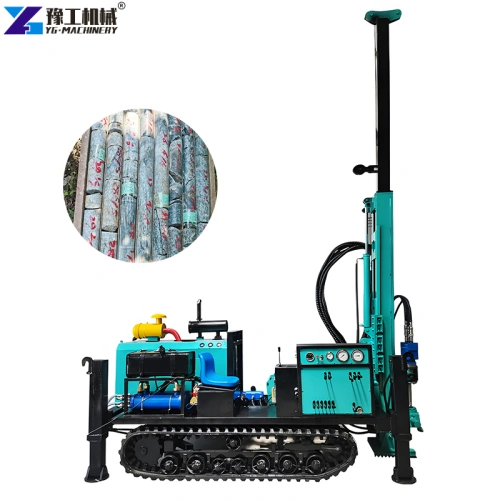
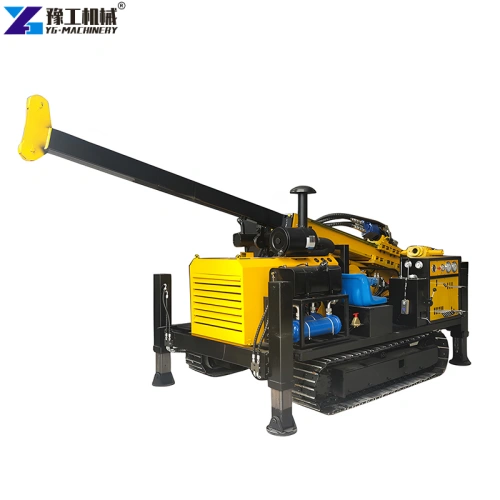
5 Major Application Areas of YG Hydraulic Core Drill
1. Geological and Mineral Exploration
Used for the general survey and exploration of underground metallic and non-metallic minerals and coal, obtaining core samples for analysis.
Advantages: Employs diamond wireline coring technology, achieving complete core sampling in deep holes (up to 1000 meters) with a recovery rate exceeding 95%, accurately obtaining data on ore body thickness, grade, and distribution; the tracked chassis is adaptable to complex mining terrains such as mountains, plateaus, and hills, ensuring efficient mobile relocation.
2. Engineering Geological Survey
Serving the foundation survey of railways, highways, bridges, tunnels, dams, high-speed railways, and high-rise buildings.
Applications: Layered soil and rock sampling to determine foundation bearing capacity and soil stability;
Investigation and monitoring of potential geological hazards such as landslides and debris flows;
Geological condition testing of roadbeds, dam foundations, and foundation pits, identifying weak layers and fractured zones;
3. Hydrogeology and Water Resources Exploration
Used for groundwater exploration, geothermal well drilling, water conservancy engineering construction, and contaminated site investigation, addressing the needs of water resources exploration and water conservancy engineering reinforcement.
Advantages: Stable hydraulic system, suitable for underwater, high humidity, and muddy conditions; high borehole verticality and good grouting hole sealing.
4. Tunnel/Underground Exploration
Suitable for operations in confined spaces such as mine shafts, tunnels, and pits, meeting the needs of deep mine exploration and underground engineering construction.
Applications: Supplementary underground mine exploration: Determines the extension and boundaries of deep ore bodies, guiding mining design.
Drilling ventilation holes, drainage holes, and water exploration holes in tunnels: Prevents mine water inrush and improves ventilation conditions.
Mine slope anchoring and support drilling: Reinforces surrounding rock in tunnels and prevents collapse.
Advantages: Compact and modular design, allowing for disassembly and transport into the wellbore; 45-90° tilt angle adjustment, suitable for downhole inclined and vertical drilling.
5. Shallow Oil and Gas Resource Exploration and Special Engineering Drilling
Used for shallow oil, natural gas, and coalbed methane resource exploration drilling to obtain oil and gas reservoir cores and geological data, as well as deep geological structure detection, such as determining the depth, temperature, and lithology of geothermal reservoirs.
Advantages: Supports multiple processes such as impact rotary drilling, directional drilling, and reverse circulation coring, adaptable to different strata and construction needs.
In addition, the fully hydraulic core drilling rig can be used in conjunction with the RC drilling rig to achieve integrated sampling and core extraction, adapting to various needs in high-precision exploration scenarios.
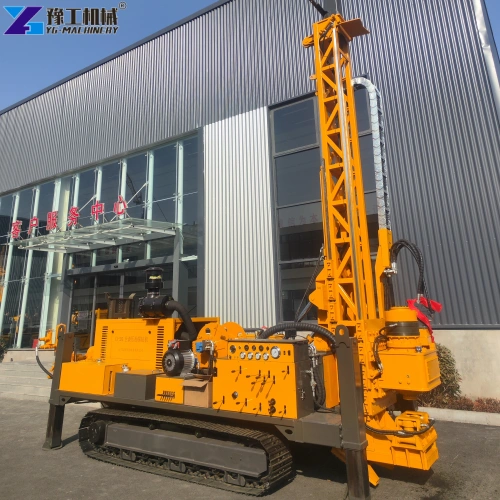
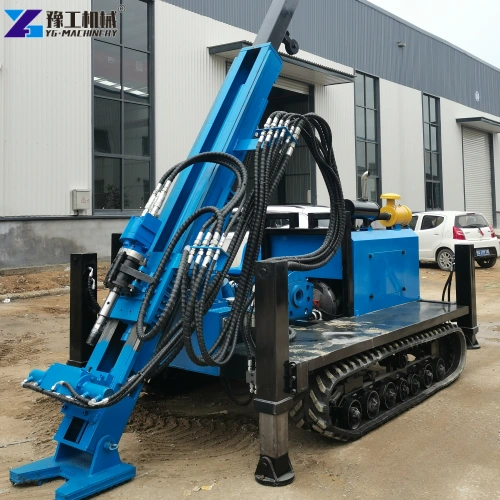
What are the Different Types of Hydraulic Core Drill?
Core drilling can be mainly divided into three major process types: conventional coring, wireline coring, and reverse circulation continuous coring. Based on depth, it is divided into shallow hole, medium-deep hole, and deep hole drilling. Based on the application, it covers mineral exploration, engineering surveying, hydrological wells, underground tunneling, and geological disaster control. Among these, wireline coring combined with a fully hydraulic power head is currently the mainstream solution for efficient and high-quality core drilling. Regarding drilling tools:
1. Conventional Core Drilling (Pull-up Core Retrieval)
• Drill a section → Pull up the drill → Retrieve the core → Drill down again
• Simple equipment, low cost
• Disadvantages: Low efficiency in deep holes, long auxiliary time
2. Wireline Core Drilling (Currently the Mainstream)
• No need to pull up the drill; the inner tube and core are retrieved directly via a wire rope.
• Significant advantages in deep holes, with a marked increase in efficiency.
• Minimal core disturbance, high recovery rate.
• Widely used in mineral exploration, detailed geological surveys, and deep holes over 500 meters.
3. Reverse Circulation Continuous, Core Drilling
• The medium (air/mud) returns from the outer ring of the drill pipe, carrying the core/sample.
• Fast sampling speed, suitable for exploration of relatively simple formations.
• Primarily used in hydrological, geological surveys, and engineering exploration.
Recommendations for Purchasing a Hydraulic Core Drill
1. Define the Construction Scenarios and Requirements
• Drilling Depth and Hole Diameter: Traditional geological exploration drilling depths are 100-500 meters, while mining exploration can reach 1000 meters or more (e.g., the YG800 drilling rig can reach 1000 meters); the diameter is 50-300 mm, requiring a matching drill bit of the corresponding specification.
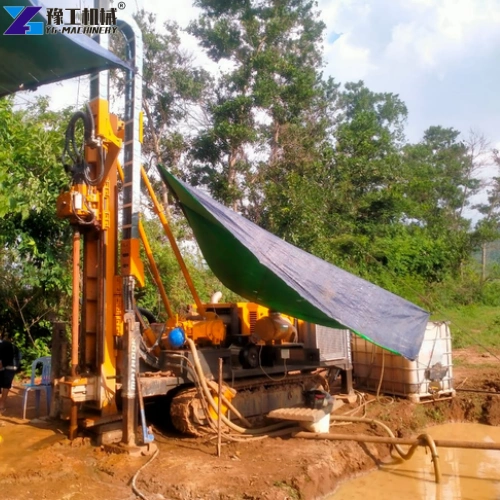
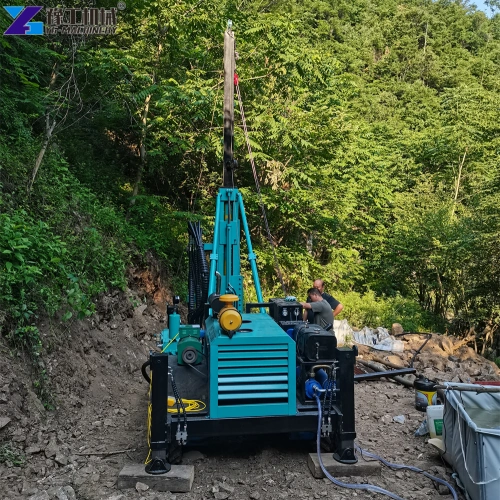
• Construction Environment: Open-pit operations require consideration of mobility (tracked/vehicle-mounted), with steel tracks suitable for complex terrain, and wireless control enhancing safety (recommended models: YG800, YG1000); tunnel and underground operations require lightweight drilling rigs, and high-temperature, high-humidity, and high-dust environments necessitate attention to heat dissipation and dust prevention.
• Drilling Technology: Different technologies, such as conventional core drilling, percussion rotary drilling, directional drilling, and reverse circulation continuous coring, place different requirements on the drilling rig’s power head and hydraulic system.
• Project Scale: Portable modular drilling rigs are suitable for small projects; large projects require integrated automated drilling rigs (e.g., automatic rod changers with a rod change time ≤ 30 seconds).
2. Define the Budget Scope (Including Hidden Costs)
The price range for fully hydraulic core drilling rigs is quite wide, with the YG hydraulic core drill ranging from $10,000 to $40,000. When purchasing, don’t just look at the initial quote; calculate the “total lifecycle cost,” including: equipment purchase price, spare parts replacement costs (drill rods, drill bits, etc.), fuel/electricity consumption, operation and maintenance costs, and after-sales repair costs. YG fully hydraulic core exploration drilling rigs are a good choice, offering a wide selection, excellent cost-performance, and a comprehensive after-sales service system.
3. Machine Design and Mobility Parameters
The machine design and mobility method affect the equipment’s relocation efficiency and site adaptability:
• Mobility Method: Tracked systems are suitable for complex terrain (mountains, muddy areas) and have high mobility; vehicle-mounted systems are suitable for long-distance relocation and have high relocation efficiency; modular and portable systems are suitable for tunnels and small sites, facilitating manual or small equipment transport.
• Weight and dimensions: Select according to the size of the construction site and the relocation method. The weight of a single small portable drilling rig can be controlled within 180KG, while the weight of a large crawler drilling rig can reach more than 13.6kN.